

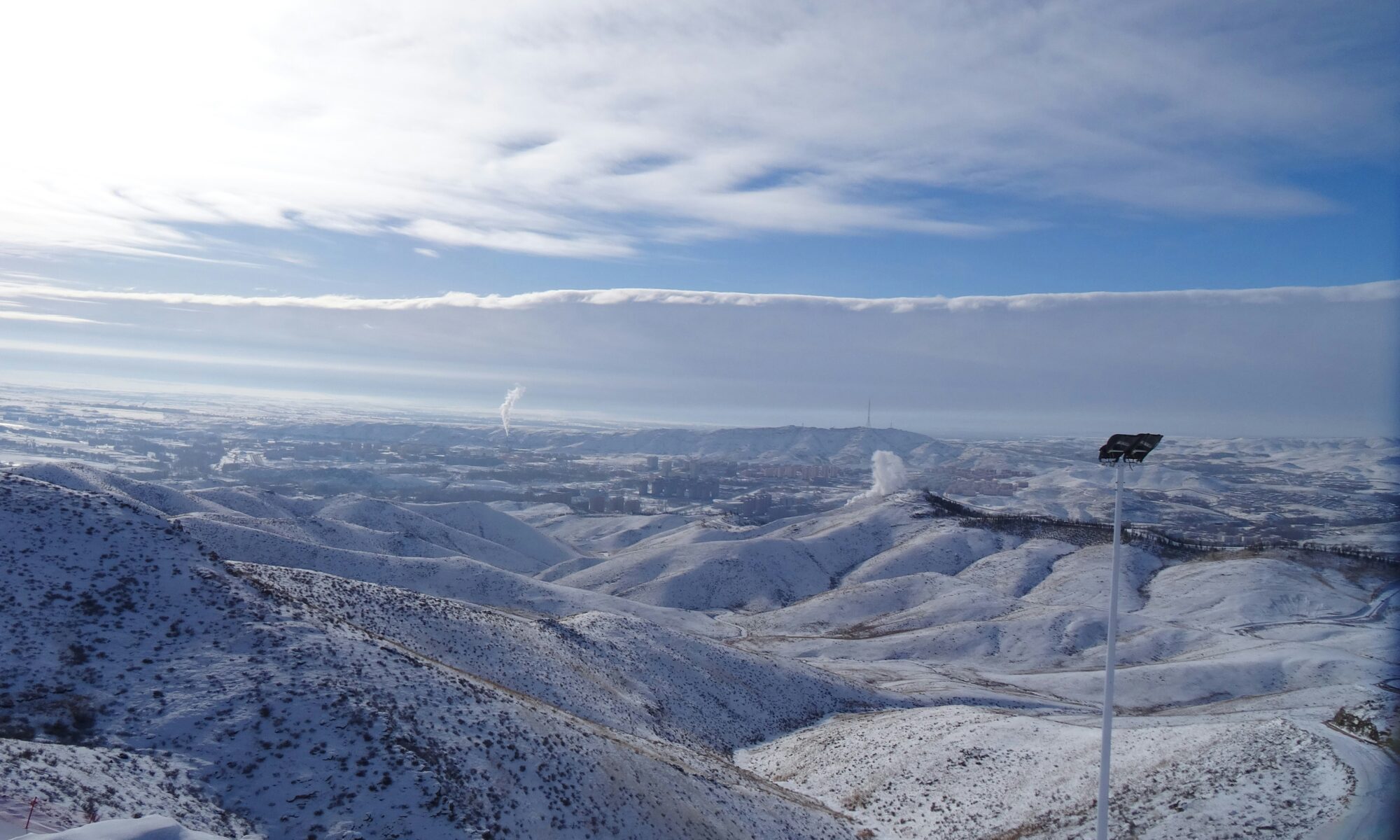
China’s latest ski-growth story is not a new lift, a new hotel, or another Olympic legacy project. It is a school holiday.
In Altay Prefecture, in China’s Xinjiang Uygur Autonomous Region, more than 70,000 primary and secondary school students were given an official “snow break” from December 1 to 5, 2025. Including the surrounding weekends, the break created nine days off school. During that period, students were offered free access to local ski resorts, free public transport within Altay City, and discounts on ski equipment rental, food, accommodation, coaching and cultural activities. Free introductory ski lessons were also made available to beginners.
For the ski industry, this is much more interesting than a simple “China loves skiing” headline. Altay’s snow holiday is a live example of something that most mature ski markets are struggling with: how to bring children and teenagers into the sport at scale.
In Europe and North America, the discussion is often about ageing skiers, affordability, declining school ski trips, rising travel costs and the difficulty of turning occasional family ski holidays into lifelong participation. China is approaching the problem from the other direction. Instead of waiting for ski demand to appear organically, local and national authorities are actively trying to manufacture it.
That makes Altay worth watching.
Altay is already one of China’s most important emerging winter destinations. Local reporting describes the prefecture as having four ski resorts, including Jiangjun Mountain and Koktokay international ski resorts. In the 2023/24 snow season, Altay welcomed around 4.89 million tourist visits and generated 5.1 billion yuan in tourism revenue, accounting for about half of Xinjiang’s growth in both visits and revenue.
The official language around the snow break is revealing. Authorities said the holiday was designed to make use of the region’s ice-and-snow resources, allow students to connect with nature and culture, and improve physical fitness. That is a social-policy message, but it is also a tourism-development message. The schools, ski resorts, cultural venues, hotels and transport providers are being knitted together into one winter-consumption ecosystem.
This is where China’s approach differs from most Western ski markets. In the Alps, the Rockies or the Pyrenees, ski demand is usually treated as something resorts compete for. In Altay, demand is being cultivated through public policy.
That does not mean every student will become a skier. It does not mean free access for a few days solves the long-term cost of equipment, coaching, transport or repeat participation. But it does lower the first barrier: the first encounter with snow sports. For a child who has never skied, the difference between “skiing is expensive and unfamiliar” and “my school holiday includes skiing” is enormous.
This matters because China has already made winter sports part of national economic strategy. In November 2024, China’s State Council issued guidelines to promote the ice-and-snow economy, targeting an economic scale of 1.2 trillion yuan by 2027 and 1.5 trillion yuan by 2030. The same policy framework includes winter sports, tourism, infrastructure, services, business development and international cooperation.
In other words, Altay’s student snow break is not an isolated local gimmick. It fits into a larger national plan to turn ice and snow into consumption, jobs, infrastructure use and regional development.
For anyone watching Mountain Tourism Trends: What the Industry Is Watching in 2026, this is a very different growth model from the one seen in mature ski countries. In many established markets, resort investment focuses on improving the experience for an existing skier base: faster lifts, better snowmaking, premium accommodation, more reliable access and summer diversification. China is still doing that too, but it is also working further upstream, trying to create the customer before the customer reaches the booking stage.
That is the part the global ski industry should pay attention to.
Reuters reported in February 2026 that China’s “winter economy” has become an example of the country’s broader shift toward services-led stimulus. The same report noted the success of Chongli, where Olympic-linked transport infrastructure and resort clustering helped unlock demand, while also warning that state-led investment can carry risks of overcapacity and underused assets if demand does not keep pace.
Altay’s snow holiday sits right in the middle of that debate. It is not just about creating more skiers. It is about whether governments can create a sustainable winter-tourism economy by combining schools, transport, resorts, events, hotels and cultural venues.
The comparison with Europe is uncomfortable but useful. In the Alps, ski participation is under pressure from high prices, changing family habits, climate uncertainty and an ageing customer base. Many resorts rely heavily on people who learned to ski decades ago, often through family holidays or school trips. The industry talks a lot about attracting younger guests, but the cost of entry keeps rising. This is where Altay becomes a mirror. China is using public policy to do what many mature markets increasingly struggle to do privately: put children on snow.
That does not mean the Chinese model can simply be copied. The political, educational and economic systems are completely different. Xinjiang is also a politically sensitive region, and any tourism story there sits within a broader context that international readers will understand is complex. But from a ski-industry perspective, the mechanics of the policy are still worth analysing.
The most important point is that China is not treating skiing only as a sport. It is treating snow as a platform for regional development, domestic tourism, family consumption, health, culture and infrastructure use. That is why the term “ice-and-snow economy” matters. It is much broader than alpine skiing.
This also helps explain why the biggest future growth story in snow tourism may not look like the traditional Alpine model. It may include beginner slopes, indoor snow centres, school programmes, winter festivals, cultural venues, rail links, hotels, equipment rental, snow play and short-break family tourism. In that sense, China may be building a winter leisure economy first, and a skiing culture second.
For the global travel trade, the immediate impact may be limited. Altay is not suddenly going to replace the Alps, Japan or the Rockies for Western skiers. But for anyone involved in long-term ski-market development, the lesson is important. Participation does not happen by accident. Someone has to pay for the first lesson, organise the first trip, remove the first transport barrier and make the first experience feel normal.
In Altay, that “someone” is the state.
And that may be the real story. While many established ski markets worry about how to replace older skiers, China is experimenting with a much more direct question: what happens when a government decides to create the next generation of winter-sports consumers?
For more on how the global ski industry is changing, see Mountain Tourism Trends: What the Industry Is Watching in 2026, Laurent Vanat’s global skier visits analysis, and how resorts are adapting to climate and demand pressure.
Sources
Reuters reported the Altay snow holiday and linked it to China’s wider ice-and-snow economy targets:
https://www.reuters.com/world/asia-pacific/chinese-students-get-snow-break-including-free-skiing-transport-2025-11-19/
Tianshannet/Xinhua reported the official details of the snow break, including more than 70,000 students, nine days off, free ski resort access and free public transit:
https://english.ts.cn/system/2025/11/19/036985174.shtml
China Daily added details on the four local ski resorts, free introductory ski lessons and discounts on rentals, dining, coaching, accommodation and transport:
https://www.chinadaily.com.cn/a/202511/20/WS691ec284a310d6866eb2a843.html
People’s Daily reported that more than 73,000 students took part and connected the policy to broader winter-tourism consumption across China:
https://en.people.cn/n3/2025/1204/c90000-20398364.html
China’s State Council published the national ice-and-snow economy targets of 1.2 trillion yuan by 2027 and 1.5 trillion yuan by 2030:
https://english.www.gov.cn/policies/latestreleases/202411/06/content_WS672b1c54c6d0868f4e8eca60.html
Reuters’ February 2026 analysis is useful background on China’s winter economy as a services-led stimulus strategy, including both the opportunity and overcapacity risk:
https://www.reuters.com/sports/winter-economy-emerges-poster-child-chinas-stimulus-tilt-services-2026-02-16/
 Planning your next trip to the Italian Alps?
 Planning your next trip to the Italian Alps?
If you’re heading to the Aosta Valley, take a look at Il Cuore della Valdigne, our family-owned apartment in Morgex, available for rent when we’re not using it ourselves.
It’s an ideal base to:
- Ski in Courmayeur, La Thuile and Pila
- Enjoy the mountains in summer (hiking, biking, nature)
- Explore the Mont Blanc valley in a quieter, more authentic setting.
Check my Mountain Art on my Shop
You can go to my shop and see what have been inspiring me lately, lots mountain landscapes in soft pastels, and now in oils too. Go here to check my latest works!

Featured Image: Altay Prefecture. Photo: Mmoka. Unsplash.


Discover more from The-Ski-Guru
Subscribe to get the latest posts sent to your email.
 Subscribe to The-Ski-Guru here.