

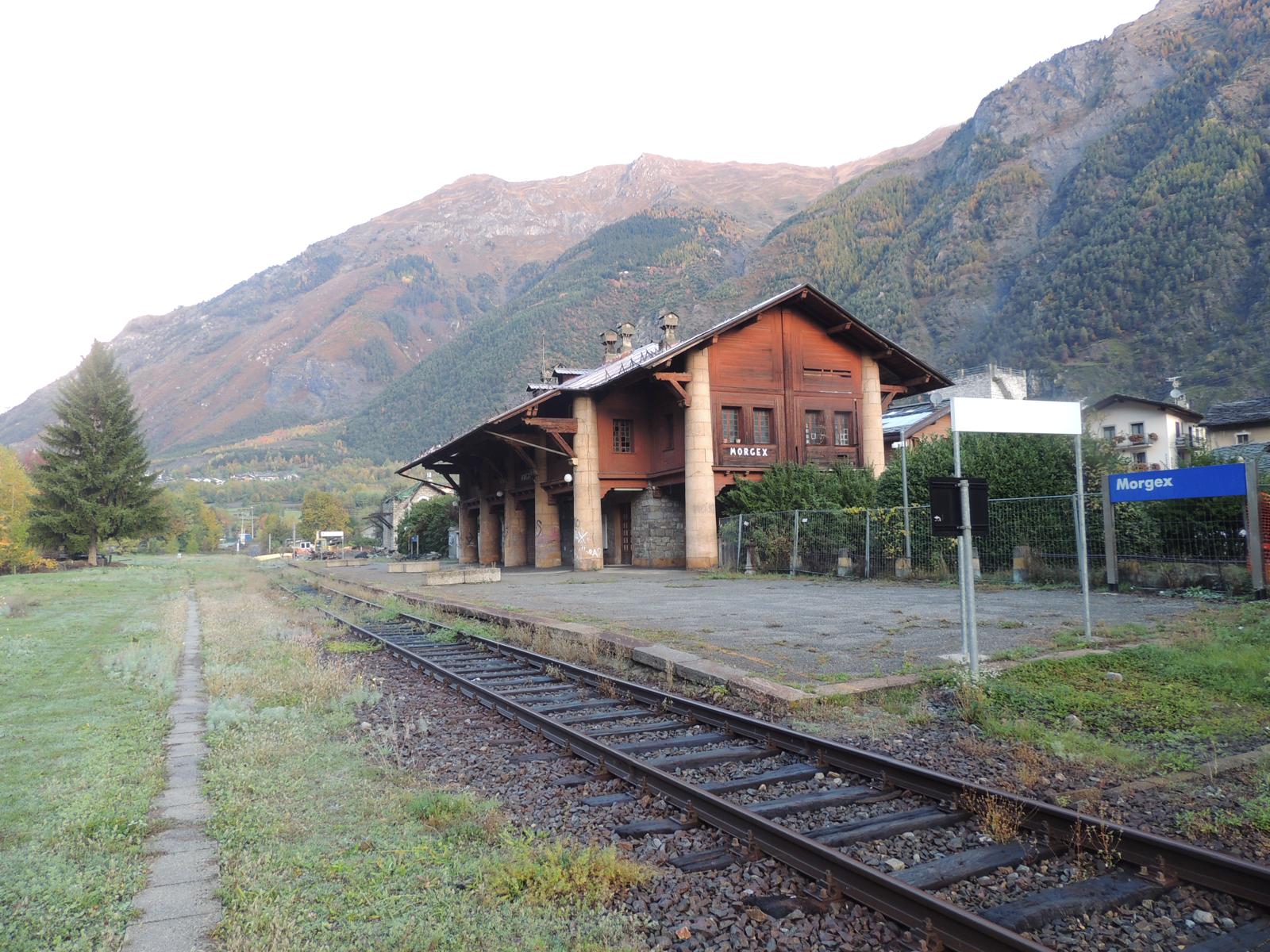
The future of the long-closed Aosta–Pré-Saint-Didier railway has become one of the most debated issues in Italy’s Aosta Valley after the Regional Council approved its new Regional Transport Plan, prompting calls for a referendum on whether the railway should be abandoned in favour of a Bus Rapid Transit (BRT) system.
The discussion goes beyond transport policy. For residents, commuters and visitors travelling towards Courmayeur, La Thuile and the western side of the valley, the decision will shape mobility for decades.
Regional Government backs Bus Rapid Transit
The newly approved Regional Transport Plan confirms the regional government’s preferred strategy: replacing the former railway connection with a Bus Rapid Transit system linking Aosta with the Upper Valley.
Regional authorities argue that reopening the railway would require enormous investment while offering uncertain benefits. According to the regional government, the line is not included in Italy’s national railway investment programme and currently has no funding allocated.
Officials also say the BRT system would provide greater flexibility while integrating with the rest of the regional public transport network.
Greens demand referendum
Not everyone agrees.
Alleanza Verdi e Sinistra (AVS), the only political group to vote against the transport plan, is now calling for a regional referendum on the future of the railway.
According to AVS, the plan removes approximately 32 kilometres of railway infrastructure while adding around 35 kilometres of new road infrastructure, representing what it describes as a political choice favouring roads over rail.
The party also argues that the proposed Bus Rapid Transit project has not been studied in sufficient detail and questions whether the existing SS26 corridor is suitable for a high-capacity dedicated bus system.
Rather than abandoning the railway, AVS proposes modernising the line through:
- service upgrades;
- removal of level crossings;
- construction of overpasses and underpasses;
- new strategically located stations;
- a redesigned railway better suited to today’s mobility needs.
The party says this approach would be more consistent with transport policies adopted in other Alpine regions such as Trentino-Alto Adige and neighbouring Switzerland.
Other parties take different positions
While AVS has become the most vocal opponent of the plan, the political landscape is more nuanced.
The Democratic Party (PD) broadly supported the Regional Transport Plan but called for a serious evaluation of the railway’s future rather than dismissing it outright.
Meanwhile, Lega and Renaissance supported a motion requesting that future studies also examine the possibility of converting part of the former railway corridor into a cycling route if rail services are not restored.
Other coalition members largely backed the government’s strategy, arguing that the region needs a realistic long-term transport plan ahead of future motorway concession changes expected in the coming years.
Tourism implications
Although the railway has been closed since 2015, its future remains important for mountain tourism.
The line historically connected Aosta with Pré-Saint-Didier, the gateway to Courmayeur and the Mont Blanc area. Restoring rail service has long been viewed by some stakeholders as an opportunity to improve sustainable access to one of Italy’s most important alpine destinations.
Supporters of the Bus Rapid Transit project argue that modern electric buses could deliver similar benefits at a fraction of the cost, while critics believe abandoning the railway would permanently remove an important strategic transport corridor.
With calls now growing for a public referendum, the debate is moving beyond technical planning and becoming one of the most significant political discussions surrounding mobility in the Aosta Valley.
Whether the issue ultimately reaches voters remains uncertain, but the future of rail transport in Italy’s smallest region is once again firmly back in the spotlight.
Read More:
- Must-Read Guide to Courmayeur
- Must-Read Guide to Aosta.
- Must-Read Guide to Morgex
- Must-Read Guide to Pila
- Punta Helbronner or Aiguille du Midi, which one to do?
- Which Ski Resorts are truly Leading Sustainability?
- Ten Years without the Aosta-Pre-St-Didier railway.
Sources
- ANSA Valle d’Aosta – AVS calls for referendum on the Aosta–Pré-Saint-Didier railway.
- Aostasera – Regional Council approves the new Regional Transport Plan.
- Gazzetta Matin – Debate in the Regional Council and positions of the political parties.
- La Vallée Notizie (2 August 2026 print edition)
- La Prima Linea – AVS relaunches referendum proposal

Planning your next trip to the Italian Alps?
If you’re heading to the Aosta Valley, take a look at Il Cuore della Valdigne, our family-owned apartment in Morgex, available for rent when we’re not using it ourselves.
It’s an ideal base to:
- Ski in Courmayeur, La Thuile and Pila
- Enjoy the mountains in summer (hiking, biking, nature)
- Explore the Mont Blanc valley in a quieter, more authentic setting.
Check my Mountain Art on my Shop
You can go to my shop and see what have been inspiring me lately, lots mountain landscapes in soft pastels, and now in oils too. Go here to check my latest works!

Featured Image: The abandoned train station at Morgex, part of the Aosta-Pre-St-Didier railroad that has not been operating for several years now. Photo: The-Ski-Guru.


Discover more from The-Ski-Guru
Subscribe to get the latest posts sent to your email.
 Subscribe to The-Ski-Guru here.