

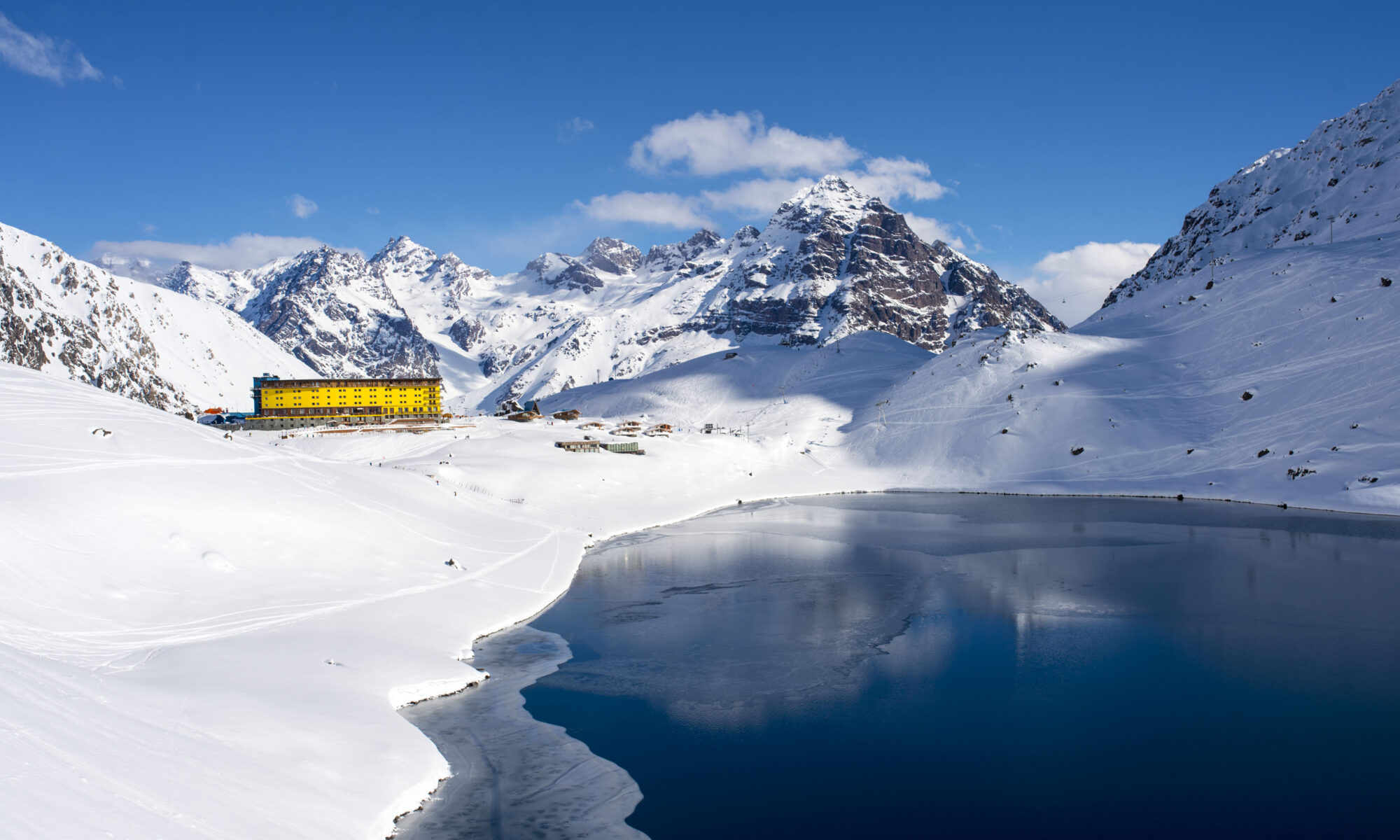
After opening late because of insufficient snow and then losing almost one-third of its season to a prolonged road closure, Ski Portillo has accumulated more than seven metres and will now continue operating until 11 October.
Ski Portillo has extended its 2026 season by more than two weeks, completing an extraordinary turnaround in a winter that began with too little snow, delivered one of the largest storm cycles in recent years and then left the Chilean resort largely isolated during a crucial part of its short operating season.
The resort had originally planned to close on 26 September. It will now continue operating until Sunday 11th October, with a 20% discount available for stays between 30 September and the new closing date.
Portillo attributed the extension to the exceptional amount of snow received this winter. The resort announced more than seven metres of accumulated snowfall, while its official snow report was showing a seasonal total of 8.19 metres by 21 August.
However, the abundance of snow tells only part of the story.
A Season That Began With Too Little Snow
Portillo had initially planned to open on 20 June, in time for the beginning of the main South American winter holiday period.
Historically, the resort aims to open around the end of June. As with every ski area relying heavily on natural snowfall, this is always subject to conditions, but being operational by early July is particularly important. Families from Chile, Argentina, Brazil and other South American markets traditionally travel during their winter school holidays.
In 2026, the expected snowfall did not arrive in time. Although an early storm produced approximately 40 centimetres and the resort supplemented it with snowmaking, Portillo said it did not yet have the base required to open safely and provide an adequate skiing experience.
The planned 20 June opening was therefore postponed.
Portillo eventually began limited operations on 4 July, exclusively for hotel guests. Only three runs — Plateau, Las Lomas and Corralito — were initially available, and the resort was not yet accepting day skiers.
Then, just ten days after the delayed opening, the situation changed completely.
From Snow Shortage to an Exceptional Storm
On 14 July, Portillo closed its slopes and access preventively ahead of a major storm.
By 23 July, more than five metres of snow had fallen. The resort described the duration and intensity of the storm as highly unusual and reported that there was no clear window in which guests could be transported safely into or out of Portillo, either by road or air.
Subsequent storms pushed the seasonal accumulation beyond seven metres and eventually above eight metres.
The snow transformed conditions on the mountain but created another problem: Portillo’s only road access, Chile’s Route 60-CH, remained closed for weeks.
The road continues beyond the resort towards the Los Libertadores border complex and the Cristo Redentor tunnel, forming the principal land crossing between Chile and Argentina. Portillo is situated approximately four to five kilometres below the tunnel, meaning visitors can reach the resort without the international border itself being open.
Nevertheless, access to Portillo continued to be managed as part of the wider international corridor.
Snow on the Mountain, but Guests Unable to Reach It
Once the storm had passed, the prolonged closure became increasingly controversial.
Portillo said that the section of Route 60-CH leading to the resort had been completely cleared for more than a week, with both lanes available and in safe condition, but normal guest access remained restricted.
The resort argued that the road to Portillo should have been considered separately from the full reopening of the Los Libertadores crossing into Argentina.
Miguel Purcell, general manager of Ski Portillo, said the closure affected more than 550 employees and their families, as well as suppliers, local businesses and the wider tourism economy of the Los Andes area.
“In an industry that lasts only three months, we have already lost practically one-third of the operation,” Purcell wrote in a letter published by the Chilean press.
According to Purcell, the direct loss to Portillo amounted to several million dollars, without counting the indirect impact on tourism and the regional economy.
The resort acknowledged that closing the road had been necessary while dangerous conditions persisted. Its criticism centred on why the access restriction remained in place after, according to Portillo, the relevant section had been cleared and made safe.
The authorities maintained that all the necessary safety protocols had to be completed and that the reopening of the route would take place progressively.
An Unusually Public Dispute
The dispute prompted unusually direct criticism from within Portillo’s ownership family.
Ellen Guidera, wife of longtime resort owner Henry Purcell and a member of the Ski Portillo board, questioned why employees were reportedly being allowed to travel along the road while guests were not.
“We employ 500 Chileans and we are allowed to bring them up the road but not our guests. Why not?” Guidera wrote on Facebook.
She accused the provincial authorities of unnecessarily linking access to Portillo with the reopening of the Argentine side of the border and appealed directly to Chilean President José Antonio Kast to intervene.
Her comments were personal and sharply worded, but reflected the frustration felt by the resort after weeks of exceptional snow conditions without the ability to receive its normal volume of guests.
In a separate opinion article, Portillo, Much More Than Skiing, Guidera emphasised the broader significance of the resort and its relationship with generations of employees, guests and the surrounding community.
Portillo is not simply a collection of ski lifts and hotel rooms. Its distinctive all-inclusive model, long-serving staff and international clientele have created a community that returns year after year. When the road closes, the impact therefore extends well beyond skiers missing days on the mountain.
A Record 34-Day Border Closure
The international Los Libertadores–Cristo Redentor crossing remained closed for 34 days, reportedly the longest interruption in its history.
A gradual reopening began on 18 August, initially prioritising freight traffic. The process reflected the wider importance of Route 60-CH, which is not merely a tourist access road but a strategic commercial link between Chile and Argentina.
The international crossing was expected to reopen to all types of vehicles during the weekend of 22–23 August. As of 21 August, however, Portillo’s own road report continued to show access from both Santiago and Mendoza as closed.
Although the international crossing and access to the resort are closely connected, they are not identical issues. This distinction was at the centre of Portillo’s complaint: the resort maintained that visitors could have been allowed to reach the hotel without reopening the final kilometres to Argentina.
A Wider Problem for Chile’s Ski Industry
The Portillo dispute has coincided with a broader debate over the management of mountain roads in Chile.
On 19 August, Valle Nevado general manager Dominique Rudloff published a forceful appeal for the country to change the way it manages access to its mountain destinations.
Rudloff was referring principally to routes G-21 and G-251, which serve Farellones, El Colorado, La Parva and Valle Nevado rather than Portillo. Nevertheless, the underlying problem is similar.
She argued that vineyards are not surprised by frost, mining operations understand that they work in the desert and ports incorporate heavy seas into their planning. Snowfall, she said, should similarly be treated as an inherent operating condition of the mountains rather than as an unforeseen emergency.
Rudloff called for sufficient snow-clearing machinery, trained operators, overnight working schedules, improved forecasting, sensors and technology, and a clearly identified authority capable of coordinating the different organisations responsible for mountain access.
Road closures may be necessary when risks cannot be controlled, she argued, but they should not become the habitual response to a phenomenon that can be anticipated and managed.
Portillo and Valle Nevado depend on different roads, but the two cases point to the same structural weakness. Chile has internationally recognised ski destinations and a mountain tourism economy supporting thousands of jobs, yet its resorts remain vulnerable not only to snowfall, but also to the country’s ability to manage that snowfall and keep essential routes operating safely.
Sixty Years After the Portillo World Championships
The timing of the disruption carried additional symbolism.
Exactly 60 years ago, between 5 and 14 August 1966, Portillo hosted the Alpine World Ski Championships. It remains the only edition of the championships ever held in the Southern Hemisphere.
Instead of celebrating the anniversary with a fully operating resort, Portillo reached August 2026 having spent more than three weeks without normal road access and having lost a substantial part of its most important commercial period.
The contrast is striking: a resort that once brought the world’s best alpine racers to the Chilean Andes had exceptional snow on its slopes but could not bring its regular guests up the road.
October Skiing Offers a Partial Recovery
The extension to 12 October cannot recover the peak winter weeks lost during July and August. School holidays, international bookings and winter demand cannot simply be transferred into spring.
It does, however, offer Portillo an opportunity to regain part of an extraordinarily disrupted season.
Spring at Portillo typically brings longer days, more sunshine and a quieter atmosphere. This year, it will also bring a much deeper snowpack than would normally be expected so late in the season.
The resort is offering a 20% discount on stays between 30 September and 12 October, subject to availability and conditions.
For Portillo, the 2026 season has moved from one extreme to another: from insufficient snow to more than eight metres; from a delayed and highly restricted opening to weeks of isolation; and now from a planned September closing to skiing deep into October.
The extension is welcome news. But the season has also left Chile’s ski industry with a larger question: whether a country seeking to establish itself as a world-class mountain destination can develop the infrastructure and coordination required to keep those mountains safely accessible when winter delivers precisely what the resorts need most — snow.
Sources
Ski Portillo — 2026 Season Update
Ski Portillo — Current Snow and Road Conditions
El Mostrador — Portillo, mucho más que ski
Emol — Portillo’s Complaint Over the Route Closure
The Clinic — Portillo Closed for More Than 20 Days
La Tercera — Gradual Reopening of Route 60-CH
Chilean Border Crossings Authority — Los Libertadores
Valle Nevado — The Road the Mountain Needs
Read More
South America Ski Season 2026: Resort Openings, Snow Updates and What’s New
Andes Snowstorm Transforms Skiing in Chile and Argentina
The Must-Read Guide to Portillo, Chile
Mountain Infrastructure Risk in the Alps & Pyrenees
Planning your next trip to the Italian Alps?
If you’re heading to the Aosta Valley, take a look at Il Cuore della Valdigne, our family-owned apartment in Morgex, available for rent when we’re not using it ourselves.
It’s an ideal base to:
- Ski in Courmayeur, La Thuile and Pila
- Enjoy the mountains in summer (hiking, biking, nature)
- Explore the Mont Blanc valley in a quieter, more authentic setting.
Featured Image: Aereal View of Portillo. Photo by Pia Vergara. Courtesy Ski Portillo.


Discover more from The-Ski-Guru
Subscribe to get the latest posts sent to your email.
 Subscribe to The-Ski-Guru here.
You must be logged in to post a comment.