

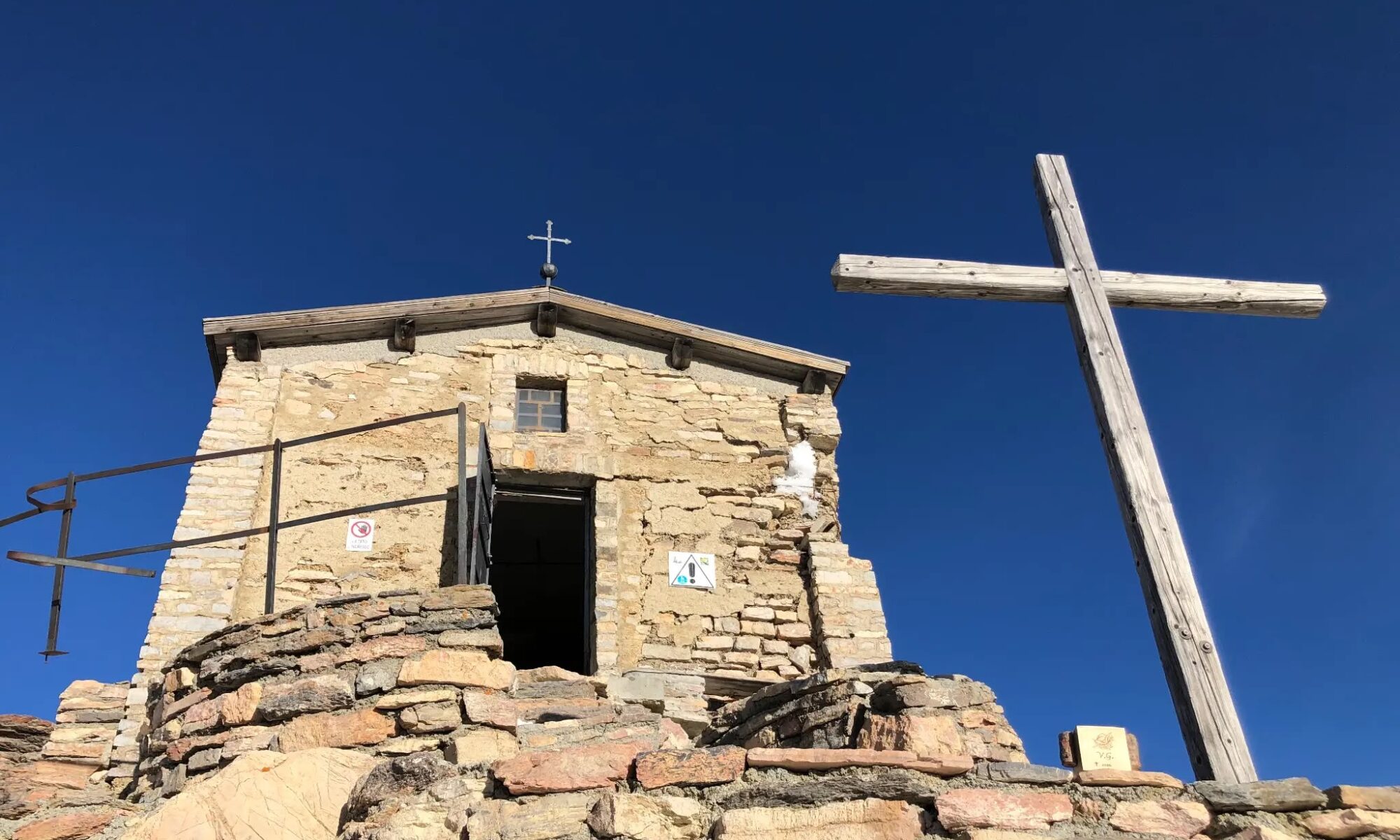
A centuries-old chapel high above the French-Italian border has survived Alpine winters, storms and changing frontiers. What it may not survive is the ground beneath it beginning to thaw.
The tiny Notre-Dame-des-Sept-Douleurs chapel on Mont Thabor, perched at around 3,170 metres in the French Alps, is to be dismantled and rebuilt nearby after the degradation of mountain permafrost destabilised the slope on which it stands.
The chapel sits close to the summit of the 3,178-metre Mont Thabor, overlooking the Vallée Étroite between Névache in France and Bardonecchia in Italy.
Its geography is almost as unusual as its predicament.
Although the chapel stands on French territory, within the commune of Névache, it belongs to the Italian municipality of Bardonecchia — a legacy of the shifting border between France and Italy after the Second World War.
Now the two sides are working together to save a building whose history stretches back centuries.
A Chapel Above 3,000 Metres
The chapel is regarded as the highest religious building in France and has been a place of pilgrimage for centuries.
Historical records indicate that a chapel existed here by at least the early 17th century, although traditions surrounding the site go back further.
The building was reconstructed in wood in 1694 and rebuilt in masonry in 1897, largely through the efforts of parishioners from Mélezet, today part of Bardonecchia. It was restored again in 1951.
A Way of the Cross was established on the final slopes of Mont Thabor in 1860, following a typhoid epidemic. The tradition of climbing to the chapel has continued ever since.
On 16 July 2026, around 50 people once again made the long ascent from the Vallée Étroite for the traditional annual pilgrimage and Mass.
But this year’s gathering also brought important news about the chapel’s future.
After years of studies and administrative procedures, permission has now been granted for the building to be dismantled and reconstructed on more stable ground nearby.
The Mountain Beneath It Is Moving
The problem is not primarily the chapel itself.
It is what lies underneath it.
The building stands on unstable mountain debris containing ice-rich permafrost — ground that traditionally remains frozen for long periods.
As temperatures rise and that frozen ground degrades, the amount of liquid water within the slope increases and the terrain can begin to deform and move.
The consequences for the chapel have become increasingly visible.
Large cracks developed through the structure and the building was eventually closed for safety reasons in 2021. Emergency measures were installed to hold and protect it while specialists investigated what was happening beneath the site.
Scientific research published in Géomorphologie: Relief, Processus, Environnement examined the chapel using several techniques, including drone photogrammetry, satellite radar measurements and electrical resistivity tomography to investigate the condition of the ground.
The findings were striking.
Satellite measurements indicated approximately 30 centimetres of displacement on the south-eastern slope between 2015 and 2024, while terrain models showed more than 25 centimetres of subsidence in part of the area below the chapel between 2021 and 2022.
Researchers linked the instability to the degradation of mountain permafrost and increasing liquid water within the slope.
In other words, repairing the cracks in the chapel would not solve the underlying problem.
The mountain itself is moving.
Moving a Chapel Stone by Stone
The solution is an extraordinary one.
Rather than continually repairing the building in its current location, the plan is to dismantle the chapel and reconstruct it on more stable terrain nearby.
The new site is around 40 to 60 metres from its current position, where studies indicate that bedrock lies closer to the surface and the terrain should be less vulnerable to permafrost-related movement.
Moving a historic masonry chapel at more than 3,000 metres will nevertheless be a highly unusual engineering and conservation operation.
Access is difficult, weather windows are short and every intervention takes place in an exposed high-Alpine environment.
But leaving the building where it is could eventually mean losing it altogether.
A French Chapel That Belongs to Italy
There is another curious chapter to the story.
For centuries, the Mont Thabor area was connected with communities on what is now the Italian side of the Alps, particularly Mélezet and Bardonecchia.
The frontier changed following the 1947 Treaty of Paris, when the Vallée Étroite and surrounding territory passed from Italy to France.
The chapel, however, remained the property of the Comune di Bardonecchia.
Today it therefore stands in France, belongs to an Italian municipality and remains connected culturally and religiously with communities on both sides of the border.
The annual pilgrimage reflects that history, bringing together walkers and worshippers from France and Italy.
When Alpine Warming Reaches Built Heritage
The fate of the Mont Thabor chapel is also part of a much bigger story unfolding across the Alps.
Thawing permafrost and retreating glaciers are changing the stability of high-mountain terrain, affecting rock faces, climbing routes and, increasingly, infrastructure built in places that were once considered relatively stable.
Mountain huts, lift infrastructure and other high-altitude structures are among the assets being studied as the thermal conditions of Alpine terrain change.
The Mont Thabor chapel provides an unusually tangible example.
For centuries, people repaired the building after storms, harsh winters and the natural deterioration that comes with maintaining a structure at more than 3,000 metres.
This time, repairing the walls is no longer enough.
To save the chapel, they have to move it — because the mountain beneath it is changing.
Read More:
- Alps Heatwave Forces Glacier and Mountain Closures as Freezing Level Soars
- 15,000m³ Rockfall at Aiguille du Midi as Extreme Heat Destabilises Mont Blanc
- Monte Pelmo Rockfalls Raise New Questions Over Alpine Mountain Stability
- Where to Check Mountain Closures in the Alps
Sources:
- Corriere della Sera – Bardonecchia, la cappella del Monte Thabor sta franando
- Le Dauphiné Libéré – Victime du climat, le plus haut édifice religieux de France sera déplacé
- CAI Bardonecchia – Il Pellegrinaggio sul Monte Thabor: Fede Senza Confini e la Svolta Storica per la Cappella in Vetta
- Géomorphologie: Relief, Processus, Environnement – La chapelle du Thabor (3165 m), un patrimoine sensible à l’évolution du permafrost de montagne
Planning your next trip to the Italian Alps?
If you’re heading to the Aosta Valley, take a look at Il Cuore della Valdigne, our family-owned apartment in Morgex, available for rent when we’re not using it ourselves.
It’s an ideal base to:
- Ski in Courmayeur, La Thuile and Pila
- Enjoy the mountains in summer (hiking, biking, nature)
- Explore the Mont Blanc valley in a quieter, more authentic setting.
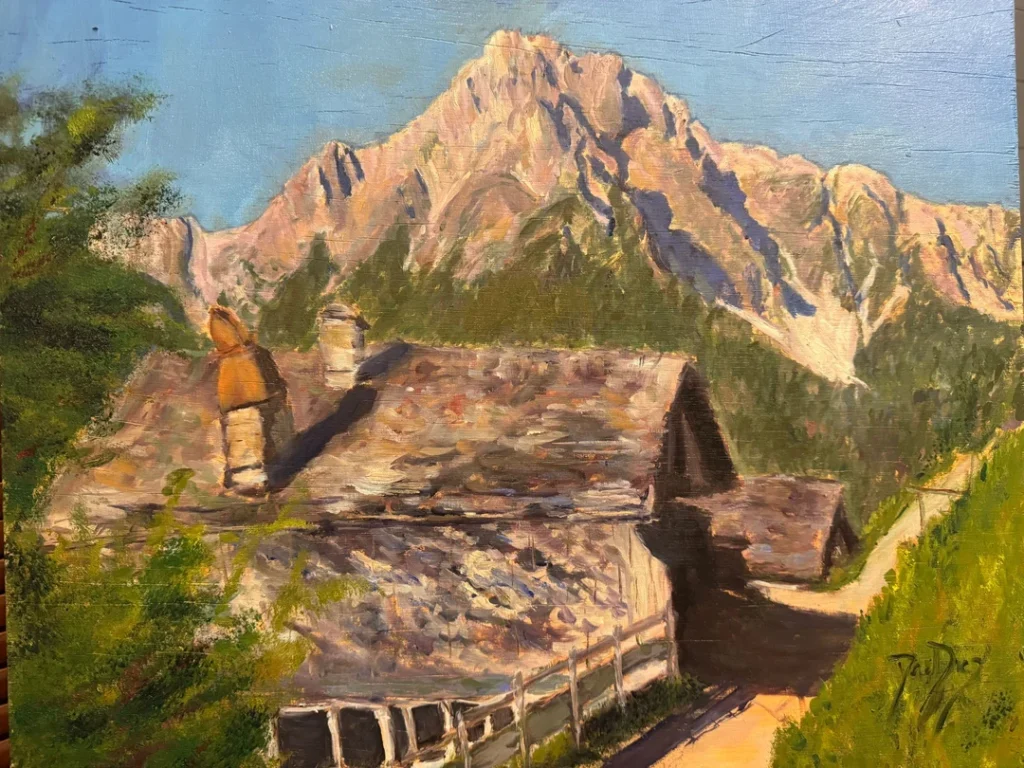
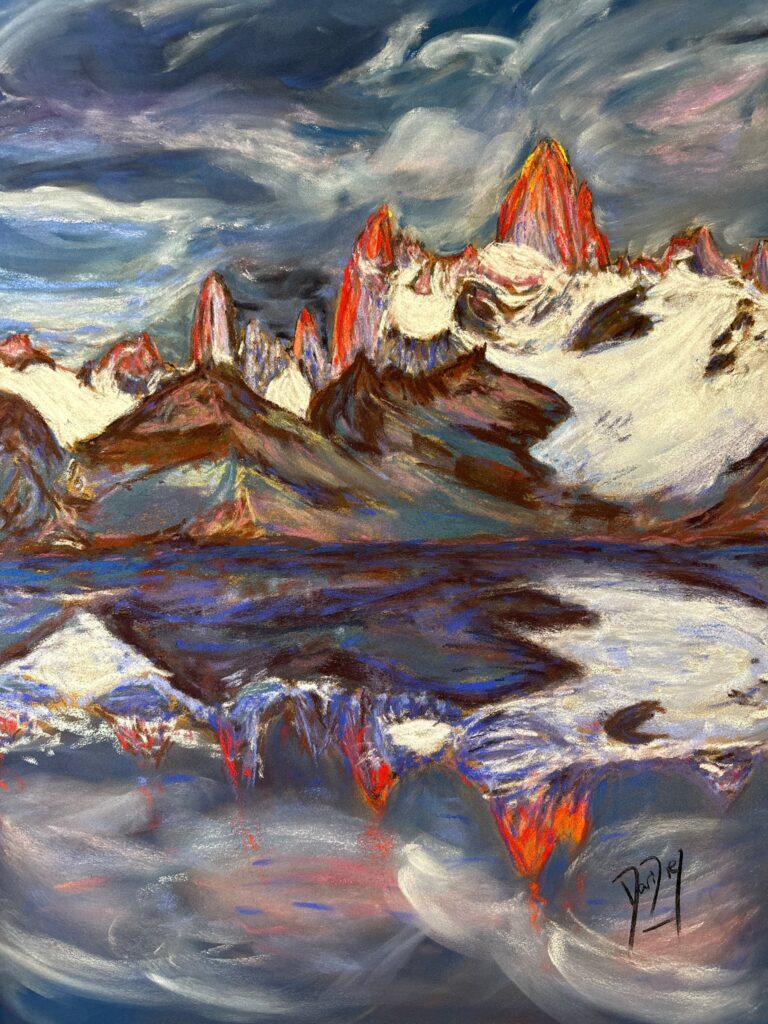
Check my Mountain Art on my Shop
You can go to my shop and see what have been inspiring me lately, lots mountain landscapes in soft pastels, and now in oils too. Go here to check my latest works!
Featured Image: Capella di Monte Tabor. Photo: Outdooractive.com


Discover more from The-Ski-Guru
Subscribe to get the latest posts sent to your email.
 Subscribe to The-Ski-Guru here.
You must be logged in to post a comment.