

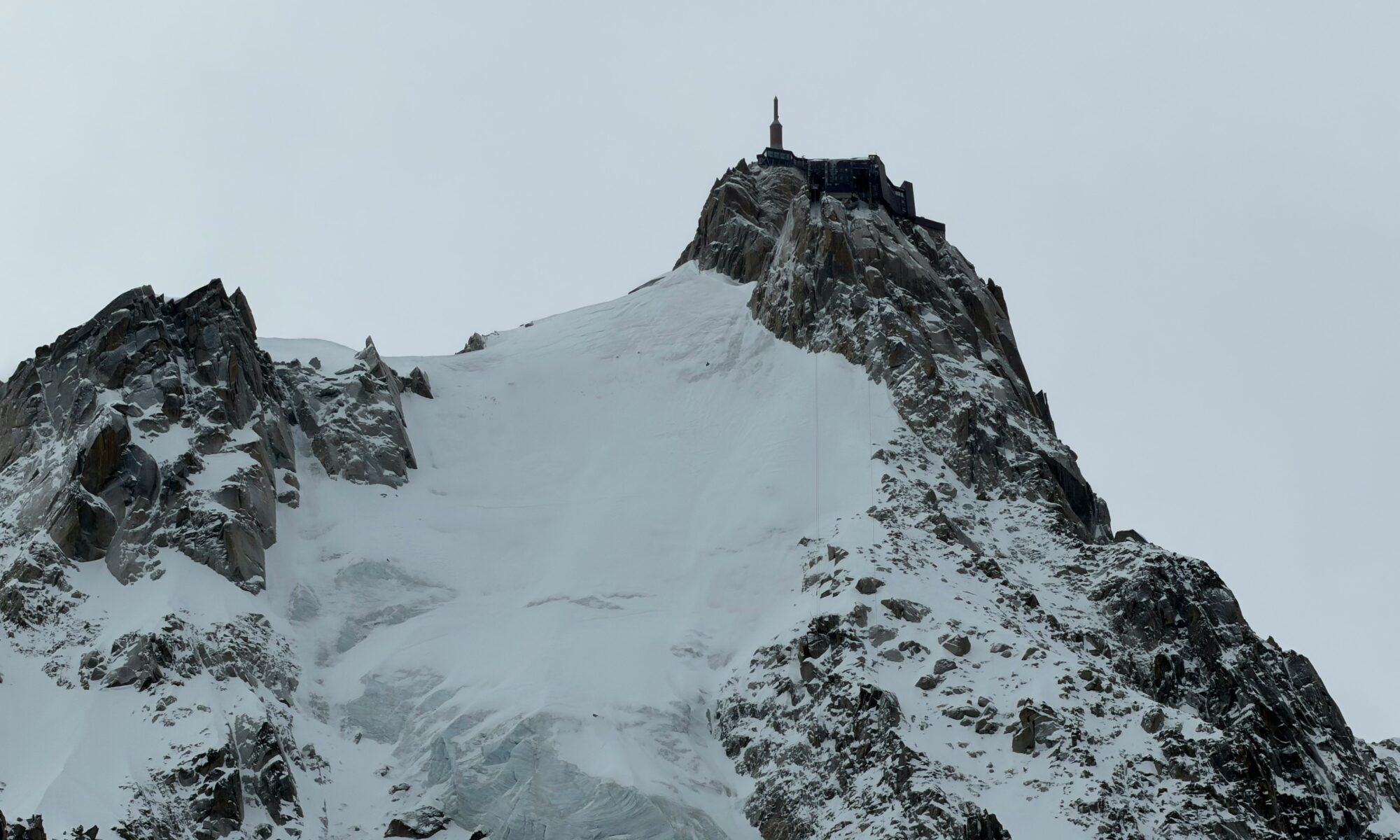
A major rockfall estimated at around 15,000 cubic metres has occurred on the north face of the Aiguille du Midi above Chamonix, adding to growing evidence of instability across the Mont Blanc massif during this summer’s extreme heat.
The collapse happened around midday on Wednesday, 12 August, at more than 3,600 metres altitude, according to French regional newspaper Le Dauphiné Libéré.
The event comes during an exceptionally difficult period in the high Alps, where sustained heat is accelerating glacier melt, warming permafrost and increasing the instability of some high-altitude rock faces.
Around 15,000 Cubic Metres of Rock Fell
Ludovic Ravanel, a geomorphologist at the CNRS and member of the Compagnie des Guides de Chamonix, estimated the volume of the collapse at approximately 15,000 cubic metres.
The starting point was identified high on the Mallory area of the Aiguille du Midi, close to a hanging glacier. Rock then fell down the north face, producing an enormous cloud of rock and dust.
The event is significant not only because of its size, but because it forms part of a much wider pattern being documented across the Mont Blanc massif this summer.
Researchers have already recorded more than 200 separate rock destabilisation events, according to Ravanel.
7,000-Year-Old Ice Is Disappearing From Inside the Mountain
Perhaps the most striking aspect of the latest collapse is what it reveals about the interior of the mountain.
Le Dauphiné Libéré reports that ice dating back approximately 7,000 years is being lost as exceptionally high temperatures affect high-altitude rock faces.
This is not simply the glacier ice visible on the surface.
Permafrost also exists within cracks and fractures in high mountain rock. When frozen, this ice can contribute to the stability of the rock mass. As temperatures rise and the ice warms or melts, fractures can widen and sections of rock can become more susceptible to collapse.
The Aiguille du Midi is one of the most closely studied high-altitude permafrost sites in the Alps.
A scientific study published in The Cryosphere in April 2026 examined permafrost dynamics at the 3,842-metre summit using repeated and automated electrical resistivity measurements. Researchers detected seasonal and multi-year changes as well as a slight decrease in permafrost resistivity, consistent with warming.
Read more: Nepal Glacier Disaster: Could It Happen in the Alps? — From the Himalayas to Mont Blanc, we examine how glacier retreat, rock instability and cascading mountain hazards are changing the risks facing high-mountain regions.
What About the Aiguille du Midi Infrastructure?
The scale of the rockfall inevitably raises another question: what does degrading permafrost mean for the extensive infrastructure built into the Aiguille du Midi itself?
The 3,842-metre summit is far more than a natural rock pinnacle. Major tourist and technical infrastructure has been constructed directly into and around the rock, including the upper cable car station, galleries, tunnels and connections between different parts of the summit complex.
For this reason, the Aiguille du Midi has become an important site for scientific monitoring of high-altitude permafrost.
Researchers have installed instruments on different faces of the mountain and have been studying temperatures and changes inside the rock for years, trying to understand how warming affects the frozen ground beneath and around this extraordinary high-altitude infrastructure.
The latest research provides evidence that the permafrost itself is changing.
That does not mean that the Aiguille du Midi cable car station or summit infrastructure is currently considered unstable. There is no evidence from the latest rockfall to suggest that the station itself is in danger.
Rather, the concentration of major infrastructure at 3,842 metres makes understanding what is happening inside the mountain particularly important as the climate warms.
The latest 15,000m³ collapse provides a dramatic illustration of why this monitoring matters.
A Difficult Week Across the Mont Blanc Massif
The collapse comes during an already dangerous period in the Mont Blanc massif.
On 13 August, climbers were stranded high on the normal Mont Blanc route after authorities temporarily closed access through the Grand Couloir because of intense rockfall risk. Helicopters were used to evacuate some mountaineers unable to descend safely.
Read More: Mont Blanc Route Closure & Helicopter Evacuation
A day later, a 26-year-old climber was killed after being struck by falling rocks elsewhere in the Mont Blanc massif, highlighting the exceptionally unstable conditions currently affecting some high-altitude routes.
Read More: Climber Killed by Rockfall on Mont Blanc
The incidents are separate, but they are occurring against the same background of unusually warm conditions and increasing concern about the stability of high mountain terrain.
Heat Is Changing the High Alps
Rockfall is a natural part of mountain evolution and individual collapses cannot automatically be attributed to climate change.
However, scientific research in the Mont Blanc massif has established a relationship between summer heat, warming and degradation of mountain permafrost and increased rockfall activity.
The issue becomes particularly visible during sustained periods of high temperatures.
Glaciers across the Alps have also been experiencing intense melting this summer, while guides and local authorities have repeatedly had to reassess conditions on traditional mountaineering routes.
For visitors, this does not mean that the entire Mont Blanc massif is unsafe. Conditions can vary dramatically according to altitude, aspect, route and time of day.
Nor does the Aiguille du Midi event imply that high-altitude infrastructure elsewhere in the massif — including Punta Helbronner and the Skyway Monte Bianco on the Italian side — is experiencing the same problems. Local geology, permafrost conditions and infrastructure differ from one location to another.
But this summer is providing another reminder of how quickly conditions in the high mountains can change — and why information from mountain guides, lift operators and local authorities should always be checked before heading into high-altitude terrain.
Read More About Conditions in the Mont Blanc Massif
- New Bivouac Rules Introduced Around Chamonix Mountain Huts
https://www.the-ski-guru.com/2026/08/15/chamonix-bivouac-rules/ - Mont Blanc Route Closure & Helicopter Evacuation
https://www.the-ski-guru.com/2026/08/13/mont-blanc-route-closure-helicopter-evacuation/ - Climber Killed by Rockfall on Mont Blanc
https://www.the-ski-guru.com/2026/08/14/climber-killed-rockfall-mont-blanc/ - Aiguille du Midi Ice Tunnel Closed by Extreme Heat
https://www.the-ski-guru.com/2026/08/04/aiguille-du-midi-ice-tunnel-closure-heat/ - Alps Heatwave: Glacier Closures and Growing Risks
https://www.the-ski-guru.com/2026/08/10/alps-heatwave-glacier-closures/ - Where to Check Mountain Closures in the Alps
https://www.the-ski-guru.com/2026/08/12/where-to-check-mountain-closures-in-the-alps/ - Who Pays for a Mountain Rescue in the Alps (hiking and mountaineering season)
Sources
Le Dauphiné – 15,000m³ rockfall at Aiguille du Midi
The Cryosphere – 2026 Aiguille du Midi permafrost study
The Cryosphere – Aiguille du Midi permafrost research
Planning your next trip to the Italian Alps?
If you’re heading to the Aosta Valley, take a look at Il Cuore della Valdigne, our family-owned apartment in Morgex, available for rent when we’re not using it ourselves.
It’s an ideal base to:
- Ski in Courmayeur, La Thuile and Pila
- Enjoy the mountains in summer (hiking, biking, nature)
- Explore the Mont Blanc valley in a quieter, more authentic setting.
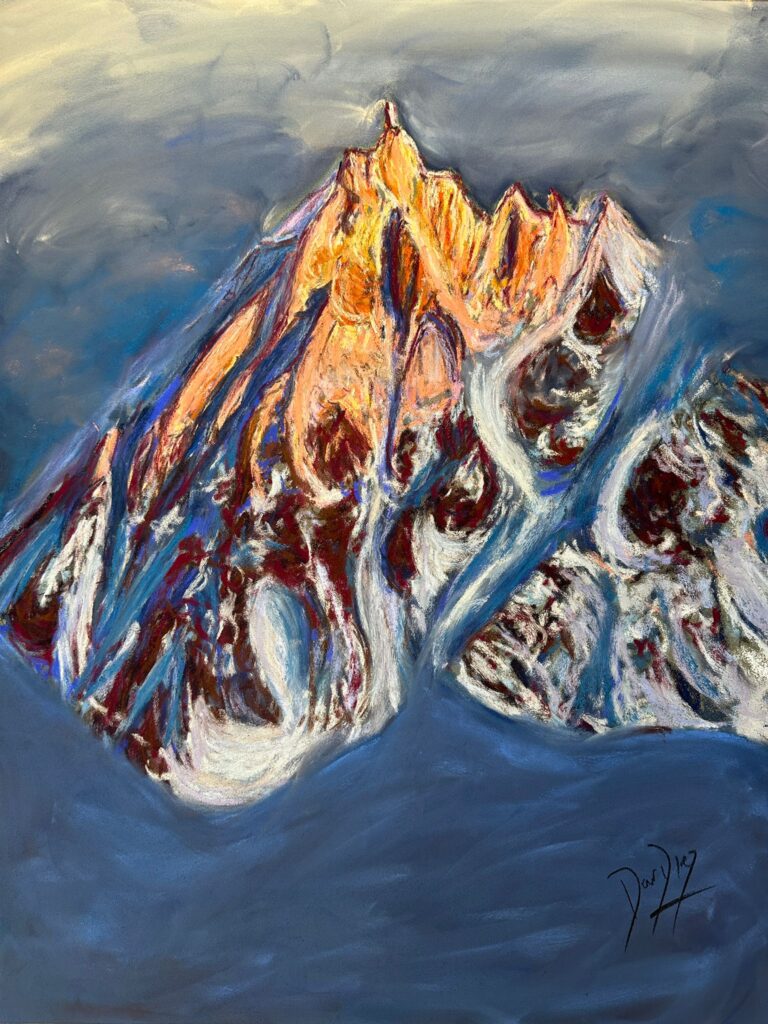
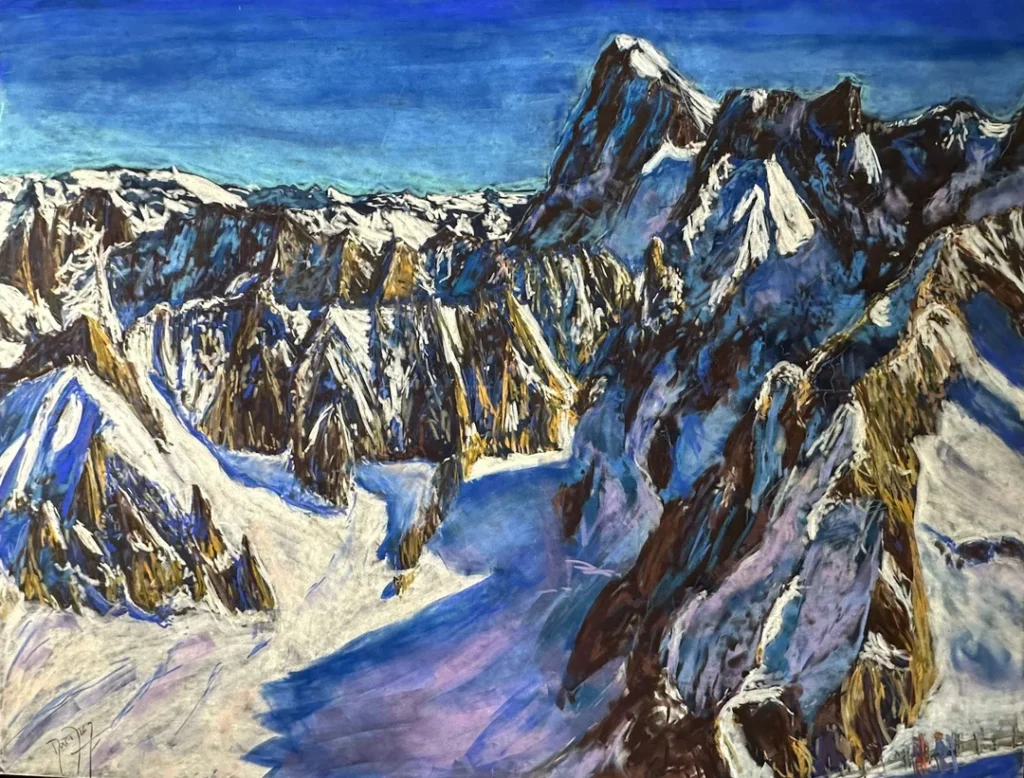
Check my Mountain Art on my Shop
You can go to my shop and see what have been inspiring me lately, lots mountain landscapes in soft pastels, and now in oils too. Go here to check my latest works!
Featured Image: Aiguille du Midi- Photo: Upendra Wanmali. Unsplash.


Discover more from The-Ski-Guru
Subscribe to get the latest posts sent to your email.
 Subscribe to The-Ski-Guru here.
You must be logged in to post a comment.