

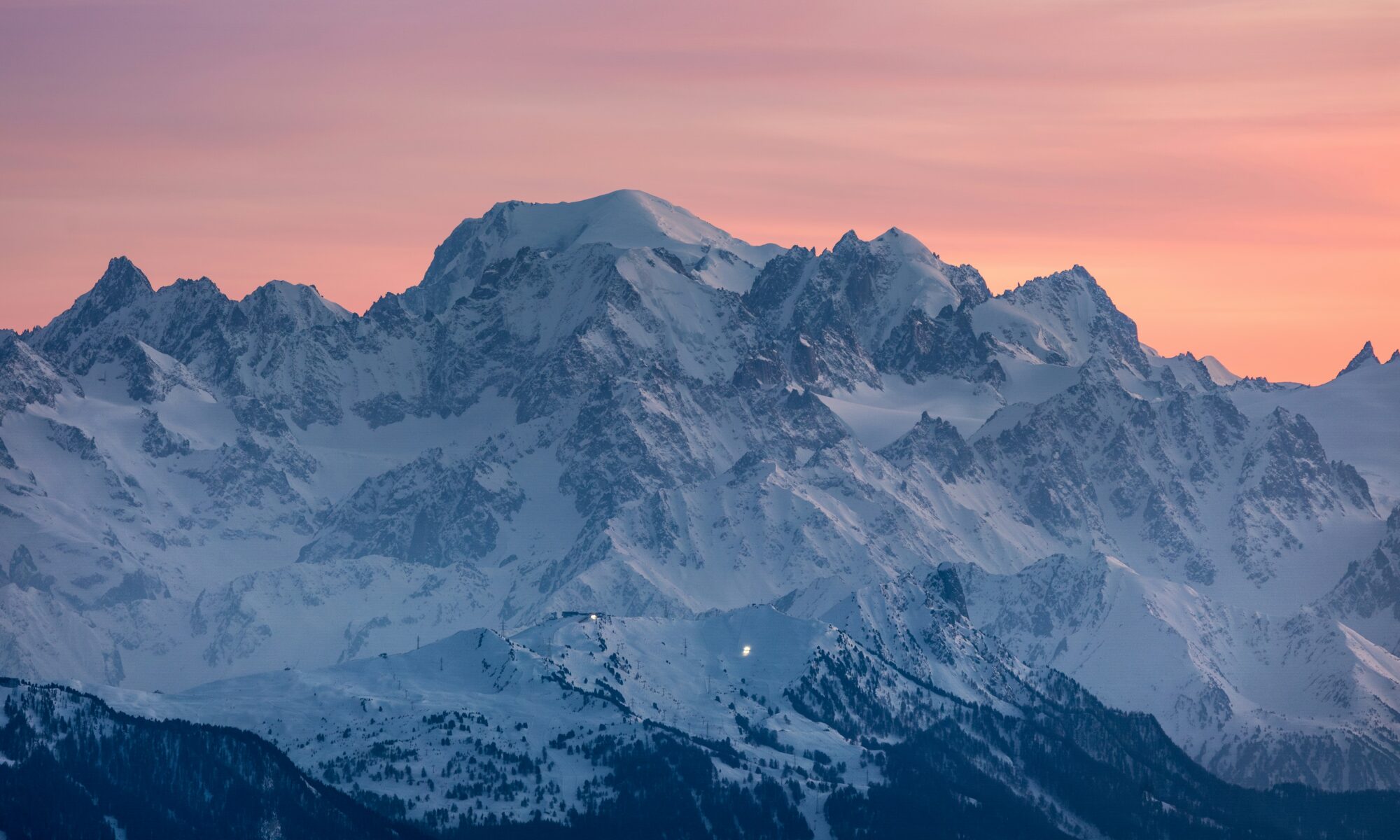
Europe’s highest Alpine summit has gained nearly two metres since 2023, but scientists warn that changes in its snowy peak should not be confused with the wider retreat of Alpine glaciers.
Mont Blanc, the highest mountain in the Alps and Western Europe, has a newly confirmed altitude: 4,807.47 metres above sea level.
The figure was officially announced on 14 October 2026 following a French scientific expedition to the summit in September.
The measurement represents an increase of 1.88 metres compared with 2023, when Mont Blanc stood at 4,805.59 metres.
However, there is an interesting twist: the mountain is actually 1.29 metres lower than it was in 2025.
So, is Mont Blanc growing or shrinking? And what does this tell us about climate change in the Alps?
Why Mont Blanc’s Height Keeps Changing
Unlike a rocky summit, Mont Blanc’s highest point is covered by a thick cap of snow and ice.
Its measured altitude changes according to snowfall, wind, temperature and the redistribution of snow across the summit.
Strong winds can remove snow from one area and deposit it elsewhere, while seasonal weather conditions influence how much snow accumulates.
The mountain’s underlying rock is not growing or shrinking by metres every few years. It is the surface of the snow and ice cap that changes.
The latest measurements illustrate this variability:
| Year | Measured altitude |
|---|---|
| 2023 | 4,805.59 m |
| 2024 | 4,808.51 m |
| 2025 | 4,808.76 m |
| 2026 | 4,807.47 m |
Although the 2026 altitude is higher than the 2023 reading, it remains below the measurements recorded during the previous two years.
A Scientific Expedition to the Roof of the Alps
The September 2026 expedition involved 32 participants, including surveyors, mountain guides, scientists and technical specialists.
The team carried approximately 30 kilograms of scientific equipment to the summit.
On 17 September, they reached the highest point of Mont Blanc at dawn and spent more than two hours conducting measurements in extremely cold conditions.
The expedition combined several technologies:
- Satellite positioning systems to establish the summit’s precise altitude.
- Drone photography, producing more than 1,300 images for a three-dimensional model.
- Ground-penetrating radar to investigate the snow and ice cap and the underlying rock.
- Gravimetric measurements to improve scientific understanding of the mountain’s structure.
The work forms part of a monitoring programme established in 2001 by surveyors in Haute-Savoie.
A Scientific First: Measuring Gravity at the Summit
One of the most significant achievements of the 2026 expedition received less attention than the announcement of Mont Blanc’s new height.
For the first time, scientists from France’s National Institute of Geographic and Forest Information (IGN) successfully measured gravity directly at the summit.
The recorded value was 9.7944689 m/s².
Although gravity varies only slightly between different locations, precise measurements can provide information about the distribution and evolution of mass beneath the surface.
Repeated measurements in future years could help researchers detect changes involving ice and rock, while also improving altitude calculations.
This makes the expedition important not only for cartography but also for long-term scientific monitoring.
Does a Higher Mont Blanc Mean Climate Change Is Slowing?
Not necessarily.
The relationship between Mont Blanc’s altitude and climate change is more complicated than a single measurement might suggest.
The summit’s extreme altitude means that temperatures remain sufficiently low for its upper ice cap to behave differently from glaciers at lower elevations.
Research by glaciologists in Grenoble indicates that the summit ice has remained relatively stable over long periods, despite fluctuations in the snow-covered surface.
This does not contradict the documented retreat and thinning of glaciers elsewhere in the Alps.
A higher summit does not mean that Alpine glaciers are recovering, just as a lower summit does not automatically demonstrate accelerated climate change.
Scientists need long-term observations, including measurements of ice thickness, glacier mass balance, temperature and snowfall, to understand these changes.
Why These Measurements Matter for Alpine Tourism
For visitors to Chamonix, Courmayeur and the wider Mont Blanc region, a difference of one or two metres in summit altitude has no meaningful impact on the mountain’s appeal.
However, the scientific monitoring behind these measurements is increasingly relevant to Alpine tourism.
Changes in glaciers, snow cover and mountain terrain can influence mountaineering routes, access to mountain refuges and the conditions encountered by guides and climbers.
These changes are particularly important during the summer mountaineering season, when exposed rock, unstable terrain and changing glacier conditions can affect traditional routes.
The distinction between conditions at Mont Blanc’s summit and those on surrounding glaciers is therefore essential.
Mont Blanc: A Mountain That Never Stands Still
The latest altitude of 4,807.47 metres is remarkably close to measurements made by Joseph and Henri Vallot in the late nineteenth century.
More than a century later, scientists have far more sophisticated instruments at their disposal, but the fundamental challenge remains the same: understanding a mountain whose snowy summit is continually reshaped by the elements.
The 2026 expedition has provided more than a new number for maps and guidebooks.
By combining satellite measurements, radar, drone imagery and the first gravity reading at the summit, researchers have established valuable information for future comparisons.
Mont Blanc may be taller than it was three years ago, but its changing height is a reminder that mountain environments are complex — and that understanding climate change requires much more than measuring a summit.
Read More on The-Ski-Guru
Chamonix Bivouac Rules: What Hikers and Climbers Need to Know
- Aiguille du Midi or Punta Helbronner: Which One Should you Visit?
Pila–Cogne Cable Car Project: What It Means for Aosta Valley Tourism
Sources
- IGN — Altitude et pesanteur du mont Blanc: récit d’une mission au sommet
- IGN — Une expédition pour mesurer la pesanteur sur le mont Blanc
- Associated Press — Mont Blanc’s snowy crown grows nearly two metres higher in three years
- Euronews — Mont Blanc rises by almost two metres
- AostaSera — Quanto è alto il Monte Bianco? Una nuova spedizione francese
Planning your next trip to the Italian Alps?
If you’re heading to the Aosta Valley, take a look at Il Cuore della Valdigne, our family-owned apartment in Morgex, available for rent when we’re not using it ourselves.
It’s an ideal base to:
- Ski in Courmayeur, La Thuile and Pila
- Enjoy the mountains in summer (hiking, biking, nature)
- Explore the Mont Blanc valley in a quieter, more authentic setting.
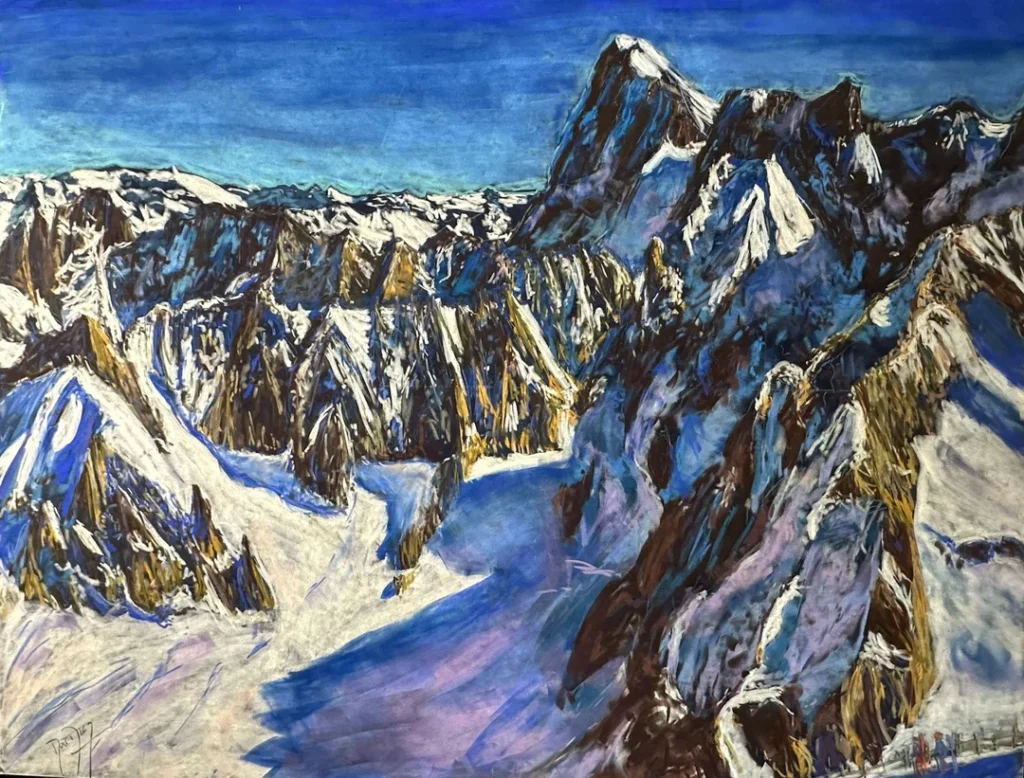
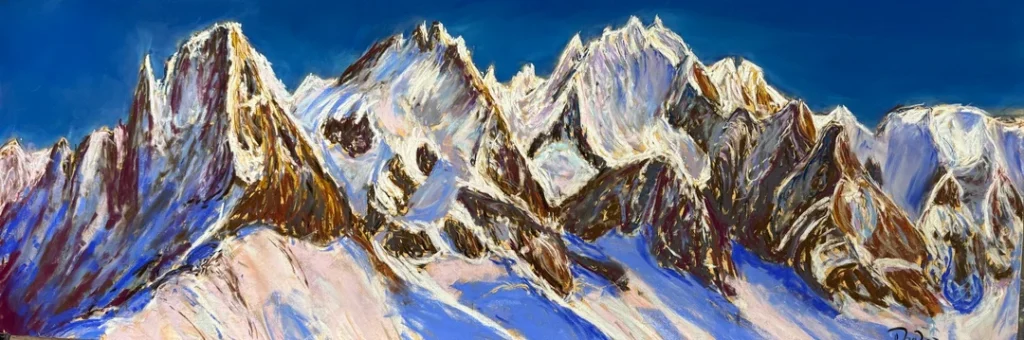
Check my Mountain Art on my Shop
You can go to my shop and see what have been inspiring me lately, lots mountain landscapes in soft pastels, and now in oils too. Go here to check my latest works!
Featured Image: Mont Blanc seen from the French side. Photo credit: Marek Piwnicki. Unsplash.


Discover more from The-Ski-Guru
Subscribe to get the latest posts sent to your email.
 Subscribe to The-Ski-Guru here.
You must be logged in to post a comment.