Mont Blanc Is Growing Again — But What Does Its New Height Really Tell Us?

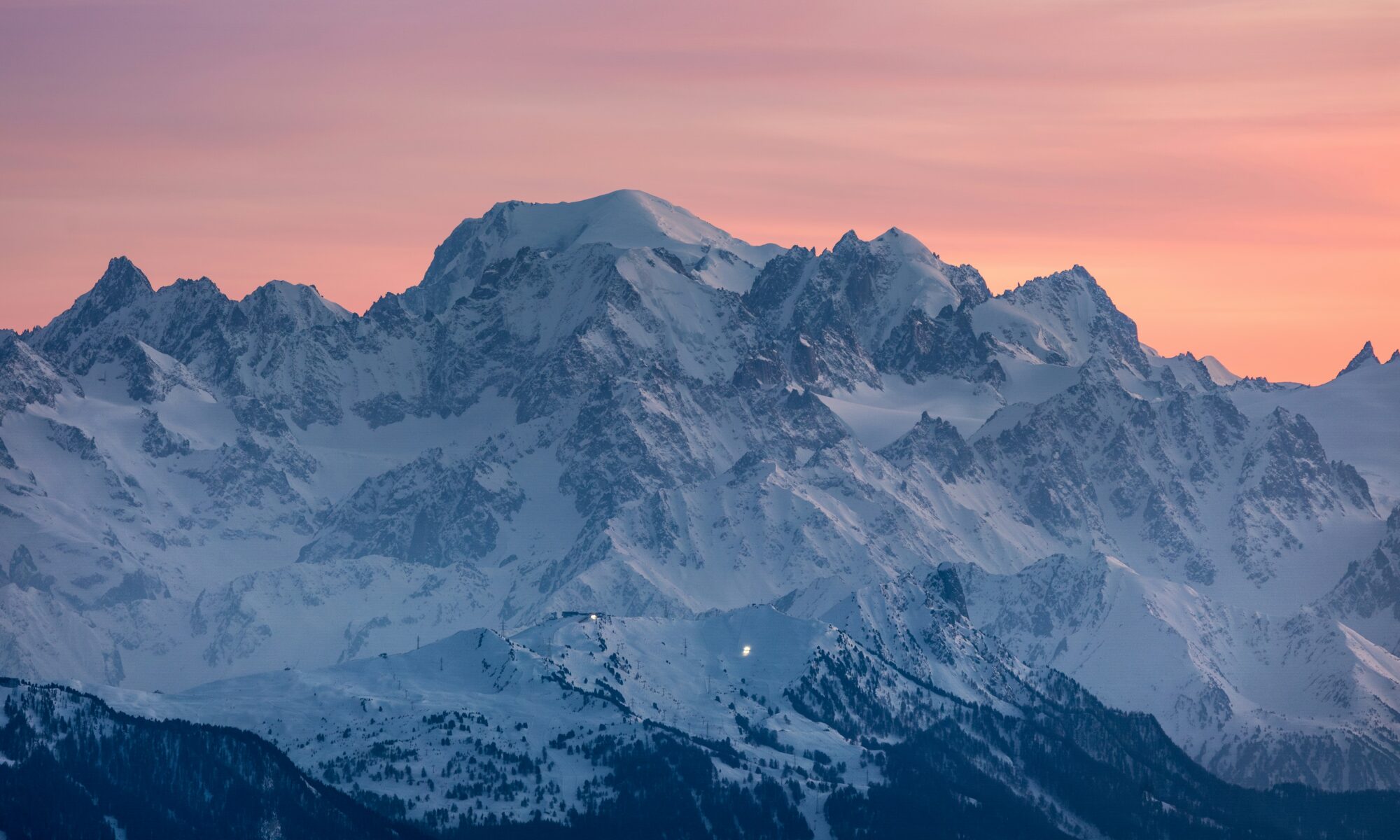
Mont Blanc seen from the French side. Photo credit: Marek Piwnicki. Unsplash.

Europe’s highest Alpine summit has gained nearly two metres since 2023, but scientists warn that changes in its snowy peak should not be confused with the wider retreat of Alpine glaciers.

Mont Blanc, the highest mountain in the Alps and Western Europe, has a newly confirmed altitude: 4,807.47 metres above sea level.

The figure was officially announced on 14 October 2026 following a French scientific expedition to the summit in September.

The measurement represents an increase of 1.88 metres compared with 2023, when Mont Blanc stood at 4,805.59 metres.

However, there is an interesting twist: the mountain is actually 1.29 metres lower than it was in 2025.

So, is Mont Blanc growing or shrinking? And what does this tell us about climate change in the Alps?

Continue reading “Mont Blanc Is Growing Again — But What Does Its New Height Really Tell Us?”
Stelvio Glacier Reopens After Heat Closure – But Summer Skiing’s August Shutdown Still Matters

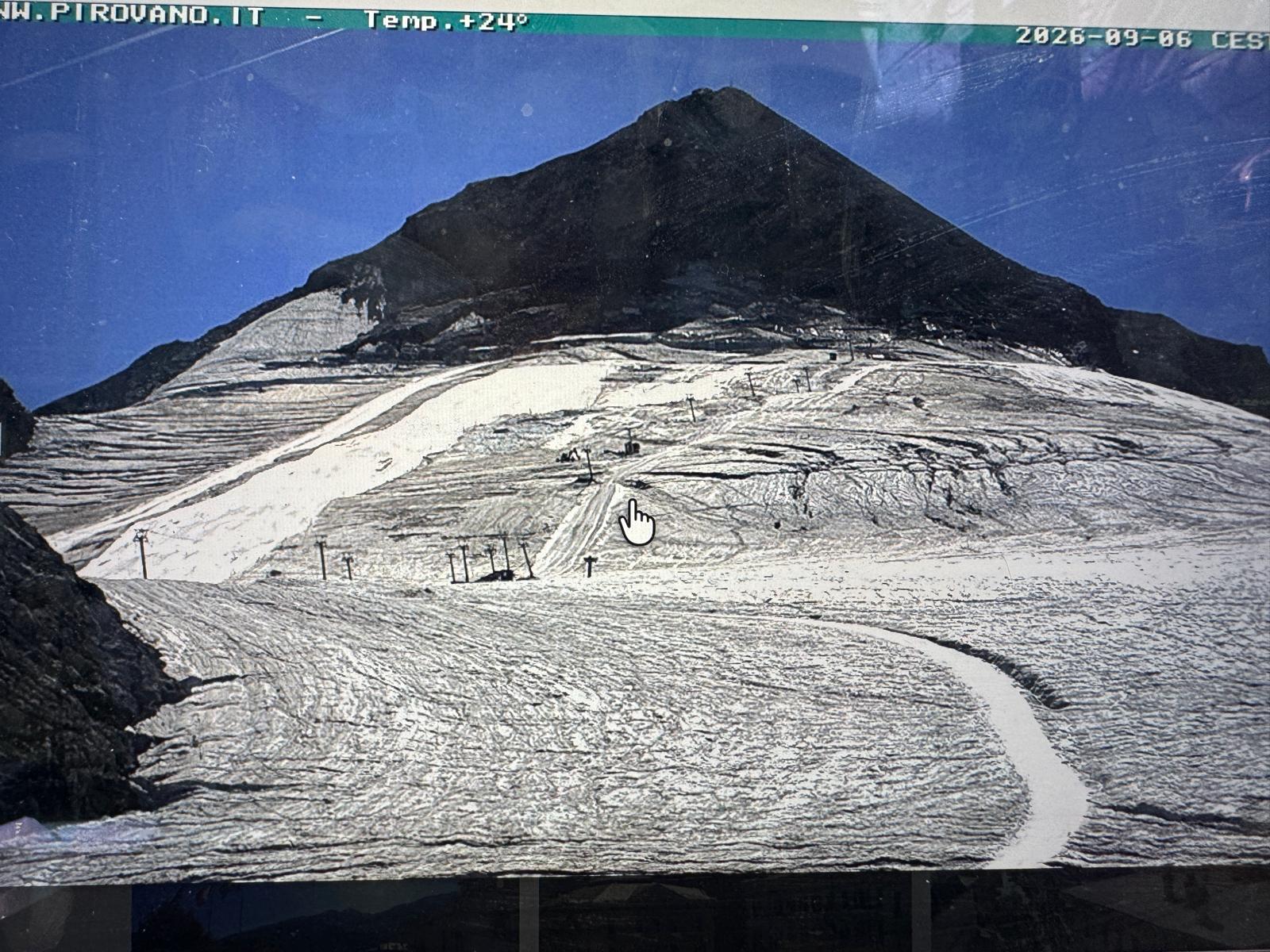
Summer skiing on the Stelvio Glacier in Italy

Italy’s Stelvio Glacier has reopened for summer skiing after a three-week heat-related closure. The return of skiing is welcome news, but it follows an extraordinary August in which high temperatures and poor overnight freezing temporarily brought lift-served summer skiing across the Alps to a halt.

Summer skiing returned to Italy’s Stelvio Glacier on Friday, September 4, after cooler conditions allowed operators to reopen lifts and pistes following a shutdown that began on August 15.

The official Bormio lift-status service confirmed the reopening, with all six Stelvio lift installations operating: the Cristallo, Pajer, Geister 1 and Geister 2 ski lifts, together with the Passo Stelvio–Trincerone and Trincerone–Livrio cable cars.

Not everything has returned to normal, however. Several pistes remain closed, and the Pajer and Cristallo ski lifts are operating only from 6:30 am until midday. The two cable cars operate until 4 pm.

The Stelvio summer season is officially scheduled to run from May 30 until November 1, 2026.

Why Stelvio closed

The August closure was significant because Stelvio had remained open after other Alpine summer ski areas suspended skiing during the summer heat.

SIFAS, the company operating the Stelvio facilities, announced the suspension of skiing from August 15, citing three factors: persistent heat waves reaching high altitude, the absence of sufficient overnight cooling and refreezing of the snowpack, and frequent thunderstorms that had further affected glacier conditions.

Continue reading “Stelvio Glacier Reopens After Heat Closure – But Summer Skiing’s August Shutdown Still Matters”

Summer Skiing Disappears Across the Alps as Extreme Heat Forces Final Glacier Closure

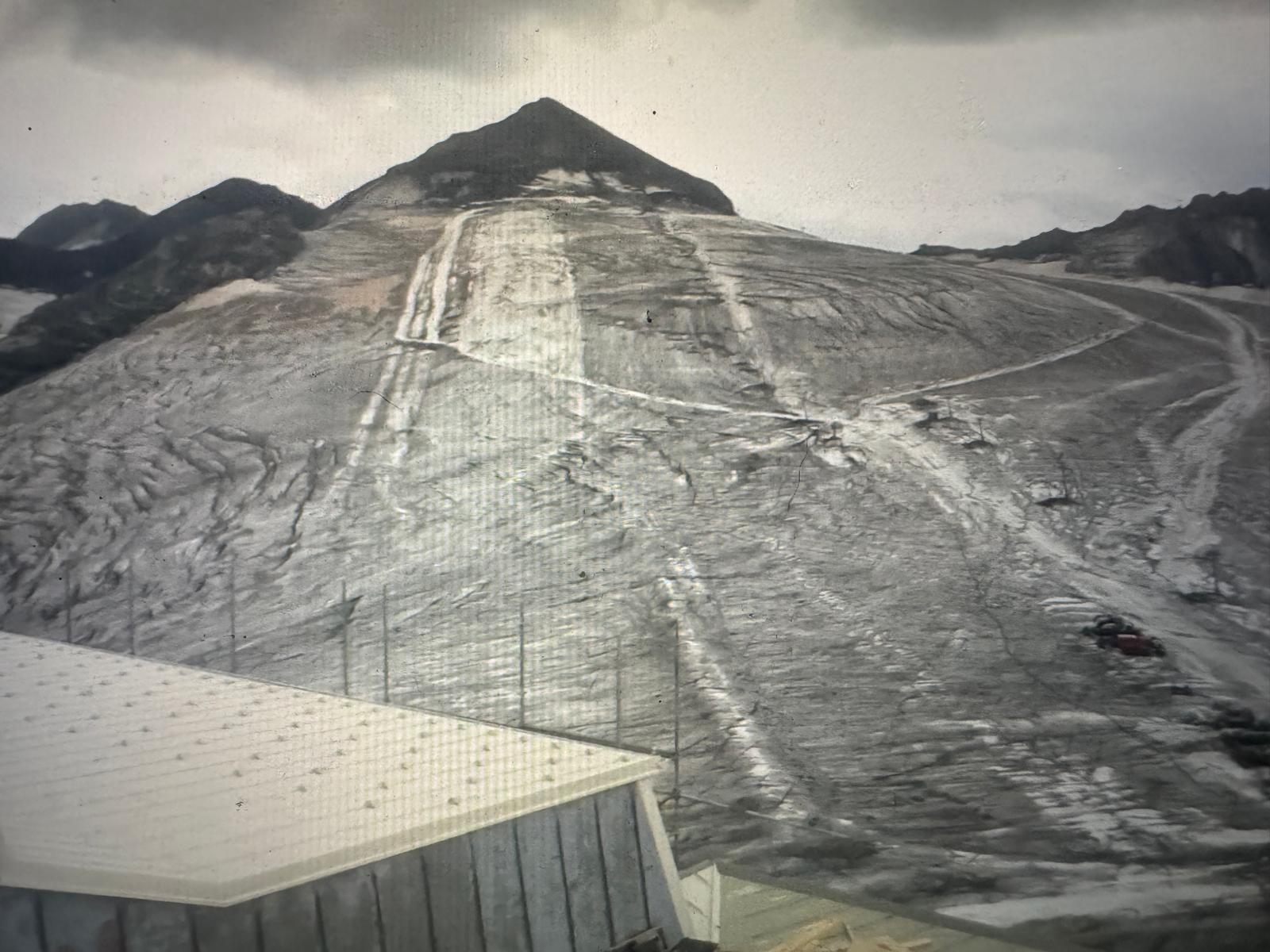
Passo dello Stelvio today 16th August. Webcam Passo dello Stelvio.

Summer glacier skiing has effectively disappeared from the Alps in mid-August after persistent extreme heat forced Passo Stelvio, the last Alpine glacier still offering lift-served summer skiing, to suspend operations.

Skiing on Italy’s Stelvio Glacier was suspended from 15 August until further notice, following weeks of unusually warm conditions at high altitude.

The closure completes a remarkable sequence across the Alps. Zermatt-Cervinia suspended public summer skiing at the beginning of August, while Saas-Fee followed on 10 August. In France, the summer skiing period at Les 2 Alpes had already ended in early July.

For an activity that was once a familiar part of the Alpine summer, the situation in August 2026 is striking: there is currently nowhere left in the Alps offering conventional lift-served summer glacier skiing.


Continue reading “Summer Skiing Disappears Across the Alps as Extreme Heat Forces Final Glacier Closure”

Alps Heatwave Forces Glacier Closures as Rockfalls Increase

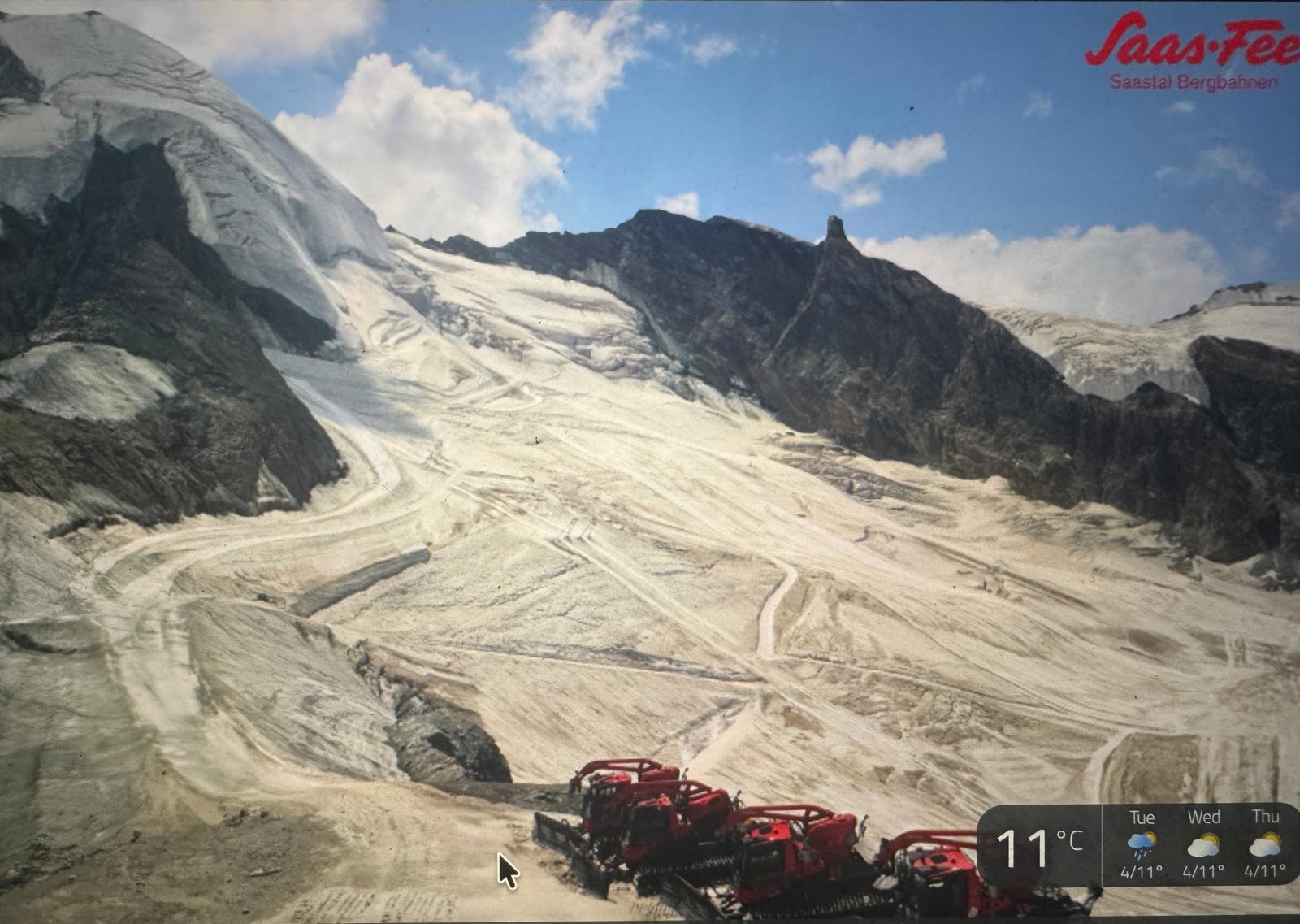
Saas Fee Glacier on 10th August, last day of its summer season. Photo: Webcam Saas Fee: https://www.saas-fee.ch/en/webcams

Extreme heat is continuing to disrupt the high Alps, forcing the suspension of summer skiing, closing a mountain refuge at more than 3,600 metres and coinciding with further rockfalls in the Dolomites.

Saas-Fee has suspended summer skiing from Monday, August 10, becoming the latest major Alpine glacier ski area affected by persistently high temperatures and deteriorating snow and glacier conditions.

The Swiss resort follows Zermatt, which had already suspended public summer skiing on the Theodul Glacier. On the Bernina massif in Italy, the Marco e Rosa refuge has closed as exceptionally warm conditions make the surrounding high mountain increasingly dangerous.

And on Sunday, August 9, another significant rockfall occurred on Monte Pelmo in the Dolomites, producing a large cloud of dust visible from the valley below.

Continue reading “Alps Heatwave Forces Glacier Closures as Rockfalls Increase”

Heat Forces Closure of Aiguille du Midi Ice Tunnel in Chamonix

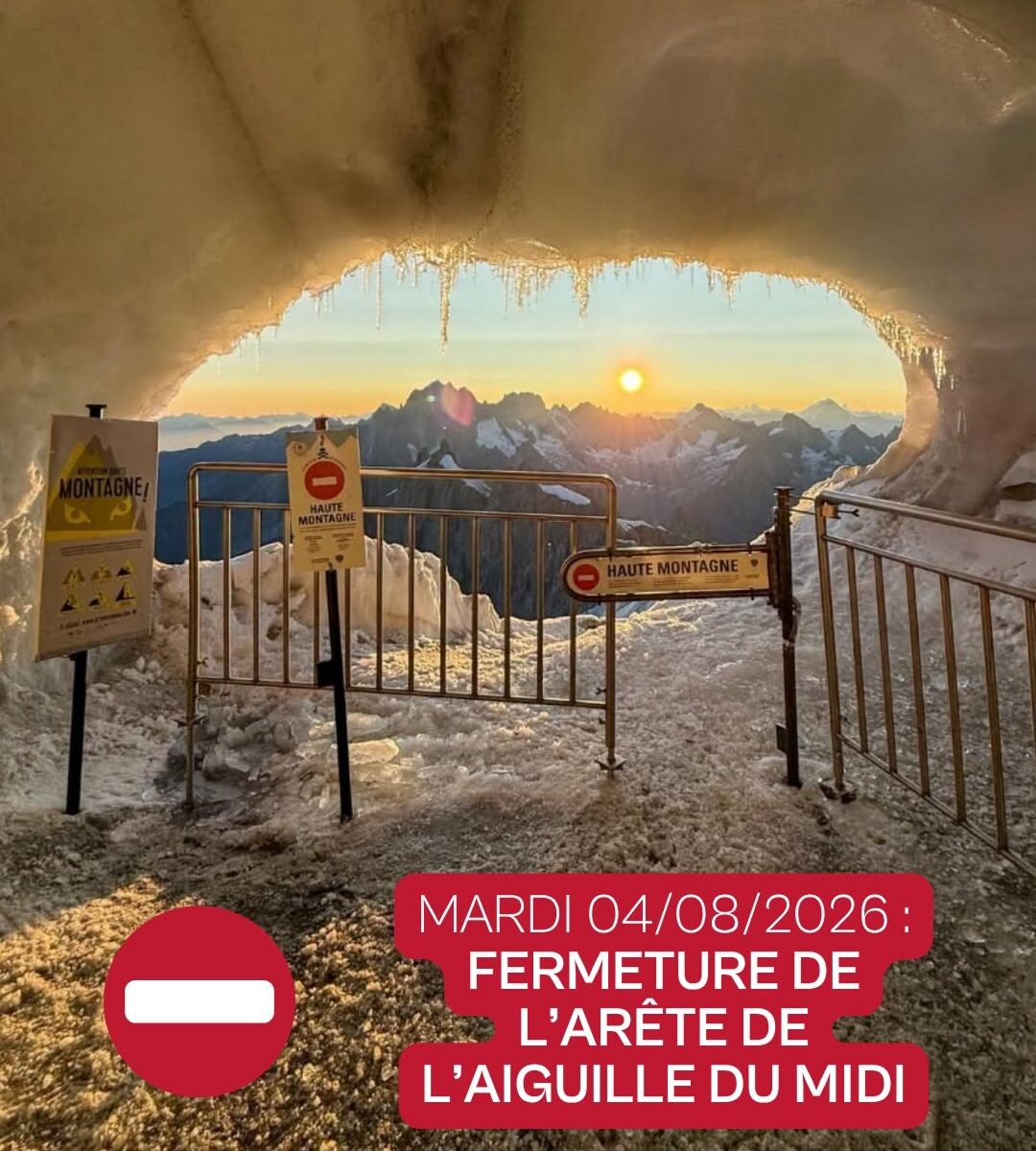
Ice Cave of Aiguille du Midi closed due to high temperatures. Image: La Chamoniarde-Facebook.

Extreme summer temperatures have forced the closure of the Aiguille du Midi ice tunnel in Chamonix after accelerating melting raised concerns over the stability of its ice roof.

The closure took effect on 4 August 2026 and affects the tunnel used by mountaineers to reach the famous Aiguille du Midi ridge, a major starting point for climbing routes across the Mont Blanc massif.

It does not concern the tourist ice cave at Montenvers–Mer de Glace, which remains open according to its published summer schedule.

Continue reading “Heat Forces Closure of Aiguille du Midi Ice Tunnel in Chamonix”

Alpine Ski Resorts Are Covering Glaciers to Slow Melting — But Can It Last?

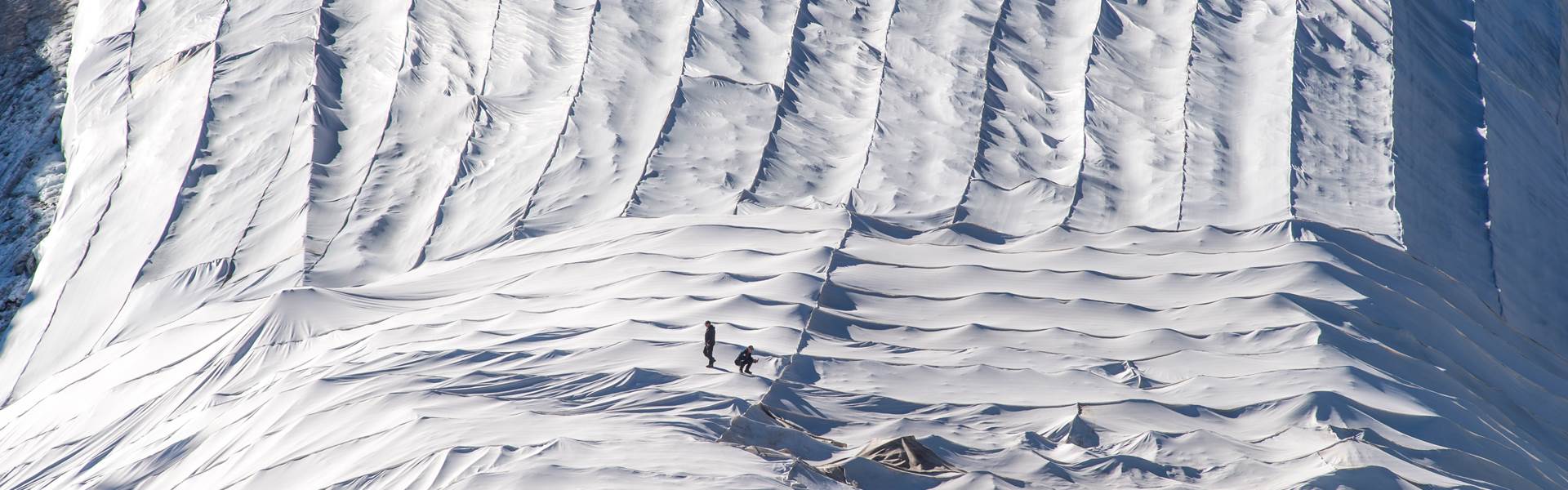
Photo credit: Pontedilegno Tonale- pontedilegnotonale.com

As glaciers across the Alps continue to shrink, some ski resorts are increasingly turning to reflective geotextile covers, snow farming, and other snow-preservation techniques in an attempt to protect glaciers, maintain ski operations, and preserve critical mountain infrastructure.

The images often go viral online as “ski resorts covering glaciers with plastic sheets,” but the reality is more complex. Most resorts use reflective geotextile fleece designed to reduce summer melting by insulating snow and ice from solar radiation.

The latest example attracting attention is the glacier area around Diavolezza in Switzerland’s Engadin region, where snow preservation and glacier management techniques have become part of long-term ski operations at altitude. Researchers note that the former glacier skiing area at Diavolezza now survives “solely thanks to snow farming and covering.”

Continue reading “Alpine Ski Resorts Are Covering Glaciers to Slow Melting — But Can It Last?”

The Alps Did Not Have a Snow-Rich Winter: Why 2026 Resembles 2022 for Glaciers

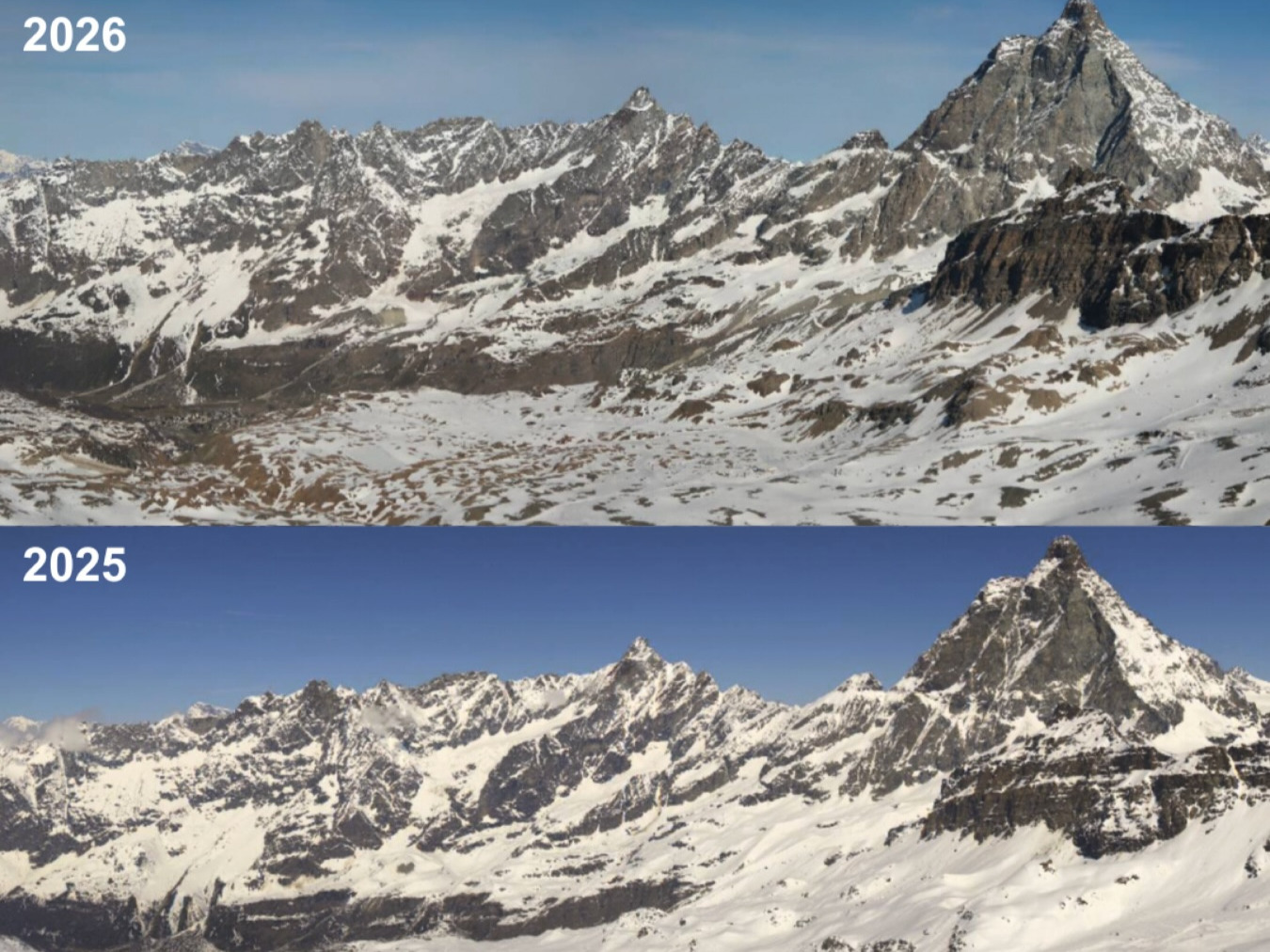
Snow comparisons Plateau Rosa 2025-26. Photo: Meteo Valle d'Aosta.

The idea that winter 2025/26 was “a good snow year” in the Alps does not hold up under closer analysis. While some regions experienced notable snowfall events, particularly in December, these were highly localised and have led to a broader misperception about conditions across the entire Alpine arc.

Data and observations from Meteo Valle d’Aosta highlight the issue clearly. Heavy early-season snowfall was largely confined to the Maritime and Ligurian Alps, a relatively small portion of the range. Outside these areas, including much of the north-western Alps and Valle d’Aosta, snowfall remained closer to average or slightly below through much of the early winter.

Crucially, what followed mattered more than what fell.

Continue reading “The Alps Did Not Have a Snow-Rich Winter: Why 2026 Resembles 2022 for Glaciers”