

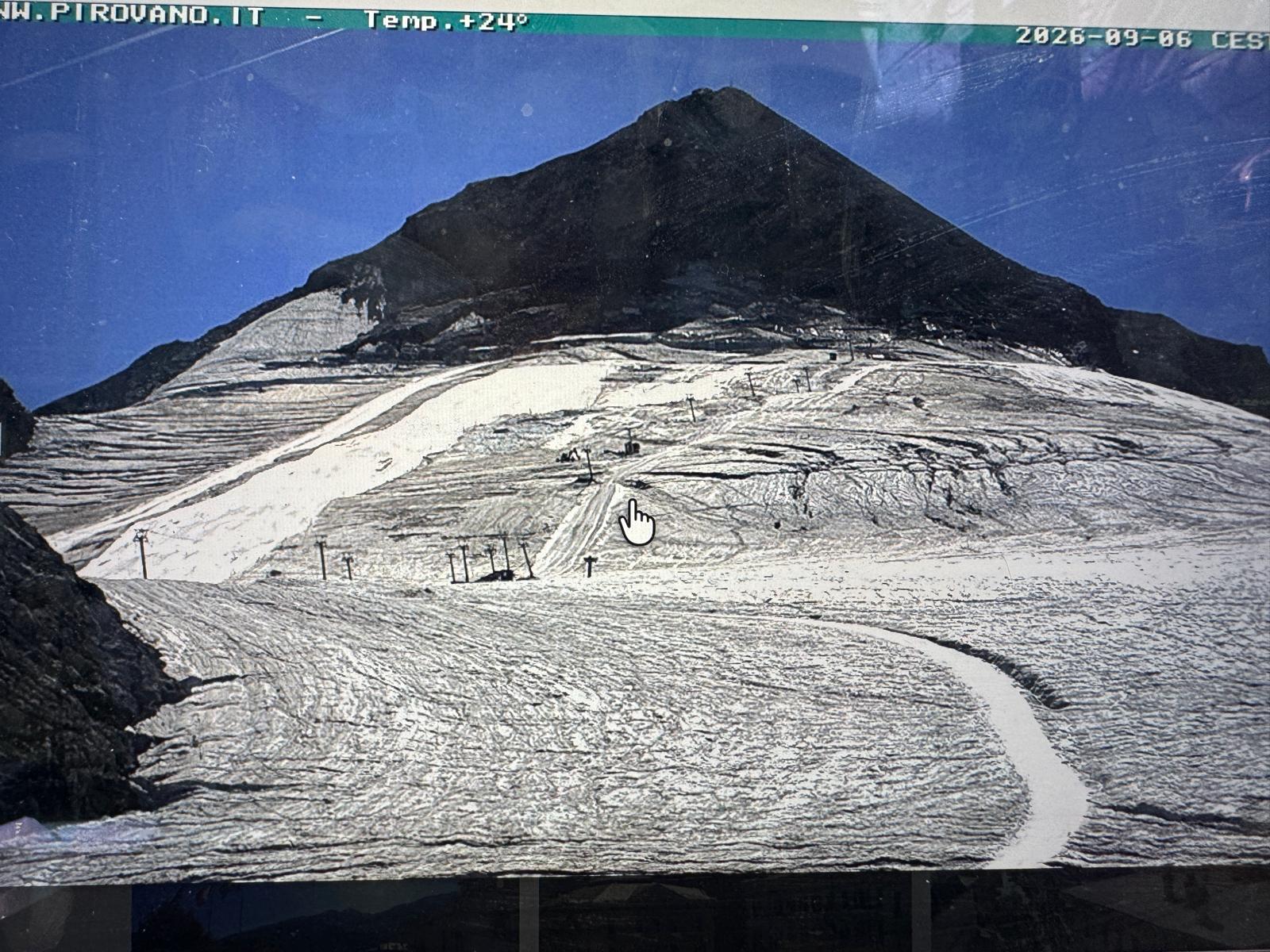
Italy’s Stelvio Glacier has reopened for summer skiing after a three-week heat-related closure. The return of skiing is welcome news, but it follows an extraordinary August in which high temperatures and poor overnight freezing temporarily brought lift-served summer skiing across the Alps to a halt.
Summer skiing returned to Italy’s Stelvio Glacier on Friday, September 4, after cooler conditions allowed operators to reopen lifts and pistes following a shutdown that began on August 15.
The official Bormio lift-status service confirmed the reopening, with all six Stelvio lift installations operating: the Cristallo, Pajer, Geister 1 and Geister 2 ski lifts, together with the Passo Stelvio–Trincerone and Trincerone–Livrio cable cars.
Not everything has returned to normal, however. Several pistes remain closed, and the Pajer and Cristallo ski lifts are operating only from 6:30 am until midday. The two cable cars operate until 4 pm.
The Stelvio summer season is officially scheduled to run from May 30 until November 1, 2026.
Why Stelvio closed
The August closure was significant because Stelvio had remained open after other Alpine summer ski areas suspended skiing during the summer heat.
SIFAS, the company operating the Stelvio facilities, announced the suspension of skiing from August 15, citing three factors: persistent heat waves reaching high altitude, the absence of sufficient overnight cooling and refreezing of the snowpack, and frequent thunderstorms that had further affected glacier conditions.
The operator said those conditions meant it could no longer guarantee the normal quality and, more importantly, safety standards required for summer skiing. The cable cars remained operational for visitors even while skiing was suspended.
By that point, the closure had effectively removed the last outdoor summer skiing option in the Alps.
ANSA reported that Stelvio’s closure followed the suspension of summer skiing at Cervino and Ponte di Legno-Tonale. Zermatt had already suspended skiing on the Theodul Glacier at the end of July, while lifts from Breuil-Cervinia continued carrying non-skiing visitors to Plateau Rosa.
The episode came during a summer in which the effects of high temperatures were being seen far beyond ski pistes. Across the Alps, glacier retreat, thawing permafrost and unstable mountain terrain have repeatedly raised questions about how warming is changing both the landscape and the risks associated with it.
The Ski Guru has been following those changes closely, including the retreat of the Planpincieux Glacier on Mont Blanc and the monitoring of a hanging glacier above Randa near Zermatt.
The importance of overnight freezing
The Stelvio episode also illustrates why summer skiing conditions cannot be judged simply by whether there is still snow on a glacier.
Overnight temperatures are crucial.
A sufficiently cold night allows the wet snow surface to refreeze, producing firmer conditions in the morning. When temperatures remain high throughout the night, that cycle is interrupted and the snow can remain soft and water-saturated from the beginning of the day.
That was specifically one of the problems identified by SIFAS when it closed Stelvio in August.
The reopening therefore does not mean that the effects of this summer’s heat have been reversed. Rather, cooler conditions have once again created a window in which skiing can be operated safely.
The restricted operating hours of the Pajer and Cristallo lifts — currently closing at midday — also underline how important the colder morning period is for glacier skiing.
From no summer skiing to skiing again
There is nevertheless some genuinely positive news.
Stelvio did not simply close for the remainder of the season. Operators continued monitoring conditions and reopened once they considered the glacier suitable for skiing again.
According to the official Bormio status update, Cristallo, Pajer, Geister 1 and Geister 2 lifts are operating, together with both cable cars. Among the open runs are Cristallo, Pajer Turistica, Pajer Agonistica, Geister 2, Geister–Trincerone and Livrio–Trincerone.
The Geister 1 and Trincerone–Passo Stelvio pistes remain closed.
That distinction matters.
Glacier conditions can change considerably over relatively short periods, and an August closure caused by inadequate overnight freezing does not necessarily mean that skiing cannot resume when temperatures fall.
But neither does a September reopening erase what happened during the hottest part of the summer.
A changing environment for Alpine summer skiing
The broader story is therefore not simply that Stelvio has reopened.
For a period in August 2026, traditional outdoor summer skiing effectively disappeared from the Alps as operators confronted temperatures and snow conditions that made keeping glacier pistes open increasingly difficult.
Stelvio’s experience shows both sides of the problem.
A spell of cooler weather can still restore skiable conditions and allow operations to resume. At the same time, summer ski areas are increasingly dependent on narrow weather windows, particularly the overnight freeze-thaw cycle that determines whether snow surfaces can recover after warm days.
The implications extend beyond summer skiing. The rapid changes taking place in high-mountain environments are also affecting glacier stability, permafrost and natural hazards — issues highlighted by recent events in the Himalayas and increasingly relevant to the Alps. The Ski Guru recently examined those connections in Nepal’s glacier disaster and what it could mean for Alpine risk.
For Stelvio, however, the season continues.
The official schedule currently runs until November 1, and skiing has returned to the glacier.
But the three-week interruption in the middle of what is normally one of Europe’s longest summer ski seasons may ultimately be the more significant part of the story.
It is another indication that the question facing Alpine summer skiing is becoming less about whether glaciers still hold snow — and increasingly about when conditions allow that snow to be skied safely.
Read More
Planpincieux Glacier Retreat: The Changing Face of Mont Blanc
Weisshorn Hanging Glacier Above Randa: Why Authorities Are Monitoring the Risk
Nepal Glacier Disaster: Could Something Similar Happen in the Alps?
Sources
Bormio Tourism – Official Stelvio Lift and Piste Status
ANSA – Troppo caldo, stop allo sci estivo sul ghiacciaio dello Stelvio
ANSA – Chiude per il caldo anche lo Stelvio, in Europa niente sci estivo
Rai News – Clima, chiude per il caldo anche lo Stelvio
Rai TGR Lombardia – Troppo caldo, stop allo sci estivo sul ghiacciaio dello Stelvio
Planning your next trip to the Italian Alps?
If you’re heading to the Aosta Valley, take a look at Il Cuore della Valdigne, our family-owned apartment in Morgex, available for rent when we’re not using it ourselves.
It’s an ideal base to:
- Ski in Courmayeur, La Thuile and Pila
- Enjoy the mountains in summer (hiking, biking, nature)
- Explore the Mont Blanc valley in a quieter, more authentic setting.
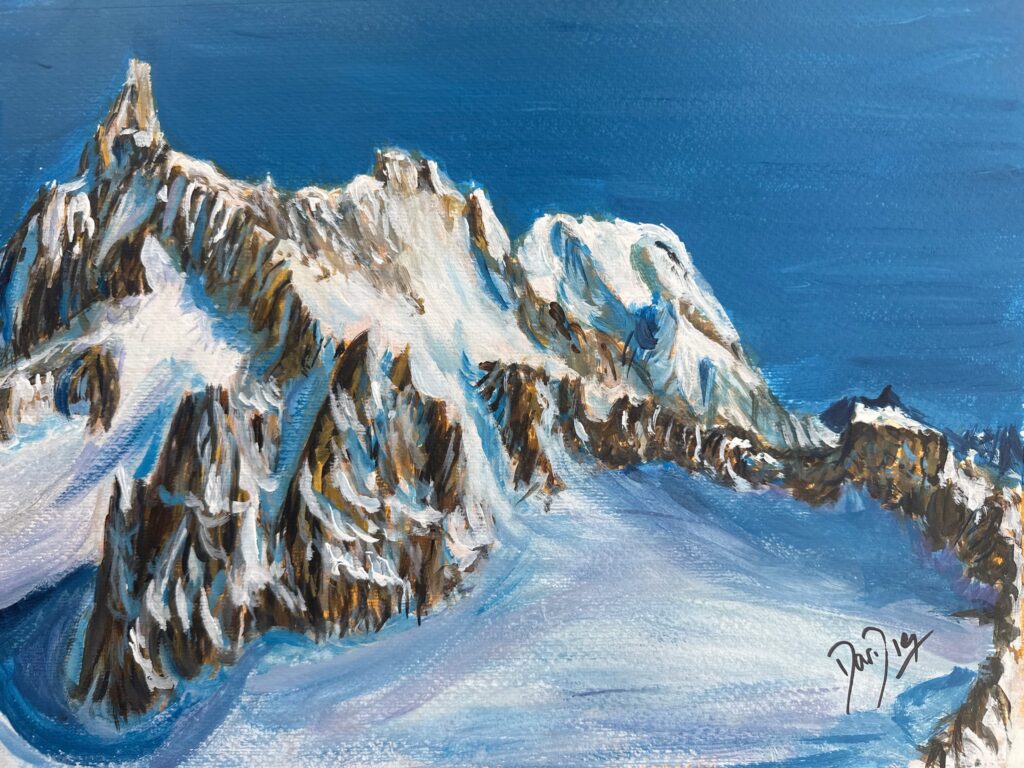
Check my Mountain Art on my Shop
You can go to my shop and see what have been inspiring me lately, lots mountain landscapes in soft pastels, and now in oils too. Go here to check my latest works!
Featured Image: Summer skiing returns to the Stelvio Glacier after its August heat closure. Passo Stelvio webcam. Photo credit: Pirovano.it.


Discover more from The-Ski-Guru
Subscribe to get the latest posts sent to your email.
 Subscribe to The-Ski-Guru here.
You must be logged in to post a comment.