

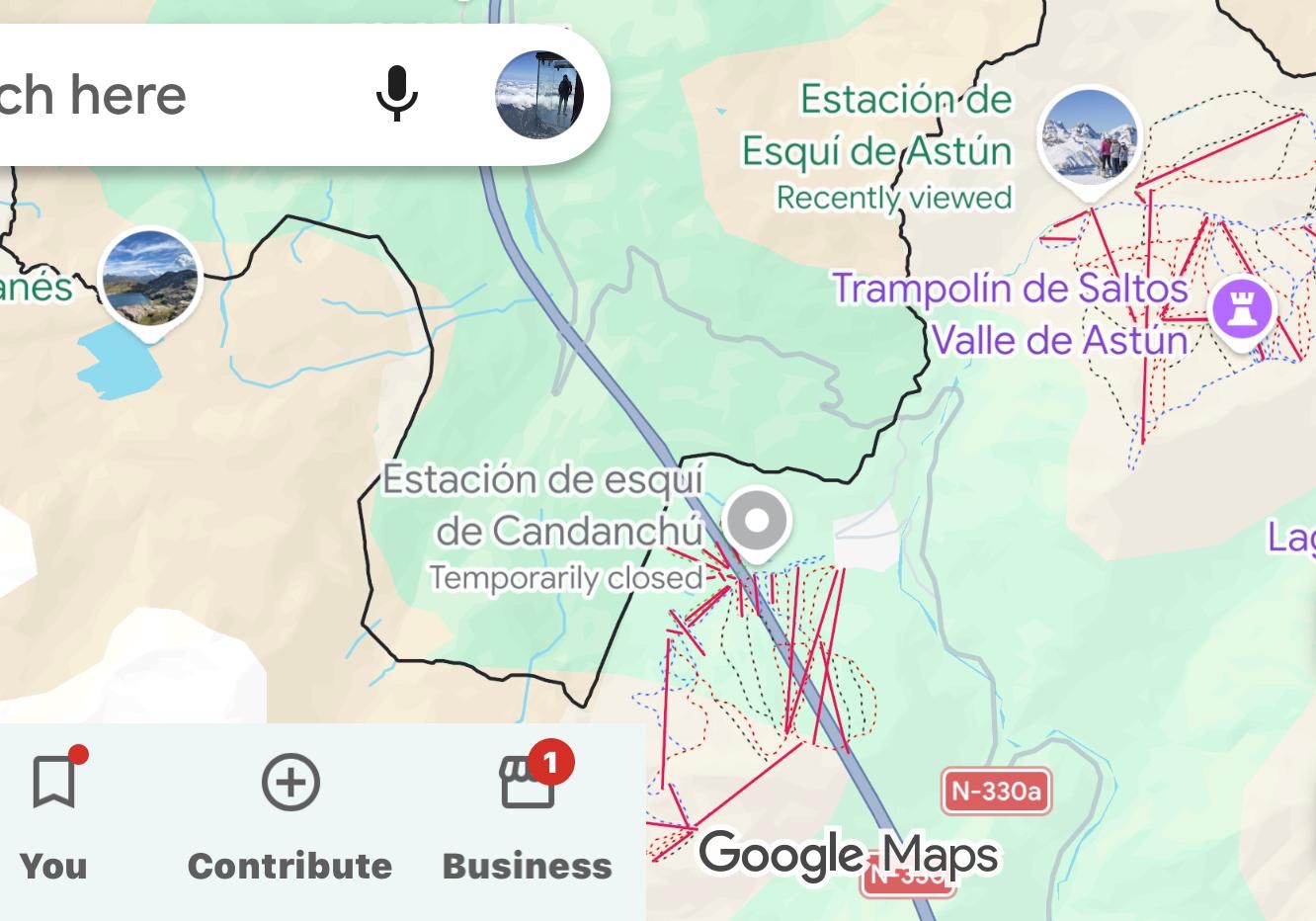
The new 3.6-kilometre gondola will connect two ski resorts in Spain’s Aragonese Pyrenees, creating a combined ski destination with more than 100 kilometres of slopes. However, the publicly funded project continues to face environmental opposition.
Construction of the new gondola linking Astún and Candanchú, two established ski resorts in Spain’s Aragonese Pyrenees, is approaching the halfway point, with the first lift towers being installed ahead of the winter season.
According to Aragón Noticias, approximately 50% of the construction work has now been completed. The project is scheduled to become operational towards the end of 2027, in time for the 2027/28 ski season.
The new connection represents one of the most significant current infrastructure developments in the Spanish Pyrenees, aiming to improve access between the two resorts and strengthen the year-round tourism offer of the Aragón Valley.
Helicopters Install Gondola Towers Ahead of Winter
Construction began in April 2026, followed by an official groundbreaking ceremony on 23 July.
During October, helicopters have been transporting and installing components of approximately 15 lift towers along the planned route.
As reported by Diario del Alto Aragón on 22 October, the foundations had already been prepared, allowing helicopters to position the tower sections and the assemblies supporting the gondola cable.
Construction is currently concentrated on the section between the intermediate station at Piedras Rojas and Astún. Work on the shorter section towards Candanchú is planned for 2027.
The construction schedule remains dependent on mountain weather conditions, which will determine how long work can continue before winter.
A 3.6-Kilometre Gondola Connecting Two Ski Resorts
The new detachable monocable gondola, manufactured by Italian lift specialist Leitner, will extend approximately 3,595 metres.
The route will connect the Pista Grande area in Candanchú with the upper section of the Pastores chairlift in Astún, passing through an intermediate station at Piedras Rojas.
The journey is expected to take approximately 12 minutes.
Once operational, the gondola will allow visitors to travel between the two ski areas without relying on road transfers, providing access to a combined destination offering more than 100 kilometres of ski slopes.
The infrastructure has also been designed for summer operation, potentially supporting hiking, sightseeing and other mountain activities beyond the traditional winter season.
Initial Capacity of 600 Passengers Per Hour
The gondola project has been divided into three development phases.
Phase 0 – Opening planned for 2027
The initial installation will feature 24 ten-person cabins, with a transport capacity of 600 passengers per hour.
Phase 1 – Planned from 2030
The proposed expansion would increase the number of cabins to 48, doubling capacity to 1,200 passengers per hour.
Phase 2 – Planned from 2035
A further expansion would bring the total to 96 cabins, increasing capacity to 2,400 passengers per hour.
These later phases remain part of the long-term development plan rather than infrastructure scheduled for the initial opening.
The timetable and technical details were outlined in the project approval reported by Cadena SER.
Public Investment and Expected Economic Benefits
The initial construction phase was awarded for approximately €29.77 million, including VAT.
Funding is divided between several public institutions:
- €16.7 million from the Government of Aragón.
- €10 million from European tourism sustainability funds.
- €3 million from the Provincial Council of Huesca.
Although the awarded first-phase contract totals approximately €29.77 million, other published estimates place the broader project cost above €35 million.
The distinction is important, as the initial construction contract and wider project cost estimates do not necessarily cover identical expenditure.
The Government of Aragón estimates that the gondola could generate an annual economic impact of up to €11.5 million for the surrounding area.
This figure is a government projection, rather than a demonstrated economic return.
Regional authorities argue that the connection will help consolidate the Aragón Valley as a more competitive mountain destination, encouraging longer stays and increasing tourism activity outside the winter months.
Environmental Opposition and Legal Challenges
Despite the project’s economic ambitions, the gondola has faced opposition from environmental organisations concerned about its potential impact on protected mountain habitats and wildlife.
In May 2026, the High Court of Justice of Aragón admitted an administrative legal challenge brought by Ecologistas en Acción Aragón, SEO/BirdLife and the Foundation for the Conservation of the Bearded Vulture.
The organisations argue that the environmental assessment does not adequately address potential impacts on protected Natura 2000 areas, bird species and neighbouring protected territories in the French Pyrenees.
Particular concerns have been raised about the bearded vulture, a protected bird species present in the Pyrenees, and the adequacy of the birdlife assessment carried out for the project.
The organisations have also questioned the absence of what they consider a necessary cross-border environmental assessment.
These are allegations raised by the organisations involved in the legal challenge, rather than established judicial findings.
The regional government, meanwhile, has defended the project and pursued the required administrative approval procedures.
The project received final approval under Aragón’s regional public-interest planning framework in October 2025, with its documentation subsequently published in the Official Bulletin of Aragón.
Construction has continued despite the legal challenge.
The latest available reporting reviewed for this article does not establish a final judicial ruling on the environmental case.
Further information about the challenge was published by elDiario.es.
A New Chapter for Ski Tourism in the Aragonese Pyrenees
The Astún–Candanchú gondola forms part of the wider Plan Pirineos investment programme, through which Aragón aims to modernise mountain tourism infrastructure and strengthen the regional visitor economy.
For international skiers, the main attraction will be the possibility of moving between two established ski resorts through a direct lift connection.
For the surrounding communities, the project also raises broader questions about public investment, environmental protection and the development of mountain tourism throughout the year.
With construction now approaching 50% completion, attention will turn to the remaining works during 2027 and whether the gondola can begin operating as planned for the 2027/28 winter season.
The coming months will also be important in determining how the outstanding environmental and legal concerns develop.
Sources
- Aragón Noticias – Formigal-Panticosa ultima los preparativos para la próxima temporada de esquí – 25 October 2026.
- Diario del Alto Aragón – Un helicóptero instala las pilonas de la telecabina entre Astún y Candanchú – 22 October 2026.
- Cadena SER – Comienzan las obras de la telecabina para unir Astún y Candanchú – 27 April 2026.
- Cadena SER – El Consejo de Gobierno aprueba el PIGA para la unión de Astún y Candanchú – 29 October 2025.
- elDiario.es – Recurso judicial al telecabina Astún-Candanchú por su impacto ambiental – 25 May 2026.
- Government of Aragón – Official environmental documentation.
- Official Bulletin of Aragón – Definitive project approval – 21 November 2025.


Discover more from The-Ski-Guru
Subscribe to get the latest posts sent to your email.
 Subscribe to The-Ski-Guru here.