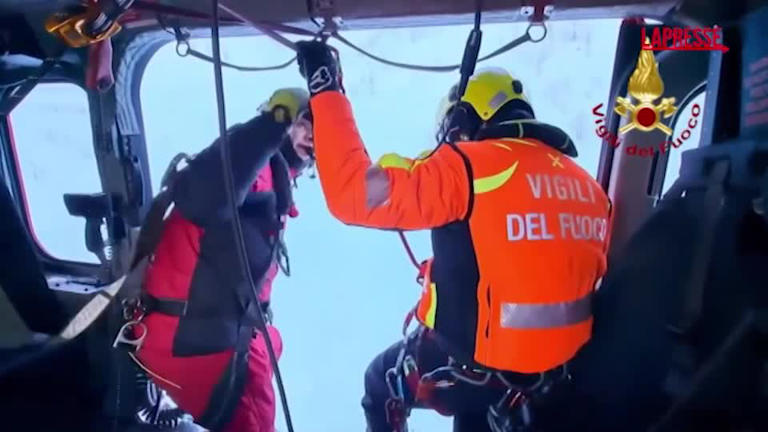
A tragic avalanche accident occurred on the north-facing slope of Pizzo Meriggio, above Albosaggia in the province of Sondrio, resulting in the deaths of two ski tourers and serious injuries to a third.
What happened
According to reconstructions published by Italian media, the avalanche released while a group of ski tourers were on the mountain. During the incident, Sebastiano Erba, 35, was killed after being caught by the avalanche while attempting to assist other skiers who had already been buried by the slide.
Summary: Between February 5 and February 7, 2026, multiple avalanches were reported to Data-Avalanche across the French Alps, spanning the Queyras, Haute Maurienne/Thabor, Belledonne, Lauzière, Vanoise, Écrins, Oisans and Haute Tarentaise (Tignes). Two incidents were reported as fatal: two ski tourers died near Saint-Véran (Queyras), and one skier died after a long burial near Valfréjus.
This post compiles the available descriptions from Data-Avalanche and early local reporting. Details can evolve as official investigations and rescue services publish more information.
BERA Reference. Meteo France. savoie.gouv.fr. French Alps avalanche incidents (Feb 5–7, 2026): what was reported across several massifs.
Fatal incidents reported on Saturday, February 7, 2026
Queyras (Saint-Véran) – Tête de Longet: two ski tourers killed
Local media reported that an avalanche occurred on the north side of Tête de Longet above Saint-Véran (around 2,300m in initial reports). Two ski tourers died; two other members of the party were not injured, and searches continued until nightfall.
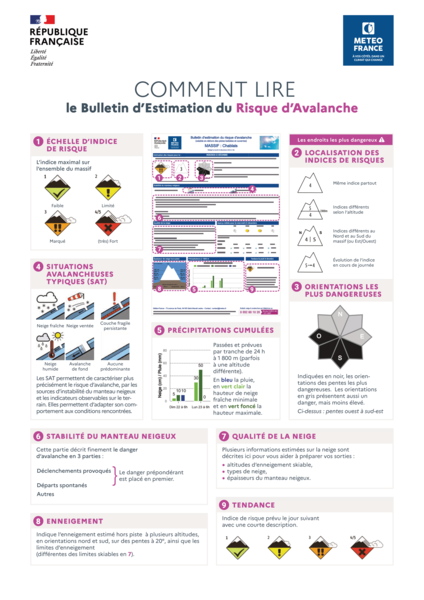
Before heading off-piste, ski touring, snowshoeing, or entering uncontrolled terrain, checking the avalanche bulletin is not optional — it is one of the most important safety steps you can take.
Yet many skiers and riders still look only at the danger number, without fully understanding how to use the rest of the information to plan a safe mountain day.
This guide explains how to read and apply avalanche bulletins properly, what they can (and cannot) tell you, and where to find the official avalanche forecasts across Europe.
What an Avalanche Bulletin Is — and What It Is Not
An avalanche bulletin (or avalanche forecast) is a regional risk assessment, based on:
Over the past week, avalanche activity across the Alps has followed a clear and worrying pattern. From the Mont Blanc massif to the Queyras and across into the Swiss Valais, numerous skier-triggered and spontaneous avalanches point to a snowpack that remains structurally unstable, despite periods of fair weather and already-tracked slopes.
Rather than isolated incidents, the reports collected since late January describe reactive slabs, remote triggers, and persistent weak layers affecting a wide range of aspects and elevations.
Much of the recent instability is consistent with wind-loaded slabs and foehn-driven snow transport, which can rapidly overload weak layers and create large, reactive avalanche conditions.
Avalanche activity has remained elevated across several French Alpine massifs over the past 48 hours, with confirmed incidents, multiple rescue checks, and continued warnings from Météo-France.
Below is a clear roundup of what has happened, followed by current avalanche danger by massif and direct links to the official bulletins skiers should consult before heading into the mountains.
On Thursday 29 January, an off-piste avalanche occurred in the La Fée sector at Les Deux Alpes. A 59-year-old skier was recovered and taken to hospital in critical condition. Regional reporting indicates the skier suffered a cardiac arrest, was resuscitated on scene, and transferred to hospital in Grenoble.
The incident occurred mid-morning, around 2,500 m, in a well-known off-piste area frequently accessed from the ski domain.
For a practical explanation of how to apply avalanche bulletins in real conditions, this step-by-step guide is worth reading before heading out.
Les Deux Alpes, near to St Christoph-en-Oisans. Photo: Toa Heftiba/Unsplash. French Alps Avalanche Danger: 48-Hour Roundup & Current Risk by Massif.
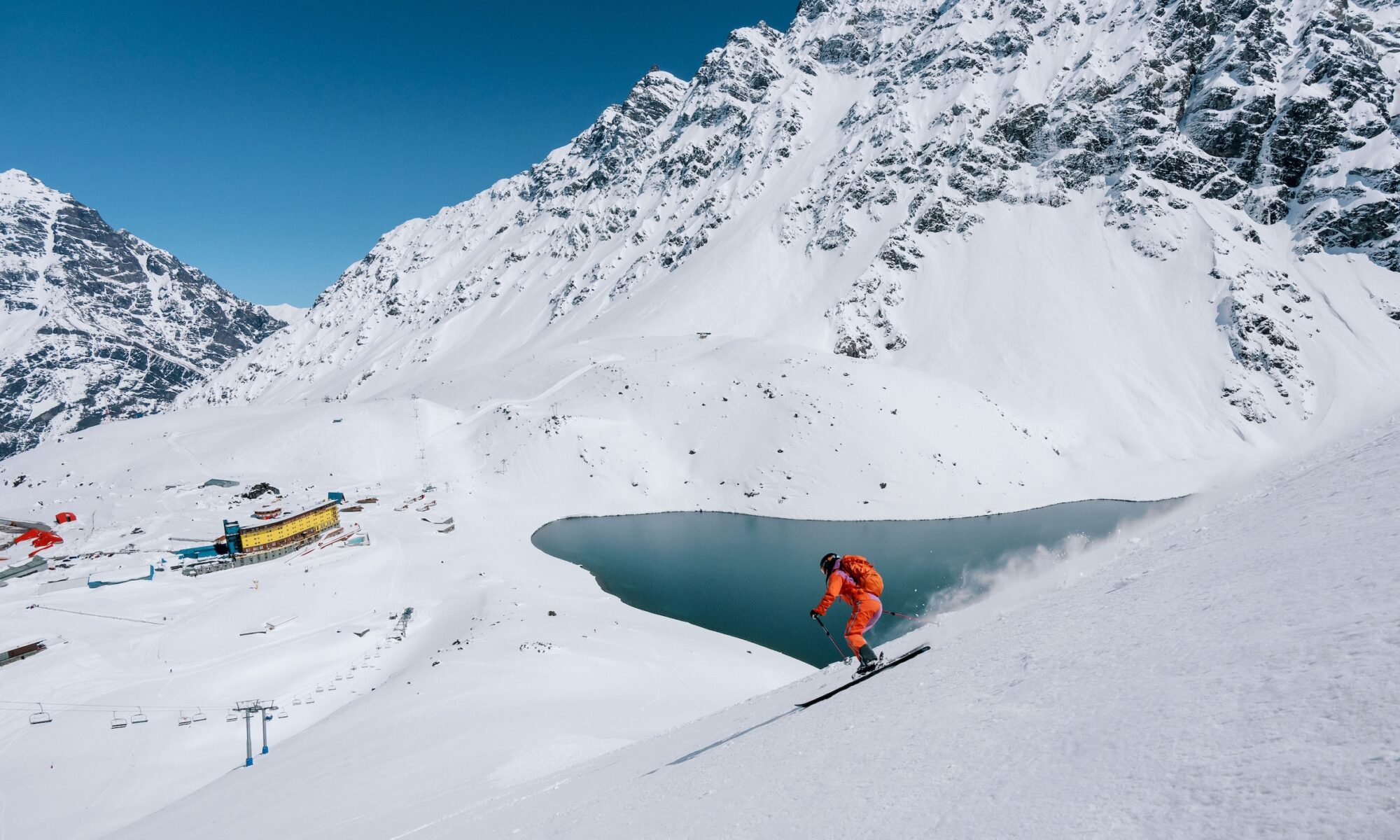
Off-piste skiing and backcountry travel offer freedom, fresh snow and adventure — but they also expose skiers to the highest avalanche risk in the mountains.
Many avalanche accidents do not happen deep in remote terrain. They happen just outside marked pistes, in areas skiers believe are controlled, familiar or “not really off-piste”.
Understanding why these situations are dangerous is essential for anyone leaving groomed slopes.
What Does “Off-Piste” Really Mean?
Off-piste skiing refers to any terrain outside marked and controlled ski runs. This includes:
Slopes beside pistes
Short traverses between runs
Bowls accessed from lifts
Areas beyond boundary ropes
In most resorts, avalanche control is limited to marked pistes only. Once you leave them, you are responsible for your own safety — regardless of how close you remain to the ski area.
Dan Egan skiing in Big Sky, Montana. Photo courtesy: Dan Egan. Dan offers ski clinics to teach you how to take care of yourself in the backcountry. Check them at skiclinics.com. Off-Piste & Backcountry Risks: Avalanche Safety – Read Before Skiing Off-Piste.
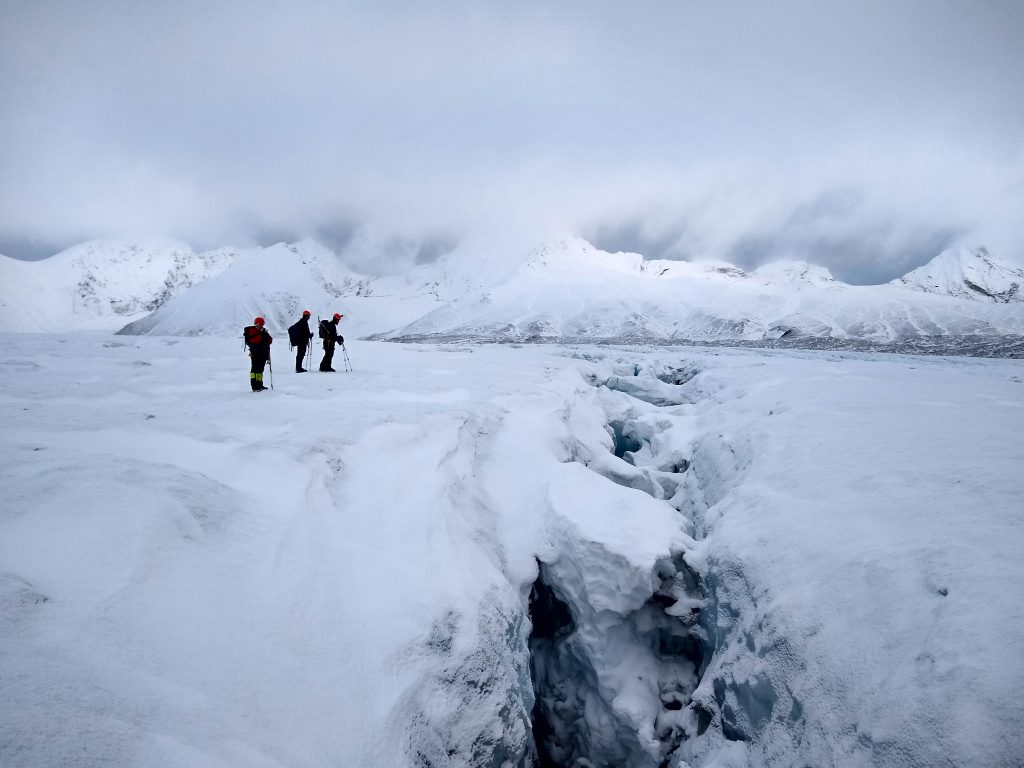
Glaciers are often associated with summer mountaineering — ropes, harnesses and visible crevasses. In winter, however, glaciers can appear deceptively smooth, white and skiable.
This illusion of safety is one of the reasons crevasses and glaciers remain among the most underestimated winter dangers in the mountains.
This article explains why glaciers are still hazardous in winter, how crevasses behave under snow, and why even experienced skiers can fall victim to hidden traps.
Skiing alone is often seen as peaceful, efficient or even safer — fewer people, fewer variables, fewer mistakes. For experienced skiers in particular, solo skiing can feel controlled and familiar.
In reality, skiing alone is one of the strongest risk factors in fatal mountain accidents, whether caused by avalanches, collisions, falls or medical emergencies.
This article explains why skiing alone dramatically increases danger, even for skilled and cautious skiers.
Avalanche Awareness: What Every Skier Needs to Know
Avalanches are one of the most serious and misunderstood dangers in the mountains. Every winter, experienced skiers, snowboarders and mountaineers are caught — often in familiar terrain, sometimes close to marked pistes, and frequently during days that do not feel dangerous.
Avalanche awareness is not about fear. It is about understanding risk, recognising patterns, and making better decisions in winter mountain environments.
This guide explains the essentials every skier should know: how avalanches form, who is most at risk, why forecasts matter, and where accidents most often happen — with links to more in-depth resources throughout.
Savoie Avalanche Crosses Blue Piste at Sainte-Foy-Tarentaise, Four Skiers Involved
On 13 January 2026, a significant avalanche crossed a marked blue ski run at the Grand Solliet area of Sainte-Foy-Tarentaise in the French Alps (Savoie). The incident occurred during open piste hours, surprising skiers and prompting an immediate rescue response.
According to reports, four people were involved when an avalanche — reportedly triggered by a skier off the marked piste — swept across the blue run. Three of those caught were knocked off balance by the force of the snow, while the fourth was briefly buried under the avalanche debris, with only their hand visible before rescuers reached them.
Rescue teams — including piste patrol, the CRS Alpes, ski school instructors, and avalanche dogs — quickly searched the area. The buried skier was located about 50 metres below the piste and transported to hospital in Bourg-Saint-Maurice for further care. Authorities confirmed that no others were missing before ending the rescue operation later in the afternoon.
Enjoyed this post? Get my latest ski guides, weather insights, resort updates and travel tips directly in your inbox. Subscribe to The-Ski-Guru here.
Manage Cookie Consent
To provide the best experiences, we use technologies like cookies to store and/or access device information. Consenting to these technologies will allow us to process data such as browsing behavior or unique IDs on this site. Not consenting or withdrawing consent, may adversely affect certain features and functions.
Functional
Always active
The technical storage or access is strictly necessary for the legitimate purpose of enabling the use of a specific service explicitly requested by the subscriber or user, or for the sole purpose of carrying out the transmission of a communication over an electronic communications network.
Preferences
The technical storage or access is necessary for the legitimate purpose of storing preferences that are not requested by the subscriber or user.
Statistics
The technical storage or access that is used exclusively for statistical purposes.The technical storage or access that is used exclusively for anonymous statistical purposes. Without a subpoena, voluntary compliance on the part of your Internet Service Provider, or additional records from a third party, information stored or retrieved for this purpose alone cannot usually be used to identify you.
Marketing
The technical storage or access is required to create user profiles to send advertising, or to track the user on a website or across several websites for similar marketing purposes.






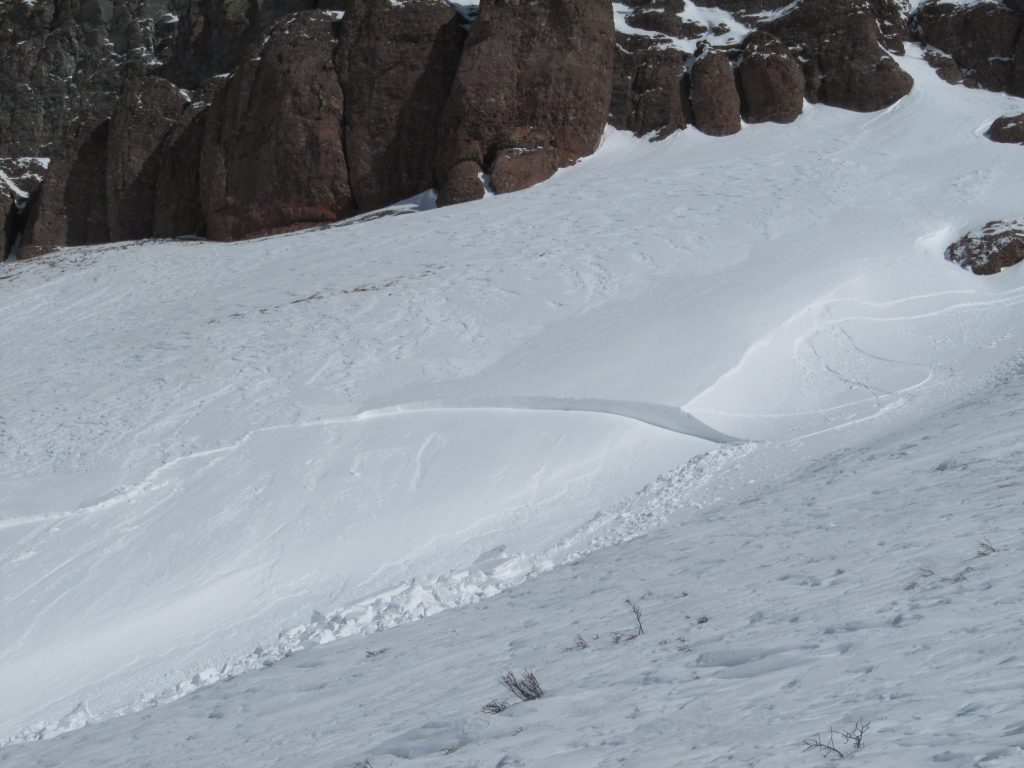 Windslab avalanche. Photo: Andrew Temple. Colorado Avalanche Information Center.
 Subscribe to The-Ski-Guru here.
You must be logged in to post a comment.