Summer Skiing Disappears Across the Alps as Extreme Heat Forces Final Glacier Closure

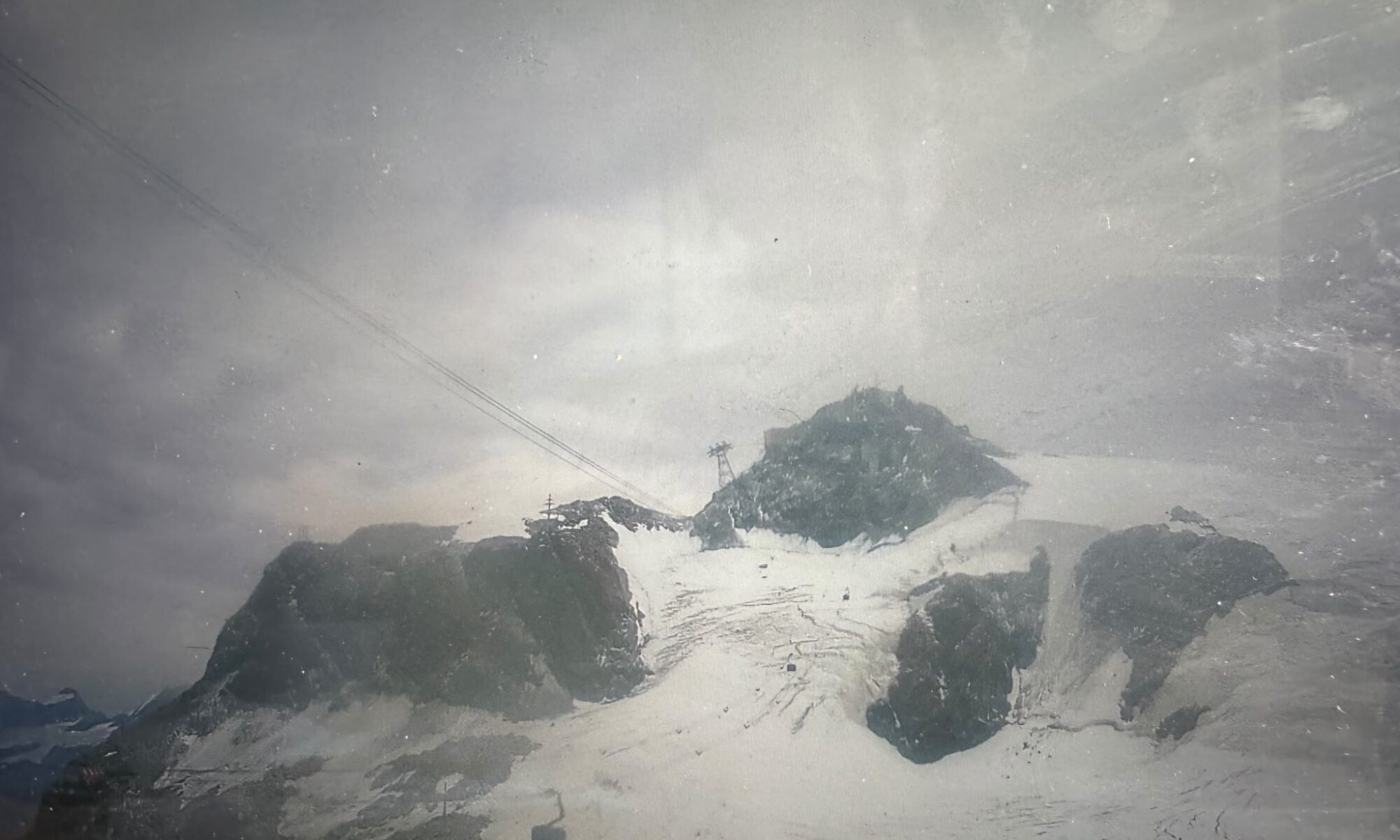
Passo dello Stelvio today 16th August. Webcam Passo dello Stelvio.

Summer glacier skiing has effectively disappeared from the Alps in mid-August after persistent extreme heat forced Passo Stelvio, the last Alpine glacier still offering lift-served summer skiing, to suspend operations.

Skiing on Italy’s Stelvio Glacier was suspended from 15 August until further notice, following weeks of unusually warm conditions at high altitude.

The closure completes a remarkable sequence across the Alps. Zermatt-Cervinia suspended public summer skiing at the beginning of August, while Saas-Fee followed on 10 August. In France, the summer skiing period at Les 2 Alpes had already ended in early July.

For an activity that was once a familiar part of the Alpine summer, the situation in August 2026 is striking: there is currently nowhere left in the Alps offering conventional lift-served summer glacier skiing.
 

Continue reading “Summer Skiing Disappears Across the Alps as Extreme Heat Forces Final Glacier Closure”

Alps Heatwave Forces Glacier Closures as Rockfalls Increase

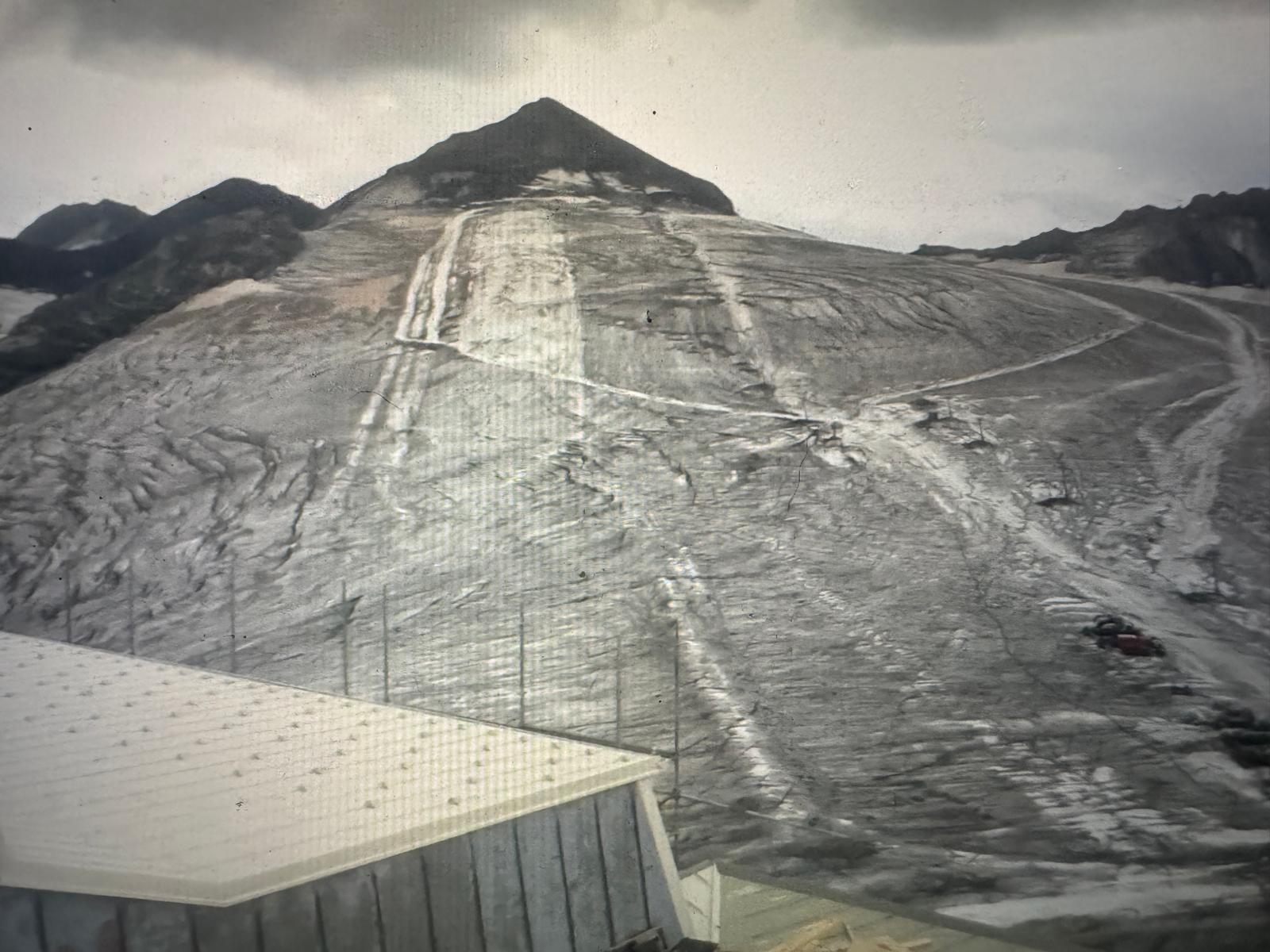
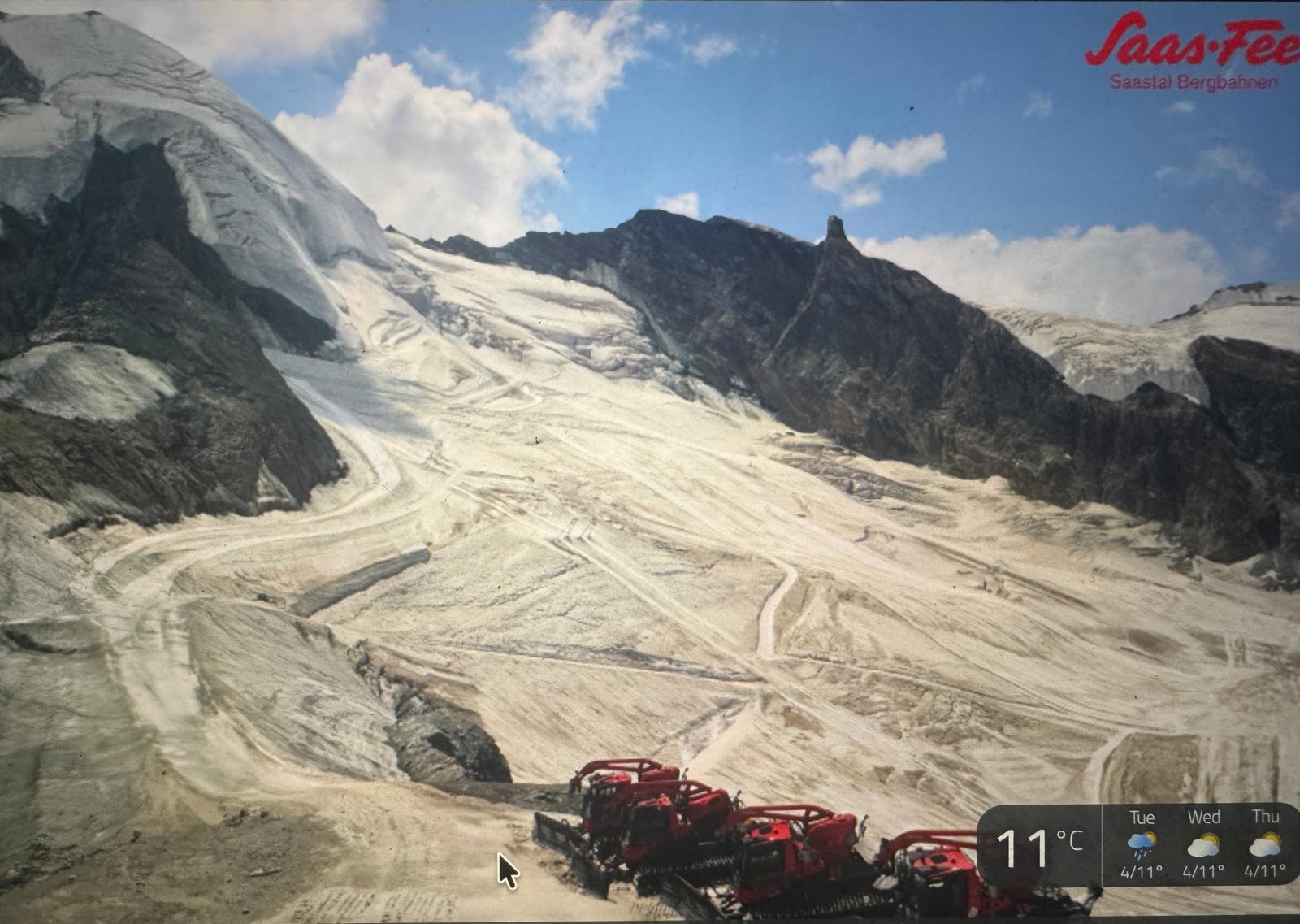
Saas Fee Glacier on 10th August, last day of its summer season. Photo: Webcam Saas Fee: https://www.saas-fee.ch/en/webcams

Extreme heat is continuing to disrupt the high Alps, forcing the suspension of summer skiing, closing a mountain refuge at more than 3,600 metres and coinciding with further rockfalls in the Dolomites.

Saas-Fee has suspended summer skiing from Monday, August 10, becoming the latest major Alpine glacier ski area affected by persistently high temperatures and deteriorating snow and glacier conditions.

The Swiss resort follows Zermatt, which had already suspended public summer skiing on the Theodul Glacier. On the Bernina massif in Italy, the Marco e Rosa refuge has closed as exceptionally warm conditions make the surrounding high mountain increasingly dangerous.

And on Sunday, August 9, another significant rockfall occurred on Monte Pelmo in the Dolomites, producing a large cloud of dust visible from the valley below.

Continue reading “Alps Heatwave Forces Glacier Closures as Rockfalls Increase”

Aosta Valley Begins to Recover, but Record Glacier Loss Highlights Growing Climate Crisis

The view from Plan Chècrouit towards the Piscina Alpina in Courmayeur. Photo: The-Ski-Guru.

The Aosta Valley is beginning to recover after a week marked by intense storms, flooding and rockfalls, but scientists warn that the longer-term picture remains deeply concerning. While tourist facilities are reopening and emergency conditions are easing, 2026 has already become the worst year on record for glacier loss in Italy’s smallest Alpine region, underlining the accelerating impact of climate change. 

One of the clearest signs of recovery has come from Breuil-Cervinia, where the local golf course has partially reopened following the severe thunderstorms that hit the resort earlier this week. Although only a temporary nine-hole course is currently available while repairs continue, the reopening is an important step for the resort’s summer tourism industry after heavy rain and mudflows disrupted the area. 

Continue reading “Aosta Valley Begins to Recover, but Record Glacier Loss Highlights Growing Climate Crisis”

Extreme Heat Pushes Alpine Glaciers Into Crisis After Matterhorn Rockfall

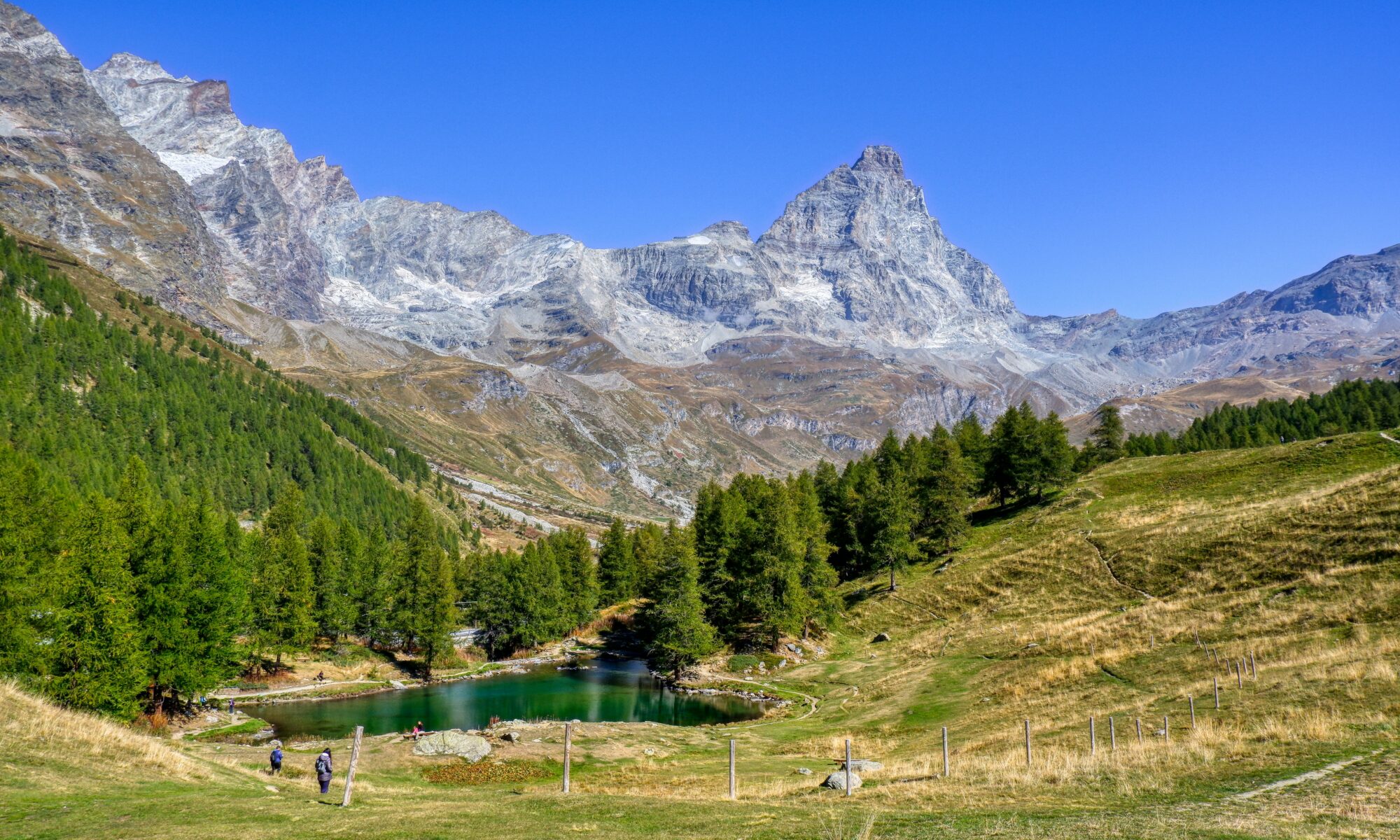
Lago Blu in Cervinia. Photo: Antonio Sessa. Unsplash.

Just one day after a large rockfall on the Matterhorn shocked the Alpine community, authorities and scientists across the Alps are warning that the exceptional heat gripping southern Europe is accelerating glacier melt and increasing instability in high mountain areas.

Italy remains under widespread red heat alerts, with meteorologists expecting the heatwave to continue through at least Ferragosto. While cities are enduring record temperatures, the impact is proving just as dramatic in the mountains, where glaciers are retreating at unprecedented rates and frozen rock is beginning to thaw.

One of the clearest indicators of the current conditions is the zero-degree isotherm. Normally found between 3,500 and 4,000 metres during summer, it remained between 5,500 and 5,800 metres for several days in July—around 1,400 metres higher than normal. This meant that even the highest Alpine peaks were experiencing temperatures above freezing, dramatically accelerating glacier melt while weakening the permafrost that helps hold mountain rock together.

Continue reading “Extreme Heat Pushes Alpine Glaciers Into Crisis After Matterhorn Rockfall”

Cervinia Avoids Repeat of 2024 Flood Disaster After Violent Storm Triggers Mudflows

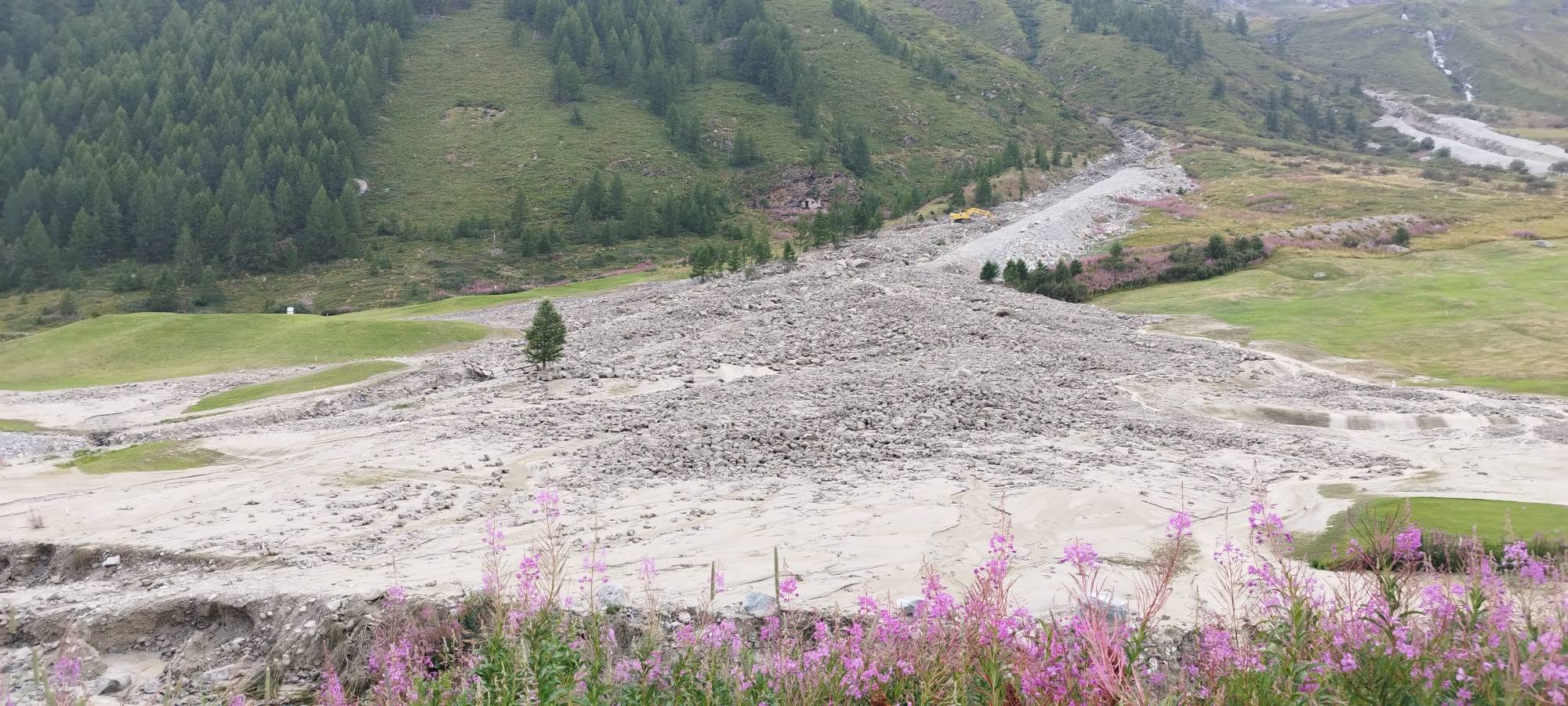
Mudslide in Cervinia. Photo: Franco Milanesi. Facebook.

A violent thunderstorm lasting barely 20 minutes sent torrents of water, mud and debris through Breuil-Cervinia on Monday afternoon, flooding parts of the resort and covering the golf course with sediment. Despite the dramatic scenes, authorities say the village itself escaped major damage thanks to flood protection measures introduced after the devastating 2024 disaster. 

The storm caused the Chérillon, Maberge and Avouil mountain streams to overflow after an intense cloudburst struck the upper Valtournenche valley. Large quantities of rocks, mud and debris were carried downstream, damaging two bridges on the golf course and depositing thick layers of sediment across several fairways. 

Continue reading “Cervinia Avoids Repeat of 2024 Flood Disaster After Violent Storm Triggers Mudflows”

Cervinia Celebrates 90 Years of Mountain Lifts While Looking Ahead to The One

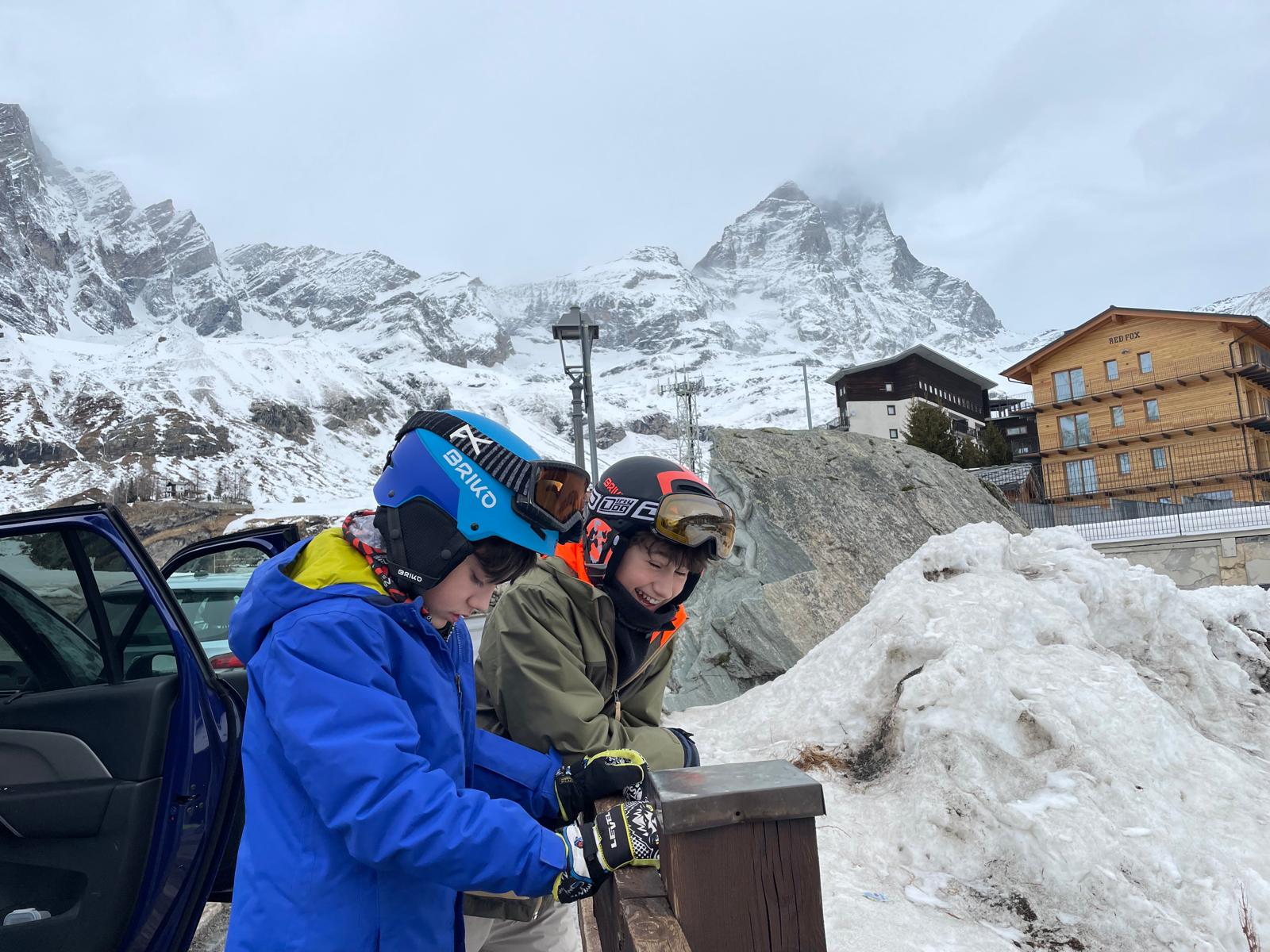
Winter in Cervinia. Photo: The-Ski-Guru.

One of the Alps’ most iconic mountain resorts has reached a major milestone. Breuil-Cervinia is celebrating the 90th anniversary of the opening of its first cable car, the Breuil-Cervinia–Plan Maison lift inaugurated in 1936, a project that forever changed access to the slopes beneath the Matterhorn and helped shape the resort into one of Europe’s premier ski destinations. 

The anniversary celebrations, held on August 1–2, bring together residents, visitors and industry partners for two days of concerts, storytelling, exhibitions and outdoor activities that honour nine decades of engineering innovation and mountain tourism. 

Continue reading “Cervinia Celebrates 90 Years of Mountain Lifts While Looking Ahead to The One”

New Capanna Carrel opens on the Matterhorn ahead of official inauguration

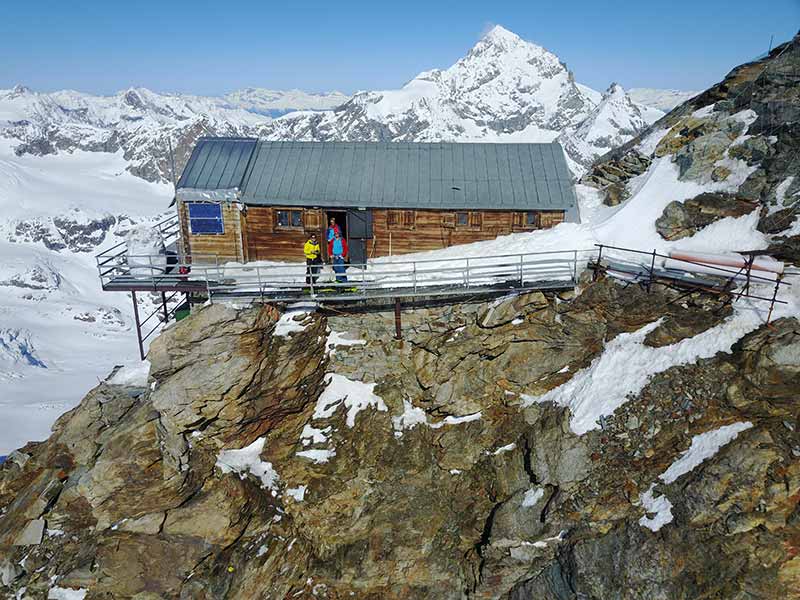
The new Capanna Carrel has opened. Photo: GuidedelCervino.com

The iconic Capanna Carrel, one of the best-known mountain huts on the Italian side of the Matterhorn (Monte Cervino), has officially begun welcoming climbers for the 2026 summer season, even as final finishing works continue before its formal inauguration.

The Municipality of Valtournenche has provisionally handed over the new refuge to the Società Guide del Cervino (Matterhorn Guides Association), allowing guides and alpinists to use the facility from late July while the last construction details are completed.

Continue reading “New Capanna Carrel opens on the Matterhorn ahead of official inauguration”

Zermatt–Cervinia Summer Skiing to Close as Extreme Heat Damages Glacier Snow

Plateau Rosa webcam. Cervino Ski Paradise. Today, 31 July, 2026

Summer skiing on the glacier shared by Zermatt and Cervinia will be suspended from August 1, 2026, after exceptionally high temperatures and a lack of snowfall left the pistes unsuitable for safe skiing.

Summer skiing in the Zermatt–Cervinia ski area will close temporarily from August 1, 2026, as unusually warm conditions continue to affect the glaciers surrounding the Matterhorn.

The operational decision was taken on the Swiss side of the ski area, where the summer pistes are located on the Theodul Glacier and around Plateau Rosa. However, the closure also directly affects Cervinia, which is connected to Zermatt and sells access to the same cross-border summer skiing product.

Continue reading “Zermatt–Cervinia Summer Skiing to Close as Extreme Heat Damages Glacier Snow”

Aosta, Italy: The Complete Guide to the Roman City in the Alps and the Best Base For Exploring the Aosta Valley

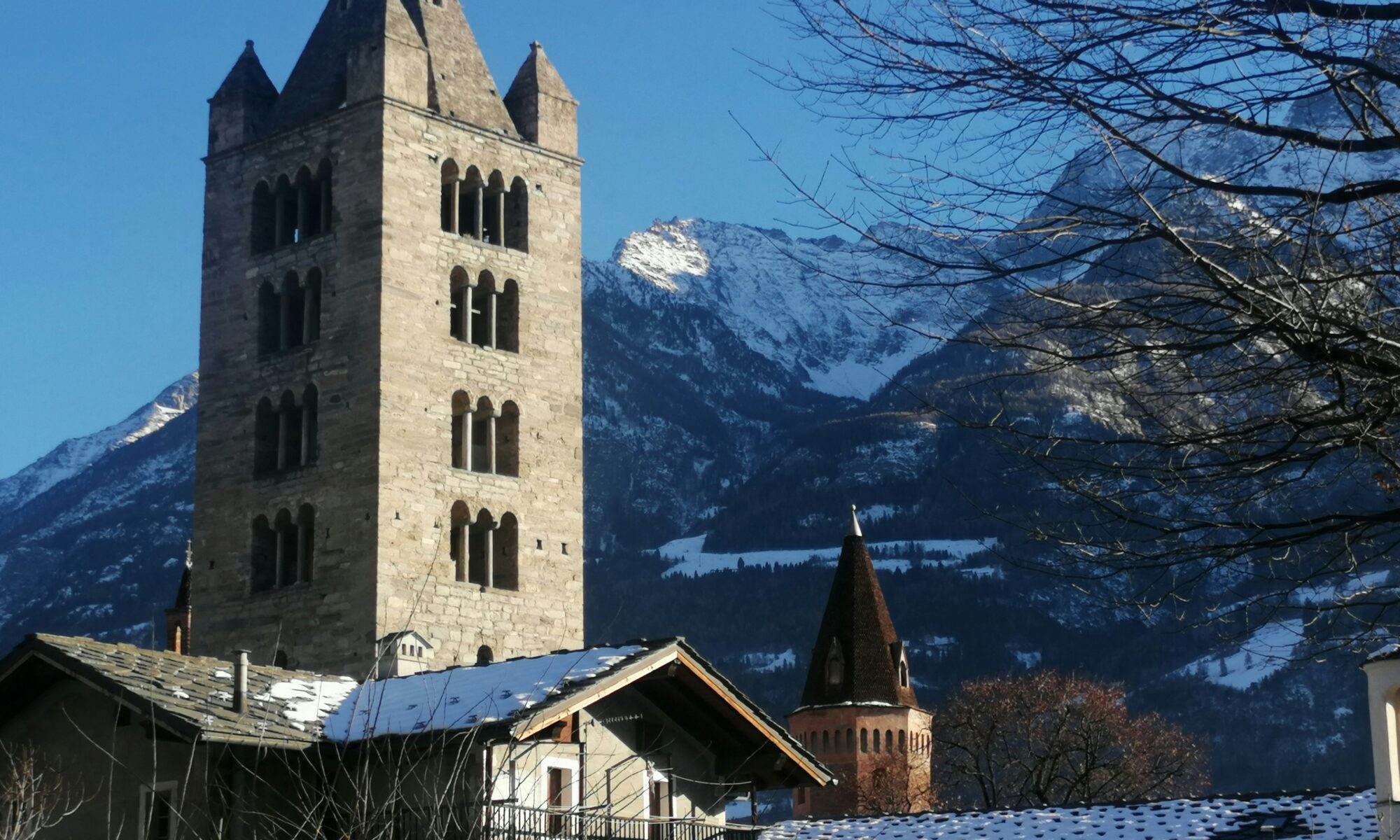
Aosta. Photo Credit: GP. Unsplash.

This article may contain affiliate/compensated links. For full information, please see our disclaimer here. Some links on my website may not function properly if ad blocker is enabled.

Many visitors pass through Aosta on their way to Courmayeur, Cervinia or Pila without ever stopping to explore the city itself.

That is a mistake.

Known as the “Rome of the Alps”, Aosta combines remarkably preserved Roman monuments, medieval churches, mountain scenery, excellent restaurants and easy access to some of the most famous destinations in the Alps.

More importantly, Aosta may be the best base in the entire Aosta Valley. From here you can ski in Pila, visit Courmayeur beneath Mont Blanc, explore Gran Paradiso National Park, discover medieval castles, cross into Switzerland via the Great St Bernard Pass or even spend a day in Chamonix.

Unlike many mountain resorts, Aosta is a real city that functions year-round. Visitors benefit from a wide range of restaurants, shops, supermarkets, sports facilities and services while remaining within easy reach of the mountains.

Continue reading “Aosta, Italy: The Complete Guide to the Roman City in the Alps and the Best Base For Exploring the Aosta Valley”

Saharan Dust Reaches the Alps as Freezing Levels Rise Above 3000 m

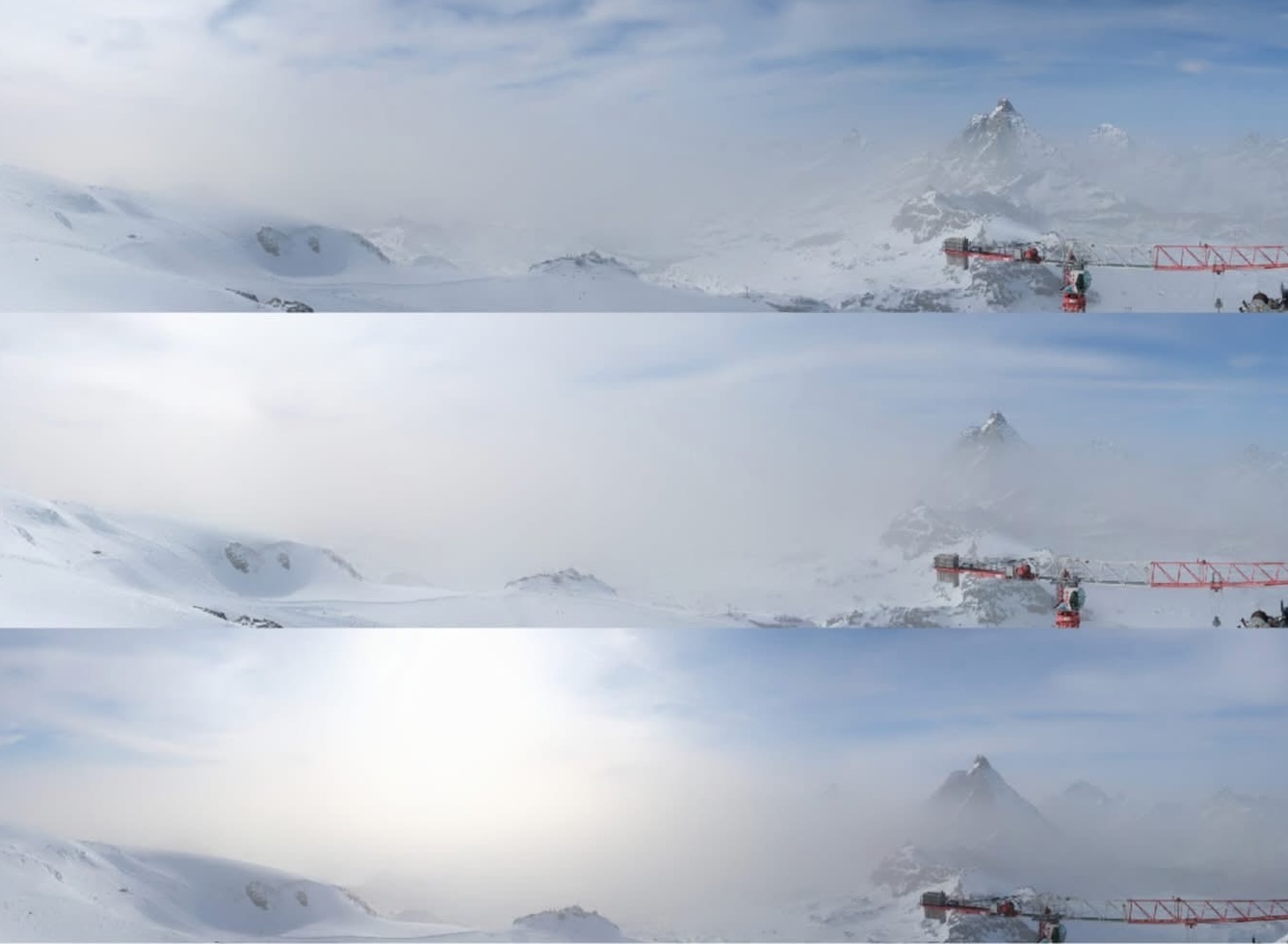
Saharan dust haze visible over the Alps at Piccolo Cervino above Cervinia

A hazy sky observed across parts of the Aosta Valley and the wider Alps in early March has an unusual origin: Saharan dust transported north across the Mediterranean.

Meteorological observations indicate that large quantities of fine sand particles from the Sahara Desert have been carried into Alpine air masses during a prolonged period of high pressure.

Similar Saharan dust events have been documented by atmospheric monitoring services across Europe, including observations from the Copernicus Atmosphere Monitoring Service, which regularly tracks large dust plumes transported from North Africa into the Mediterranean and Alpine regions. These atmospheric events can influence visibility, air quality and — when dust settles on snow surfaces — the evolution of the mountain snowpack.

The result has been a visible veil of haze in the atmosphere and dust deposition on snow surfaces at high altitude, something that can have important consequences for the evolution of the snowpack.

Webcam images from Piccolo Cervino (3883 m), above Breuil-Cervinia, show the progressive increase of dust suspended in the air during the day.

Meteorologists across the region also report exceptionally mild temperatures for the time of year, with freezing levels remaining unusually high for several consecutive days.

These episodes are part of a broader pattern of extreme weather in the Alps, affecting snow quality and melt rates.

Similar patterns are now visible beyond the Alps, where extreme heat has forced early resort closures in North America.

Continue reading “Saharan Dust Reaches the Alps as Freezing Levels Rise Above 3000 m”