

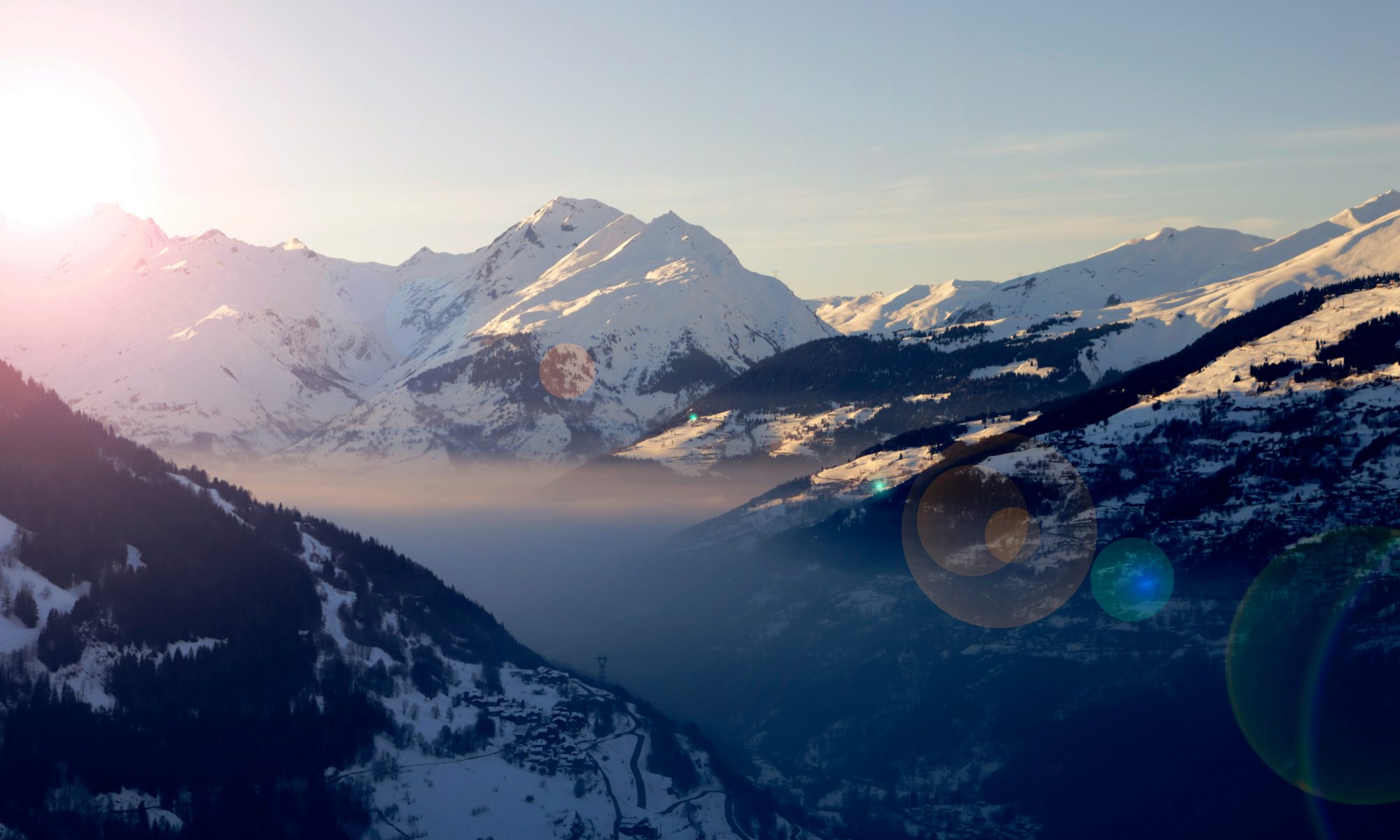
Southern Alps avalanches February 2026 highlight a continued instability phase across multiple Alpine massifs between 21 and 26 February.
Between 21 and 26 February 2026, widespread avalanche activity was observed across the Southern and Western Alps, including the Écrins, Queyras, Vanoise, Beaufortain, Haute Tarentaise and the Aosta Valley.
Unlike isolated accident reports, these observations show a broader structural pattern:
• Deep slab failures
• Spontaneous releases during warming
• Glide avalanches and reptation
• Hard slabs transitioning into wet snow on south-facing slopes
This phase followed the intense storm cycle and coincided with rising freezing levels across the Alps.
Most of the following observations are drawn from the public database at data-avalanche.org, complemented where possible by regional reporting.
Southern Alps Avalanches February 2026: Regional Breakdown
Écrins Massif
Écrins Massif
Multiple significant releases were observed:
- Freissinières (Aiguillas / Gourenq, 2250 m):
Several avalanches released on 30–35° slopes, running from approximately 2250 m down toward 1400 m. Dates of release may precede the observation date (26/02). - Valgaudemar – Chalanche:
A large avalanche likely released during the late-storm phase (around 19–20 Feb), reportedly exceeding the historical CLPA envelope — suggesting unusual magnitude. - Grand Bec (Vanoise side):
Natural release during warming, captured from helicopter footage.
These observations point toward deep instabilities activated by both storm loading and subsequent temperature rise.
Queyras & Col de Vars
Queyras
Col de Vars
Activity across the Queyras region was notable:
- Saint-Véran – Pointe des Sagnes Longues:
A hard slab triggered by a group of seven ski tourers transformed into a wet snow avalanche on a south-facing slope before stopping 200m lower. One person was briefly carried but uninjured (reported by Le Dauphiné Libéré). - Ceillac – Montagne de la Riche:
A spontaneous deep slab release reaching the ground layer. - Arvieux – Col de Furfande:
Avalanche observed with linear crown propagating along the combe; in places the snowpack was stripped to ground. - Embrunais Parpaillon – Barre de la Pisse:
Full-depth release reaching ground level.
These events illustrate both human-triggered and spontaneous releases during the same instability window.
Vanoise & Haute Tarentaise
Vanoise National Park
- Sainte Foy – Face Sud Pierre Pointe:
A very large avalanche (~400 m wide at crown) with approximately 1000 m vertical extent. Crown depth ranged between 60 cm and 2 m. Stair-step failure across multiple weak layers was noted. Deposits reportedly reached 3–4 m in depth in the main combe. - Pointe des Buffettes (PIDA heli operation):
Significant artificial triggering following earlier Gazex malfunction during storm episodes. - Grandes Rousses – Côtes Souveraines:
Ongoing glide cracks and basal slides observed.
This confirms that warming played a decisive role in activating deeper weak layers deposited during the previous north-west wind event.
Beaufortain
- Dôme de Vaugelaz / Mont Rosset:
Numerous fallen trees along the itinerary. Large reptation and a glide avalanche that stopped roughly 50 m from the Chapelle de Saint Guérin.
Glide and full-depth failures were increasingly reported across south and south-east aspects during this period.
Aosta Valley – Rhêmes (Col du Fond / Rifugio Benevolo)
Valle di Rhêmes
On 25 February, spontaneous releases were observed on east-facing slopes in the valley leading to Col du Fond, beneath Punta di Calabre. Three slab locations were recorded in the public avalanche observation database (data-avalanche.org), with coordinates documented for each release.
The exact timing of release is unknown, but observers confirmed spontaneous departures affecting moraine slopes and the left bank of the vallon.
No injuries were reported in connection with this observation.
Earlier in February, the Rhêmes valley had also experienced avalanche impacts affecting the SR24 road, leading to temporary evacuations reported by regional media (ANSA Valle d’Aosta), highlighting the broader instability affecting the valley during this cycle.
What This Pattern Shows
Taken together, these observations confirm:
- A widespread regional instability across multiple Alpine massifs
- Deep slab failures to ground in several sectors
- Warming-driven activation of previously loaded weak layers
- South-facing slopes transitioning toward wet snow avalanche regimes
- Glide and basal sliding activity increasing during the rapid thaw phase
This was not a series of isolated incidents — but a structural avalanche cycle extending across the Western and Southern Alps.
The Southern Alps avalanches February 2026 confirm that instability extended well beyond isolated headline incidents.
For full context on fatalities, Level 4 and Level 5 alerts, and the broader February storm cycle, see:
→ February 2026 Avalanche Cycle Across the Alps
→ Avalanche Danger Level 4 Explained
→ Avalanche Danger Level 5 Explained
Sources
Observational data from the public reporting platform data-avalanche.org, complemented by regional reporting from Le Dauphiné Libéré and ANSA Valle d’Aosta.
Data-Avalanche observation database – multiple field reports (21–26 February 2026), including Rhêmes / Col du Fond, Écrins, Queyras and Vanoise sectors
Le Dauphiné Libéré – Saint-Véran ski tourer avalanche (26 February 2026)
ANSA Valle d’Aosta – SR24 Rhêmes road avalanche and evacuations (mid-February 2026)
 Planning your next trip to the Italian Alps?
 Planning your next trip to the Italian Alps?
If you’re heading to the Aosta Valley, take a look at Il Cuore della Valdigne, our family-owned apartment in Morgex, available for rent when we’re not using it ourselves.
It’s an ideal base to:
- Ski in Courmayeur, La Thuile and Pila
- Enjoy the mountains in summer (hiking, biking, nature)
- Explore the Mont Blanc valley in a quieter, more authentic setting.
 Ski in Courmayeur,
 Enjoy the mountains in summer (hiking, biking, nature)
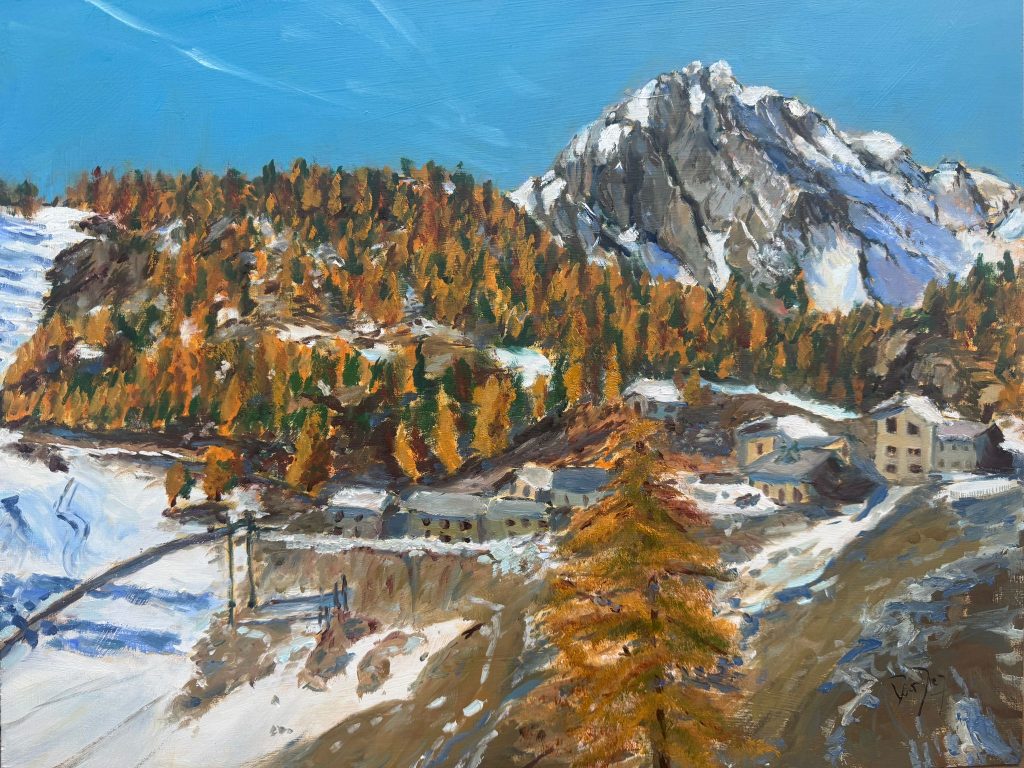
Check my Mountain Art on my Shop
You can go to my shop and see what have been inspiring me lately, lots mountain landscapes in soft pastels, and now in oils too. Go here to check my latest works!
Featured Image: St. Foy-Tarentaise-Photo: Valdemaras Januska. Unsplash. Southern Alps avalanches February 2026.


Discover more from The-Ski-Guru
Subscribe to get the latest posts sent to your email.
 Subscribe to The-Ski-Guru here.