


Summer traffic jams in the Alps are no longer limited to a few notorious holiday weekends. Across Europe’s mountain corridors, tunnels, high passes and border crossings are experiencing growing pressure as heatwaves, synchronized holiday patterns, campervan tourism and the rise of “coolcation” travel push more visitors toward Alpine destinations.
The latest queues at the Gotthard Road Tunnel, where traffic recently stretched for several kilometres even before the main summer season, are part of a wider trend affecting many of Europe’s major Alpine crossings. In Italy, the term “Sabato Nero” — Black Saturday — has long described the intense weekend traffic linked to summer holiday departures and arrivals. But increasingly, similar congestion patterns are being seen throughout the Alps, from the Brenner Pass to the Mont Blanc Tunnel and the scenic passes connecting Switzerland, France, Austria and Italy.
For decades, many of these routes were primarily associated with winter ski tourism or freight transport. Today, they are becoming year-round tourism corridors carrying cyclists, hikers, motorcyclists, campervans, second-home owners and travellers escaping increasingly hot cities in search of cooler mountain temperatures.
The Gotthard Road Tunnel remains the symbolic bottleneck of Alpine travel. Linking northern Europe with Italy through Switzerland, it carries millions of vehicles each year and regularly sees major delays during Easter, Ascension weekend, Pentecost and the peak July-August holiday season. Long traffic jams have become so common that many travellers now deliberately seek alternative crossings or travel during the night. Switzerland is currently building a second road tunnel at Gotthard, partly to allow renovation of the existing tunnel while maintaining traffic flow, but the project also reflects the growing strategic importance of this corridor.
Above the tunnel lies the historic Gotthard Pass itself, which typically opens between mid-May and early June depending on snowfall and weather conditions. In recent years, lighter snow winters have sometimes allowed earlier openings, illustrating how climate change is beginning to alter the traditional Alpine road calendar. This trend ties into broader questions around Mountain Infrastructure Risk in the Alps and Pyrenees and how warming temperatures are reshaping mobility across Europe’s mountain regions.
Further east, the Brenner Pass has become one of Europe’s most politically sensitive mountain corridors. Unlike many higher Alpine passes, Brenner remains open year-round and forms one of the continent’s key freight and tourism axes between Germany, Austria and Italy. During summer, the route becomes heavily congested with travellers heading toward the Dolomites, Lake Garda, Tuscany and the Adriatic coast. Local frustration over noise, pollution and traffic volumes has led to increasing transit restrictions in Austria, while the massive Brenner Base Tunnel rail project aims to shift more freight traffic from road to rail in the future.
On the French-Italian border, the Mont Blanc Tunnel continues to play a crucial role for tourism and regional mobility. Traffic surges during the summer hiking season, particularly as visitors arrive for the hugely popular Tour du Mont Blanc hiking circuit and the increasingly busy resorts around Chamonix and Courmayeur. The tunnel’s history remains deeply marked by the devastating 1999 fire disaster, which permanently changed freight regulations and safety standards throughout the Alps.
Nearby, the scenic Little St Bernard Pass generally opens between late May and June, depending on snow conditions, before closing again in autumn. The pass has become increasingly popular with cyclists, motorcyclists and travellers seeking a slower and more scenic alternative to the tunnel routes. Similar patterns can be seen across the Alps, where historic mountain roads are experiencing renewed popularity as part of a broader “slow travel” trend linked to changing summer tourism habits and growing interest in Alpine mobility.
The Fréjus Road Tunnel is often overshadowed by Mont Blanc but remains another critical corridor linking Turin and France. It carries both freight traffic and large numbers of leisure travellers, particularly from the UK and Benelux countries heading toward Italy and the Riviera. Above it, the historic Montgenèvre Pass remains an important cross-border route used by tourists, cyclists and local communities alike.
In the western Alps, the Great St Bernard Tunnel serves as a secondary but strategically important north-south corridor between Switzerland and Italy. While less congested than Gotthard, it often becomes more significant during disruptions elsewhere. The nearby Great St Bernard Pass usually opens between late May and June and closes in autumn. Once an essential trade and pilgrimage route, it is now increasingly valued for scenic tourism.
The Simplon Pass and the historic Simplon rail corridor through Domodossola also continue to provide important alternatives for travellers trying to avoid heavier congestion elsewhere. Unlike many higher Alpine passes, Simplon generally remains open year-round, although winter storms can still cause temporary disruptions.
Some of the most dramatic changes are taking place on scenic tourism routes. The Bernina Pass and nearby Maloja Pass have seen rising traffic linked to panoramic tourism, the popularity of the Bernina Express railway and growing numbers of day-trippers travelling between St. Moritz, Lake Como and Milan. Social media exposure and “Instagram tourism” have transformed some of these roads into international attractions in their own right, reinforcing many of the trends already visible in Future Mobility and Transport Adaptation in Andorra and the Pyrenees.
Further south, the Tenda Tunnel has become symbolic of another challenge facing Alpine infrastructure: vulnerability to extreme weather, landslides and chronic closures. The tunnel and the historic Col de Tende route connect the Riviera with the southern Alps and have suffered repeated disruptions in recent years. The wider debate around these connections has also re-emerged through proposals such as The Ghost Tunnel Project Linking Piemonte and the French Riviera and discussions surrounding The Tenda Tunnel Reopening and Southern Alps Connectivity.
Many of Europe’s iconic high passes remain seasonal and highly dependent on snow conditions. The legendary Stelvio Pass usually opens between late May and June before closing again in autumn and has become one of the world’s most famous cycling roads. Switzerland’s Furka Pass, Grimsel Pass, Nufenen Pass and Susten Pass also typically open between June and October, depending on snowfall and avalanche risk. These scenic roads are increasingly tied to the wider transformation of the Alps into a year-round tourism destination, particularly as cycling, hiking and panoramic road tourism continue to grow during the summer months.
What is becoming increasingly clear is that Alpine mobility is changing rapidly. Roads and tunnels originally designed for freight, trade and winter ski access are now facing year-round pressure from tourism growth, synchronized holiday schedules and climate-driven travel patterns. Rail operators across Europe are attempting to absorb part of this demand through expanded international rail services and overnight trains, while governments invest billions in projects such as the Brenner Base Tunnel and Swiss rail infrastructure.
Yet despite growing promotion of sustainable mobility and “slow tourism,” the reality remains that much of Alpine travel is still heavily car-dependent, particularly for families, second-home owners and multi-destination summer trips. As Europe’s mountains continue to attract more visitors during hotter summers, the pressure on Alpine roads, tunnels and communities is likely to intensify further.
 Planning your next trip to the Italian Alps?
 Planning your next trip to the Italian Alps?
If you’re heading to the Aosta Valley, take a look at Il Cuore della Valdigne, our family-owned apartment in Morgex, available for rent when we’re not using it ourselves.
It’s an ideal base to:
- Ski in Courmayeur, La Thuile and Pila
- Enjoy the mountains in summer (hiking, biking, nature)
- Explore the Mont Blanc valley in a quieter, more authentic setting.
 Ski in Courmayeur,
 Enjoy the mountains in summer (hiking, biking, nature)
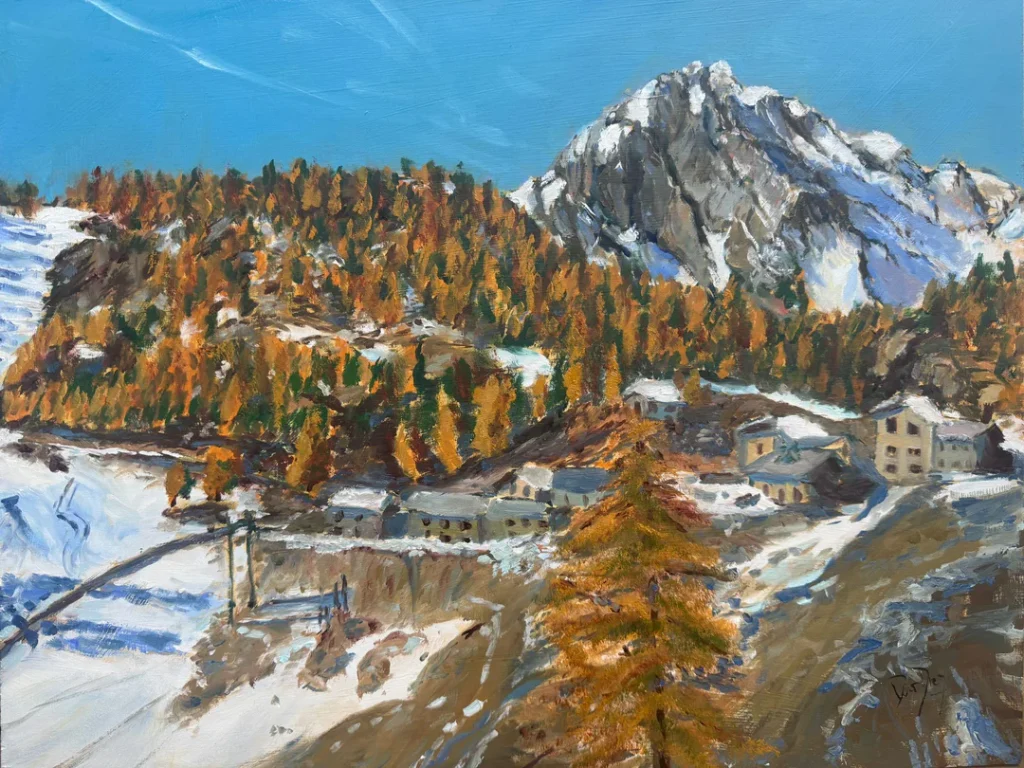
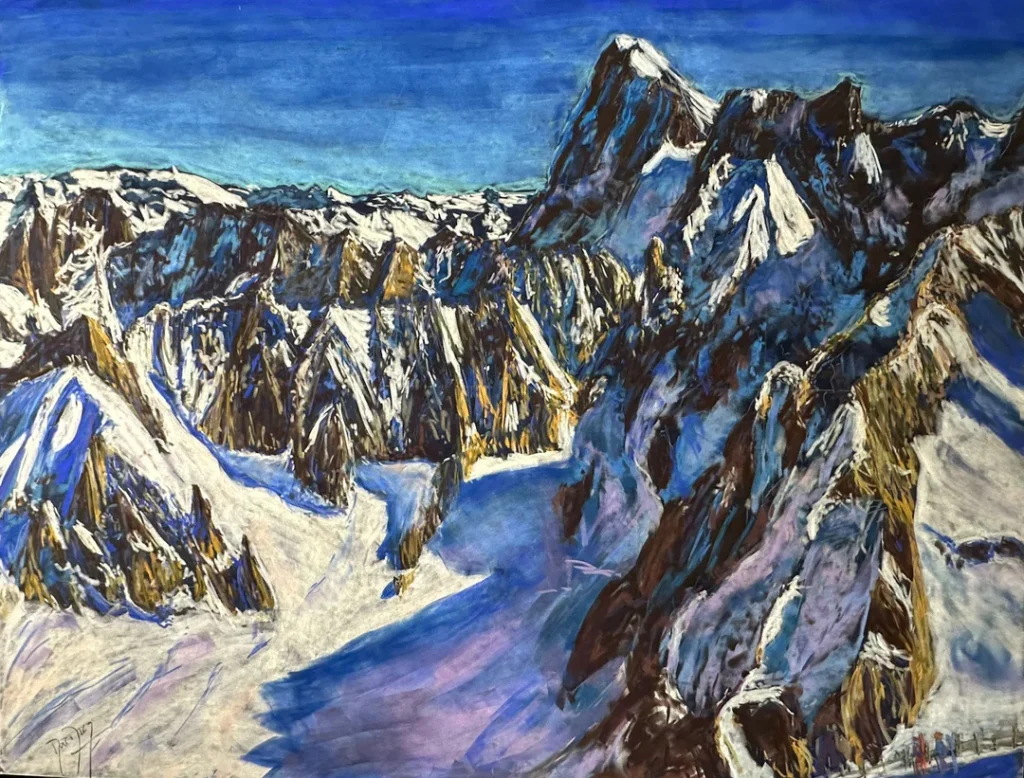
Check my Mountain Art on my Shop
You can go to my shop and see what have been inspiring me lately, lots mountain landscapes in soft pastels, and now in oils too. Go here to check my latest works!
Featured Image: Splugenpass in Switzerland. Photo: Daniele Levis Pelusi. Unsplash.


Discover more from The-Ski-Guru
Subscribe to get the latest posts sent to your email.
 Subscribe to The-Ski-Guru here.