

A recent filing showing that investment firm MSA Advisors sold its entire position in Vail Resorts may not be major news on its own. Institutional investors buy and sell shares every day. But in the context of the current ski industry landscape, the move raises broader questions about whether Wall Street is becoming more cautious about the future of the large destination ski resort model.
Over the past decade, Vail Resorts became one of the defining success stories of the modern ski industry. Through the growth of the Epic Pass, aggressive acquisitions, and expansion into Europe, the company transformed skiing into a subscription-style global business. Investors rewarded that strategy for years, helping turn Vail into one of the most valuable ski companies in the world.
But the environment facing ski resort operators in 2026 looks very different from the one that fuelled that expansion.
One of the weakest snow seasons in decades across parts of the Rocky Mountains highlighted how vulnerable even the largest operators remain to weather volatility. Resorts in Colorado and Utah saw difficult conditions during key periods of the season, while unusually warm temperatures accelerated spring closures at some destinations. At the same time, the cost of operating major ski resorts continues to rise, from labour and insurance to energy and snowmaking expenses.
That matters because companies like Vail Resorts are now balancing several competing priorities simultaneously.
The company continues to invest heavily in infrastructure, lift upgrades, snowmaking systems, and technology. It is also maintaining shareholder dividends that were once seen as a sign of stability and confidence. Yet critics increasingly question whether large cash payouts to shareholders make sense during a period when ski resorts face growing climate adaptation costs and operational pressures.
This debate is not unique to Vail Resorts, but the company has become the clearest example because of its scale and visibility.
Some industry observers argue that publicly traded ski companies are under pressure to satisfy investors expecting consistent returns, even though the ski business itself is becoming less predictable. Poor snow years can quickly affect visitation, spending, and profitability. At the same time, mountain infrastructure requires constant long-term investment.
The result is an increasingly difficult balancing act: how much cash should go toward dividends and shareholder returns, and how much should be reinvested into the future resilience of resorts?
This question becomes even more relevant as ski areas face mounting challenges linked to climate adaptation. Snowmaking expansion, water storage, employee housing, lift modernisation, transportation systems, and four-season diversification all require enormous amounts of capital.
As explored in Snow Conditions in a Warming Alpine Climate, resorts on both sides of the Atlantic are already adapting to shorter and less predictable winters.
In North America, this tension is increasingly visible. Labour disputes at major resorts, debates over pass pricing, criticism over overcrowding, and concerns about employee housing shortages have all become recurring themes across the industry.
You have already seen similar pressures emerge in stories such as Park City Ski Patrol Union Accuses Vail Resorts of Unfair Labour Practices and Ski Resort Employee Housing Is Becoming a Global Challenge.
At the same time, several smaller or community-supported ski areas have gained renewed attention by promoting local ownership models and reinvestment into regional economies rather than prioritising shareholder returns.
That trend also connects with Why More Towns Are Buying Their Ski Hills Back, where municipalities and local groups are increasingly trying to regain control of mountain infrastructure.
In Europe, many mountain lift companies operate under different structures, often with strong municipal or regional involvement. Profitability remains important, but Alpine operators are frequently viewed as strategic infrastructure for local tourism economies rather than purely financial assets. That does not mean European resorts are immune to climate and financial pressures, but it does create a different dynamic when major investments are considered.
This can also be seen in infrastructure-focused projects such as Future Mobility and Transport Adaptation in Andorra and the Pyrenees and Courmayeur’s New Gondolas Reflect a Shift in Alpine Infrastructure, where long-term regional planning often plays a larger role than short-term shareholder expectations.
The question now is whether investors are beginning to reassess how resilient the mega-resort business model truly is in an era of climate uncertainty and rising operating costs.
To be clear, Vail Resorts remains financially strong compared to many tourism businesses. The company still generates substantial revenue, continues to invest in its resorts, and maintains one of the most powerful season pass ecosystems in the industry. Some analysts also believe that the company could rebound if snowfall conditions improve and operational performance stabilises.
But the conversation surrounding ski resort economics is evolving.
The ski industry is entering a period where resilience may become just as important as growth. And that could ultimately force both investors and resort operators to rethink what long-term success looks like in mountain tourism.
Sources:
Yahoo Finance – MSA Advisors exits Vail Resorts position
https://finance.yahoo.com/markets/stocks/articles/msa-advisors-sells-vail-resorts-143740649.html
The Motley Fool – MSA Advisors sells out of Vail Resorts position
https://www.fool.com/coverage/filings/2026/05/19/msa-advisors-sells-out-of-vail-resorts-position-unloads-usd8-3-million-in-stock/
PR Newswire – Vail Resorts reports fiscal 2026 results and capital plans
https://www.prnewswire.com/news-releases/vail-resorts-reports-first-quarter-fiscal-2026-and-season-pass-sales-results-reaffirms-guidance-and-announces-2026-capital-plan-302638473.html
Zacks – Season pass metrics showing pressure for Vail Resorts
https://www.zacks.com/stock/news/2907655/are-season-to-date-metrics-showing-pressure-for-vail-resorts
Investing.com / Jefferies – Analyst upgrade on Vail Resorts
https://uk.investing.com/news/analyst-ratings/jefferies-upgrades-vail-resorts-stock-to-buy-on-expected-202627-growth-93CH-4450172
 Planning your next trip to the Italian Alps?
 Planning your next trip to the Italian Alps?
If you’re heading to the Aosta Valley, take a look at Il Cuore della Valdigne, our family-owned apartment in Morgex, available for rent when we’re not using it ourselves.
It’s an ideal base to:
- Ski in Courmayeur, La Thuile and Pila
- Enjoy the mountains in summer (hiking, biking, nature)
- Explore the Mont Blanc valley in a quieter, more authentic setting.
 Ski in Courmayeur,
 Enjoy the mountains in summer (hiking, biking, nature)
Check my Mountain Art on my Shop
You can go to my shop and see what have been inspiring me lately, lots mountain landscapes in soft pastels, and now in oils too. Go here to check my latest works!

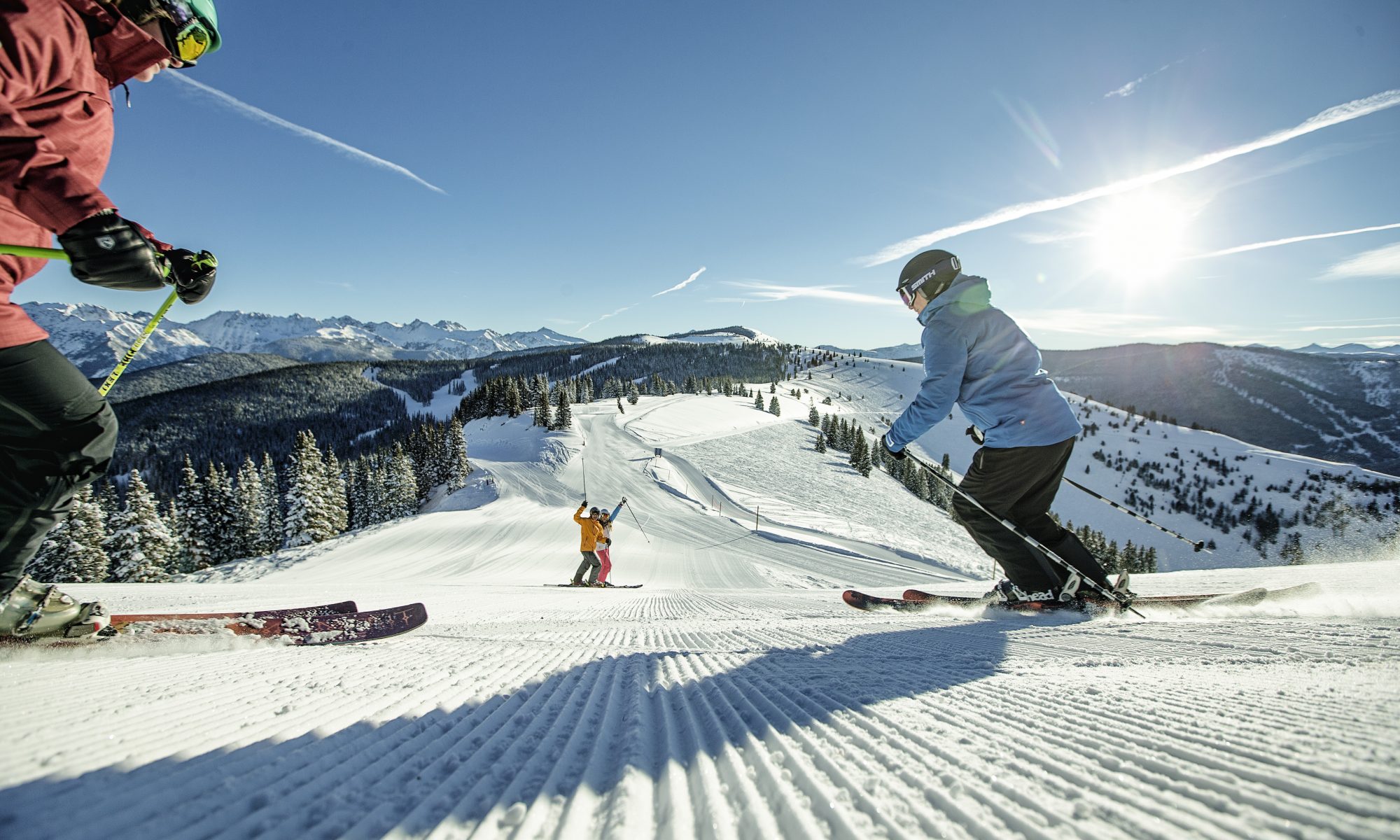
Featured Image: Friends Skiing Groomed Terrain in Vail, CO.. Photo: Daniel Milchev. Vail Resorts.


Discover more from The-Ski-Guru
Subscribe to get the latest posts sent to your email.
 Subscribe to The-Ski-Guru here.