

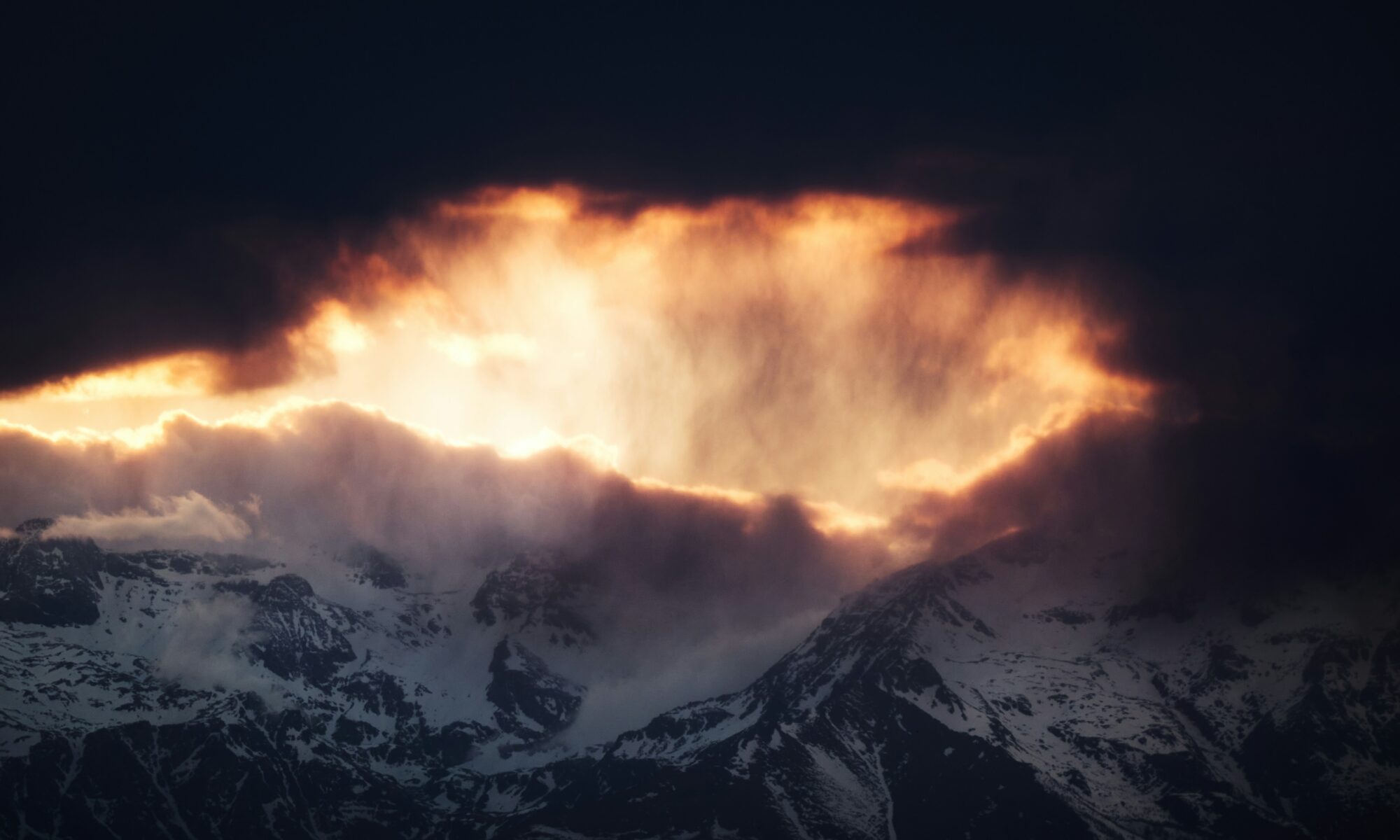
A hiker has died after being struck by lightning in the Italian Alps, while two Polish climbers were injured by another lightning strike above Cortina d’Ampezzo, as violent thunderstorms followed a prolonged period of extreme summer heat.
The incidents highlight one of the most rapidly developing hazards in the mountains: thunderstorms that can turn apparently manageable hiking and climbing conditions into a dangerous situation within minutes.
Atmospheric scientists say the Alps themselves can act as a hotspot for lightning, with mountain topography helping to trigger and intensify summer thunderstorms.
Hiker Dies on Piz Starlex
Gustav Wiesler, 42, from Tubre in South Tyrol, died while descending from Piz Starlex, a 3,075-metre mountain above Val Monastero close to the Swiss border.
Wiesler had last made contact at around 13:00 from the summit, when a thunderstorm was approaching.
After he failed to return, a major search operation was launched later that evening involving around 40 rescuers.
At 23:44, a drone operated by the Prato allo Stelvio Alpine Rescue service located Wiesler near trail number 4 at approximately 2,600 metres.
According to the Alpine Rescue service, Wiesler had been struck by lightning while descending from the mountain.
Local reports said he was found in exposed terrain just below the ridge, with no nearby shelter.
Polish Climbers Struck by Lightning Above Cortina
The Piz Starlex tragedy came just a day after another serious lightning incident in the Dolomites.
On Sunday, 16 August, emergency services were called to assist two climbing parties caught by severe weather on Ra Gusela, above Cortina d’Ampezzo.
One of the groups consisted of two Polish rock climbers — a man and a woman — who were on the final pitch of the Via “Mamma e Papà” when lightning struck the rock face.
Both climbers were injured.
At the same time, another two climbers were stranded on the summit of Ra Gusela and unable to descend because of the storm.
The Aiut Alpin Dolomites helicopter crew recovered both groups. The two injured Polish climbers were flown to hospital in Bolzano, while the two uninjured climbers were taken to Passo Giau.
The incident illustrates the particular danger thunderstorms pose to climbers, who may have little opportunity to escape once committed to an exposed route.
Two Fatal Lightning Incidents in Italy
The fatal accident on Piz Starlex was not the only lightning death reported in Italy during the same period.
A 30-year-old American tourist died after being struck by lightning while hiking on Mount Etna in Sicily on Sunday evening.
He was rescued in serious condition and transported to Cannizzaro Hospital in Catania, where he later died.
Italian media reported that the tourist may have been hiking through a restricted area when the thunderstorm developed.
While Etna is far removed from the Alps, the two deaths within such a short period underline the danger posed by rapidly developing summer thunderstorms in exposed mountain terrain.
Why the Alps Are a Lightning Hotspot
The combination of mountains and atmospheric instability makes the Alps particularly favourable terrain for thunderstorm development.
Lorenzo Giovannini, an atmospheric physicist at the University of Trento, described the Alps as a “hot spot” for lightning following the latest storms.
Mountain topography helps force warm, humid air upwards. When this rising air encounters colder air higher in the atmosphere, powerful convective clouds can develop.
After prolonged periods of extreme heat, the arrival of cooler air at altitude can create particularly unstable conditions.
The result can be intense rainfall, hail, strong wind gusts and frequent lightning.
This does not mean that an individual lightning strike can simply be attributed to climate change. Thunderstorms and lightning have always been part of Alpine summer weather.
But periods of intense heat followed by changing air masses can provide the atmospheric ingredients for violent storms.
Why Mountain Thunderstorms Can Become Dangerous So Quickly
For hikers and climbers, the problem is not simply whether thunderstorms are forecast.
It is where you are when they arrive.
Someone on a summit, ridge, exposed plateau or climbing route may have nowhere safe to shelter. Climbers can be particularly vulnerable because retreating from a multi-pitch route can take considerable time.
Via ferratas present another significant risk during electrical storms because climbers are attached to extensive systems of steel cables, ladders and other metal infrastructure.
Lightning is also only one of the hazards.
Heavy rain can rapidly make rock and trails slippery, while hail can cover paths. Strong wind gusts can make exposed terrain dangerous, and intense rainfall can contribute to flash flooding, debris flows and rockfall.
The safest decision may therefore need to be made long before the first thunder is heard.
What Hikers and Climbers Should Do
Mountain forecasts and official weather warnings should always be checked before setting out, particularly during periods of unstable summer weather.
When afternoon thunderstorms are forecast, starting early can provide an additional safety margin. But hikers should never assume storms can only occur late in the day.
Conditions should continue to be monitored while on the mountain.
Darkening skies, rapidly growing clouds, increasing winds or distant thunder are all reasons to reconsider continuing towards an exposed summit or ridge.
If thunder can be heard, lightning is already a potential danger.
Hikers should move away from summits, ridges and other exposed high points and avoid isolated trees, bodies of water and exposed metal infrastructure.
For climbers and via ferrata users, the crucial consideration is time. Getting off an exposed route after a storm has already arrived may be extremely difficult.
Turning around early can be the safest decision.
Check Official Weather Information Before Heading Up
Mountain weather can change dramatically over short distances in the Alps, so forecasts should come from official national or regional meteorological services whenever possible.
In Switzerland, MeteoSwiss provides continuously updated hazard warnings covering thunderstorms, heavy rain, wind and other severe weather.
Equivalent official services operate across the Alpine countries, while local mountain authorities and rescue organisations can provide additional information about conditions.
Weather apps can be useful planning tools, but they should not replace official severe-weather warnings.
The recent incidents on Piz Starlex and above Cortina are reminders that summer mountain safety is not only about glacier conditions, rockfall or extreme heat.
As the weather changes after a prolonged hot spell, one of the most immediate hazards can come from the sky.
Read More
Extreme Heat and Glacier Closures Across the Alps
https://www.the-ski-guru.com/2026/08/10/alps-heatwave-glacier-closures/
Where to Check Mountain Closures in the Alps
https://www.the-ski-guru.com/2026/08/12/mountain-closures-alps/
Fatal Week in the Alps: Mountaineering Accidents Highlight Summer Risks
https://www.the-ski-guru.com/2026/06/13/fatal-week-alps-mountaineering-accidents-summer-2026/
Sources
Alto Adige — Tragedia sul Piz Starlex, la vittima è Gustav Wiesler: aveva 42 anni
https://www.altoadige.it/cronaca/tragedia-sul-piz-starlex-la-vittima-e-gustav-wiesler-aveva-42-anni-ba46e0gv
RAI TGR Bolzano — Hiker killed by lightning on Piz Starlex
https://www.rainews.it/tgr/bolzano/articoli/2026/08/muore-colpito-da-un-fulmine-58c792a9-757f-4eb5-b169-ad4e4508a20c.html
ANSA — Two climbing parties rescued above Cortina, one struck by lightning
https://www.ansa.it/sito/notizie/cronaca/2026/08/16/soccorse-due-cordate-di-alpinisti-sopra-cortina-una-colpita-da-un-fulmine_0610db56-b556-47af-9c4b-3faed9da9b18.html
ANSA — Expert: the Alps are a lightning “hot spot”
https://www.ansa.it/sito/notizie/cronaca/2026/08/18/temporali-dopo-il-caldo-parla-lesperto-le-alpi-fanno-da-hot-spot-per_d9e35673-8b00-4df7-885c-a720ae9e3fd0.html
Il Sole 24 Ore — US tourist dies after being struck by lightning on Etna
https://en.ilsole24ore.com/art/etna-30-year-old-us-tourist-dies-after-being-struck-by-lightning-whilst-hiking-on-the-volcano-AJi8Q1n
MeteoSwiss — Natural hazard warnings
https://www.meteoswiss.admin.ch/weather/hazards.html
Planning your next trip to the Italian Alps?
If you’re heading to the Aosta Valley, take a look at Il Cuore della Valdigne, our family-owned apartment in Morgex, available for rent when we’re not using it ourselves.
It’s an ideal base to:
- Ski in Courmayeur, La Thuile and Pila
- Enjoy the mountains in summer (hiking, biking, nature)
- Explore the Mont Blanc valley in a quieter, more authentic setting.
Check my Mountain Art on my Shop
You can go to my shop and see what have been inspiring me lately, lots mountain landscapes in soft pastels, and now in oils too. Go here to check my latest works!
Featured Image: A storm in the Alpe Torinesi, photo credit: Joshua Kettle. Unsplash.


Discover more from The-Ski-Guru
Subscribe to get the latest posts sent to your email.
 Subscribe to The-Ski-Guru here.