

Why Skiing Alone Is Dangerous in the Mountains
Skiing alone is often seen as peaceful, efficient or even safer — fewer people, fewer variables, fewer mistakes. For experienced skiers in particular, solo skiing can feel controlled and familiar.
In reality, skiing alone is one of the strongest risk factors in fatal mountain accidents, whether caused by avalanches, collisions, falls or medical emergencies.
This article explains why skiing alone dramatically increases danger, even for skilled and cautious skiers.
The Most Critical Factor: No Immediate Help
When skiing alone, there is no margin for error.
In many mountain accidents:
- The victim is unable to call for help
- Injuries prevent movement or communication
- Time becomes the decisive factor
In avalanches, survival often depends on rescue within minutes. Without a partner to initiate a search, deploy equipment or raise the alarm immediately, the chances of survival drop sharply.
The same applies to:
- High-speed collisions with trees or rocks
- Falls into gullies or terrain traps
- Sudden medical events such as cardiac arrest
When alone, even minor incidents can become fatal.
Solo Skiing and Avalanche Accidents
A significant number of avalanche fatalities involve solo skiers or riders.
Common patterns include:
- “Just one run” mentality
- Familiar terrain leading to complacency
- Reduced caution due to lack of group discussion
- No one to observe warning signs or challenge decisions
Without a partner:
- No one performs a transceiver search
- No one probes or shovels
- No one immediately contacts rescue services
👉 For broader context, see:
Avalanche Awareness: What Every Skier Needs to Know
Psychological Factors: How Being Alone Changes Decisions
Group dynamics can increase risk — but being alone introduces different dangers.
When skiing solo:
- Decisions are rarely verbalised
- Risk assessments remain internal
- There is no external feedback or second opinion
This often leads to:
- Underestimating consequences
- Rationalising small warning signs
- Continuing despite fatigue or doubt
Experienced skiers are particularly vulnerable to this form of silent overconfidence.

Familiar Terrain Is Not Safe Terrain
Many solo accidents occur:
- Near pistes
- On return runs
- On slopes skied “hundreds of times”
Familiarity can create a false sense of control, especially when:
- Snow conditions have changed
- Wind has redistributed snow
- Visibility masks terrain features
Avalanche conditions, surface hardness and obstacle exposure can shift dramatically from one day — or even one hour — to the next.

Delayed Discovery and Rescue
Another often overlooked risk of skiing alone is delayed discovery.
When someone skis with others:
- A missing person is noticed quickly
- Search areas are narrowed
- Rescue is activated sooner
Solo skiers may not be reported missing for hours — or longer — especially when:
- Skiing outside marked areas
- Touring alone
- Skiing late in the day
In mountain environments, time is often the difference between survival and fatality.
Equipment Does Not Compensate for Being Alone
Carrying avalanche safety equipment is essential — but equipment alone does not save lives.
Without a partner:
- A transceiver cannot be used
- A probe cannot locate you
- A shovel cannot dig you out
Similarly, helmets and protective gear offer limited protection in high-energy collisions or deep burial scenarios.
👉 Related reading:
Avalanche Safety Equipment Explained: What Every Skier Should Carry Off-Piste
When Is Skiing Alone Especially Risky?
Skiing alone carries heightened danger during:
- Elevated avalanche danger levels
- Poor visibility or flat light
- Wind-affected conditions
- Late-day fatigue
- Off-piste or side-country skiing
Understanding avalanche forecasts and recognising when conditions warrant extra caution is critical.
👉 Essential reading:
Avalanche Danger Levels Explained: What “Level 3 – Considerable” Really Means
A Simple Safety Principle
A widely accepted mountain safety principle is:
If you wouldn’t do it alone in summer, don’t do it alone in winter.
Winter adds:
- Snow instability
- Reduced mobility
- Hidden obstacles
- Cold and exposure
Skiing with a partner does not eliminate risk — but it dramatically improves response time, decision quality and survival chances.
Final Thoughts
Skiing alone is not inherently reckless — but it is objectively more dangerous.
Many fatal accidents are not caused by extreme terrain or poor skill, but by:
- Isolation
- Delayed rescue
- Unchallenged decisions
Mountain safety is not about fear. It is about stacking small advantages in your favour. Skiing with at least one partner is one of the most effective ways to do that.
Continue Learning
- Avalanche Awareness: What Every Skier Needs to Know
- Avalanche Danger Levels Explained: What “Level 3 – Considerable” Really Means
- Off-Piste & Backcountry Risk
- Avalanche Safety Equipment Explained: What Every Skier Should Carry Off-Piste
- Why Skiing Alone Is Dangerous in the Mountains
- Crevasses & Glaciers: The Hidden Winter Danger
 Planning your next trip to the Italian Alps?
 Planning your next trip to the Italian Alps?
If you’re heading to the Aosta Valley, take a look at Il Cuore della Valdigne, our family-owned apartment in Morgex, available for rent when we’re not using it ourselves.
It’s an ideal base to:
- Ski in Courmayeur, La Thuile and Pila
- Enjoy the mountains in summer (hiking, biking, nature)
- Explore the Mont Blanc valley in a quieter, more authentic setting
 Ski in Courmayeur,
 Enjoy the mountains in summer (hiking, biking, nature)
Check my Mountain Art on my Shop
You can go to my shop and see what have been inspiring me lately, lots mountain landscapes in soft pastels, and now in oils too. Go here to check my latest works!
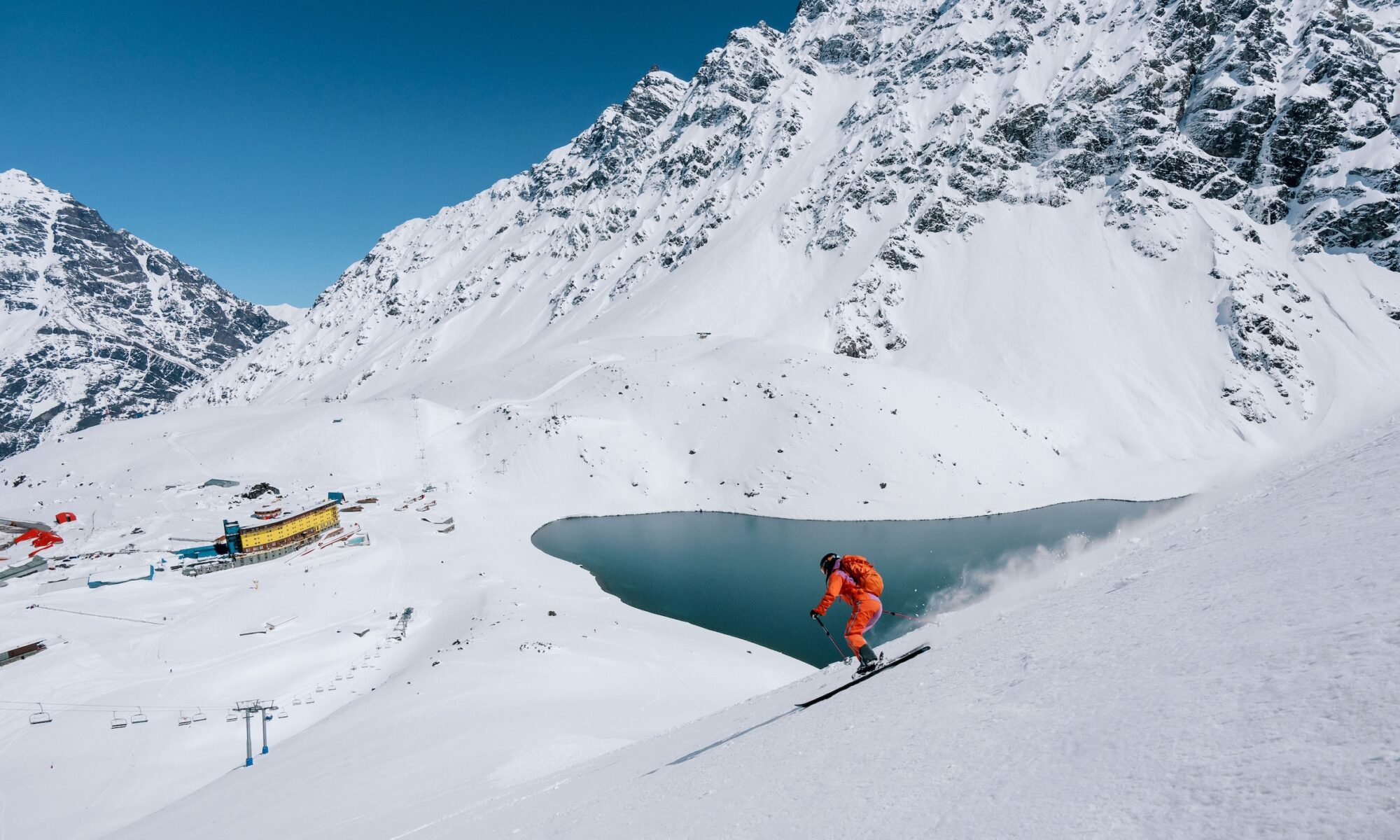
Featured Image: Skier coming down the slopes- views of the hotel and the Laguna del Inca. Photo by Tamara Susa. Courtesy Ski Portillo.


Discover more from The-Ski-Guru
Subscribe to get the latest posts sent to your email.
 Subscribe to The-Ski-Guru here.
You must be logged in to post a comment.