

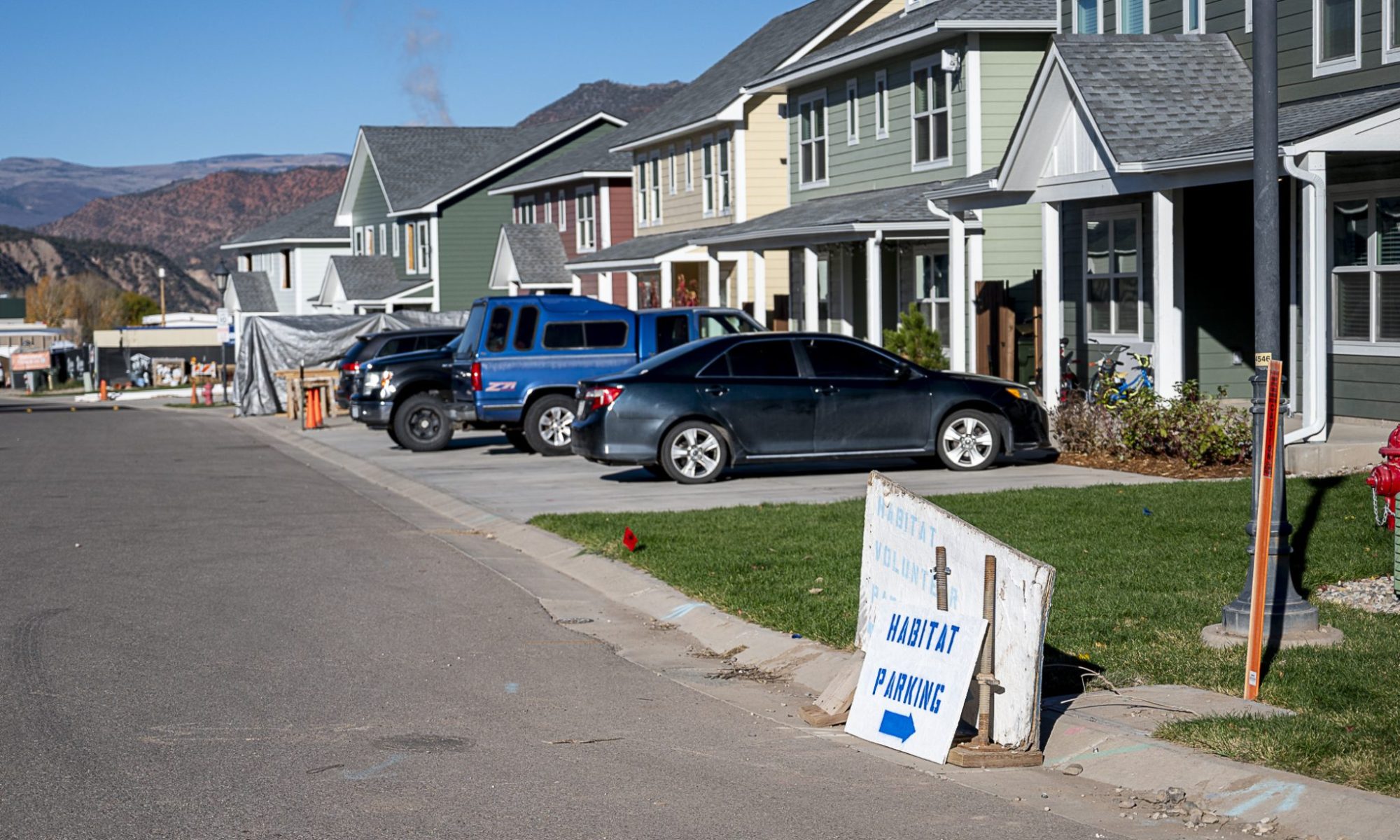
The conversation around ski destinations has long focused on snow, infrastructure, and demand. Yet across North America and Europe, a different constraint is becoming increasingly visible: whether the people who operate these destinations can still afford to live within reach of them.
What appears at first as a local issue in individual resorts is, in reality, a structural challenge affecting mountain tourism globally. From Aspen to Zermatt, from Whistler to Cortina d’Ampezzo, the same question is emerging in different forms: who can still afford to live where tourism takes place, and how far can they be pushed away before the system begins to strain.
In North America, the issue is often framed directly as workforce housing. In Aspen, one of the most developed housing systems in ski tourism has been in place for decades, yet demand continues to exceed supply. Access to subsidised housing remains competitive, with strict qualification systems and long waiting lists. The conclusion is difficult to avoid: even a mature, highly structured model does not fully resolve the imbalance between housing supply and workforce demand.
Further west, in destinations linked to Vail Resorts such as Vail and Breckenridge, significant investment has been made in employee housing. Yet local reporting consistently points to a more complex reality. Geography, land constraints, and the distribution of housing stock mean that even where accommodation exists, it is not always aligned with where and when employees need to work. In some cases, housing lies further down valley, requiring reliance on transport systems that do not always match shift patterns. The issue is not a lack of effort, but a structural imbalance between supply, geography, and operational needs.
In more constrained resort environments such as Telluride and Crested Butte, local coverage has increasingly framed housing as a broader community sustainability issue. Extremely limited developable land, very high real estate values, and the growth of second-home ownership have reduced the availability of long-term housing, pushing workers into surrounding areas and lengthening commutes. In these cases, the question extends beyond staffing into whether a year-round local community can be maintained at all.
Canada offers a partial contrast. In Whistler, long-term planning and the legacy of the 2010 Winter Olympics led to the development of one of the most structured workforce housing systems in the industry. The conversion of Olympic accommodation and the creation of the Whistler Housing Authority have provided a model often cited internationally. Yet even here, demand continues to outpace supply, reinforcing the idea that planning can mitigate but not eliminate the underlying pressure.
In Europe, the issue often appears less visible, but it is no less present. In the French Alps, reporting in Le Dauphiné Libéré has highlighted how employers in destinations like Chamonix are increasingly purchasing property directly to house seasonal workers. This marks a shift in the tourism model, where businesses move beyond employment into accommodation provision in order to maintain operations.
Switzerland presents a different structure again, shaped by its transport infrastructure. Resorts such as Verbier are not directly connected by rail, but are integrated into a dense valley transport network. Workers can live in places like Le Châble or even Martigny, commuting via train, cable car, or road. In Crans-Montana, the funicular link to Sierre enables a similar model.
Zermatt illustrates both the strength and the limits of this system. The resort is directly connected by rail, yet housing constraints mean many workers live in Täsch or further down the valley in Visp. Daily commuting is efficient but not necessarily cheap relative to seasonal wages. A single ticket can be expensive for lower-paid hospitality or lift workers, and while passes and discounts reduce the burden, the cost and time of commuting are effectively transferred onto the workforce. The housing problem does not disappear; it is redistributed geographically and economically.
Italy adds another layer to this comparison. In the Via Lattea and Bardonecchia, proximity to Turin allows for a hybrid model where some workers commute daily by train or road. Unlike more isolated North American resorts, Bardonecchia remains connected to Turin by a relatively affordable rail corridor, making commuting far more realistic. Across the Via Lattea system, the distribution of villages between Sestriere, Sauze d’Oulx, Cesana, Pragelato, and Claviere creates a more flexible labour geography where workers can move between valleys and resort sectors rather than relying entirely on local accommodation.
In the Aosta Valley, resorts such as Courmayeur, Cervinia, La Thuile, Monterosa, and Pila remain connected to a central valley system, allowing commuting by car or bus from Aosta and surrounding areas. This creates a more flexible labour geography than in isolated mountain towns, although commute times can still become significant for destinations deeper into the valleys. Again, the pressure is softened by geography and transport rather than fully resolved.
The Dolomites, across Trentino and South Tyrol, still benefit from strong local communities and a distributed tourism model. However, rising property values and increasing reliance on external seasonal workers are gradually introducing the same pressures seen elsewhere. In many cases, hotels provide staff accommodation directly, but capacity remains limited.
In Cortina d’Ampezzo, the recently completed 2026 Winter Olympics accelerated investment in luxury accommodation and infrastructure, with the number of five-star hotels increasing significantly. Yet there appears to be little clear evidence in local reporting of a long-term plan to convert Olympic accommodation into permanent workforce housing after the Games. Much of the Olympic accommodation was designed as temporary or modular structures rather than a permanent residential village. This contrasts with examples such as Whistler after 2010, where Olympic accommodation formed part of a broader long-term housing strategy.
In Andorra, Grandvalira has been linked in industry reporting to a potential project inspired by the Olympic village model, with accommodation for approximately 200 to 300 seasonal employees. While still at a proposal stage, it reflects a broader recognition across mountain destinations that tourism infrastructure alone is not enough if the workforce itself cannot be housed sustainably.
Spain reflects similar dynamics in different forms. In Sierra Nevada, proximity to Granada allows for some commuting, while rising tourism demand and short-term rentals affect local availability. In Baqueira-Beret, high-end second-home development in the Val d’Aran coexists with a seasonal workforce that must find accommodation within a limited market.
Austria, particularly in Tyrol and SalzburgerLand, has historically relied on strong local populations and family-run hospitality. However, local discussions increasingly highlight labour shortages linked to housing availability and affordability, suggesting that similar pressures are emerging even in systems that have traditionally been more stable.
Across all these regions, different models exist. Some rely on large-scale housing development, others on transport networks, others on employer-provided accommodation or proximity to urban centres. Yet none fully resolve the same underlying issue.
The ski industry has invested heavily in lifts, snowmaking, and high-end accommodation, while demand continues to grow in many destinations. But the functioning of these systems ultimately depends on a workforce that is increasingly priced out of the very places it sustains. This dynamic also connects with broader structural pressures already explored in Snow Conditions in a Warming Alpine Climate, where environmental and economic constraints are reshaping how destinations operate, and in Courmayeur’s New Gondolas Signal a Deeper Shift in Alpine Ski Infrastructure, where investment in infrastructure reflects longer-term strategic adaptation.
At the same time, the question of who benefits from growth and who absorbs the pressure echoes trends discussed in Vail Resorts Visits Drop 14.9% — What It Reveals About Snow, Demand, and the Ski Industry Model, as well as in Is Global Ski Consolidation Reshaping Europe’s Alpine Model? and Global Ski Passes and the Alps: Structural Shifts in Demand Before the Debate, where the evolution of demand, pricing, and ownership models continues to reshape the industry.
The question is no longer simply whether resorts can attract visitors. It is whether they can continue to operate effectively if the people who run them are pushed further and further away.
Sources
- Le Dauphiné Libéré – Chamonix seasonal housing pressure
- Aspen Snowmass Housing Overview
- Aspen Public Radio – Housing and workforce coverage
- Vail Daily – Housing coverage archive
- Pique Newsmagazine – Whistler housing coverage
- Matterhorn Gotthard Bahn – Zermatt rail line
- SBB Swiss Rail – Travelcards and pricing
- Trainline – Turin to Bardonecchia train route
 Planning your next trip to the Italian Alps?
 Planning your next trip to the Italian Alps?
If you’re heading to the Aosta Valley, take a look at Il Cuore della Valdigne, our family-owned apartment in Morgex, available for rent when we’re not using it ourselves.
It’s an ideal base to:
- Ski in Courmayeur, La Thuile and Pila
- Enjoy the mountains in summer (hiking, biking, nature)
- Explore the Mont Blanc valley in a quieter, more authentic setting.
 Ski in Courmayeur,
 Enjoy the mountains in summer (hiking, biking, nature)
Check my Mountain Art on my Shop
You can go to my shop and see what have been inspiring me lately, lots mountain landscapes in soft pastels, and now in oils too. Go here to check my latest works!
Featured Image: Homes built by Habitat for Humanity Vail Valley. Stratton Flats Neighborhood in Gypsum
Photo: Ben Roof/Special to the Summit Daily/Vail Daily


Discover more from The-Ski-Guru
Subscribe to get the latest posts sent to your email.
 Subscribe to The-Ski-Guru here.