

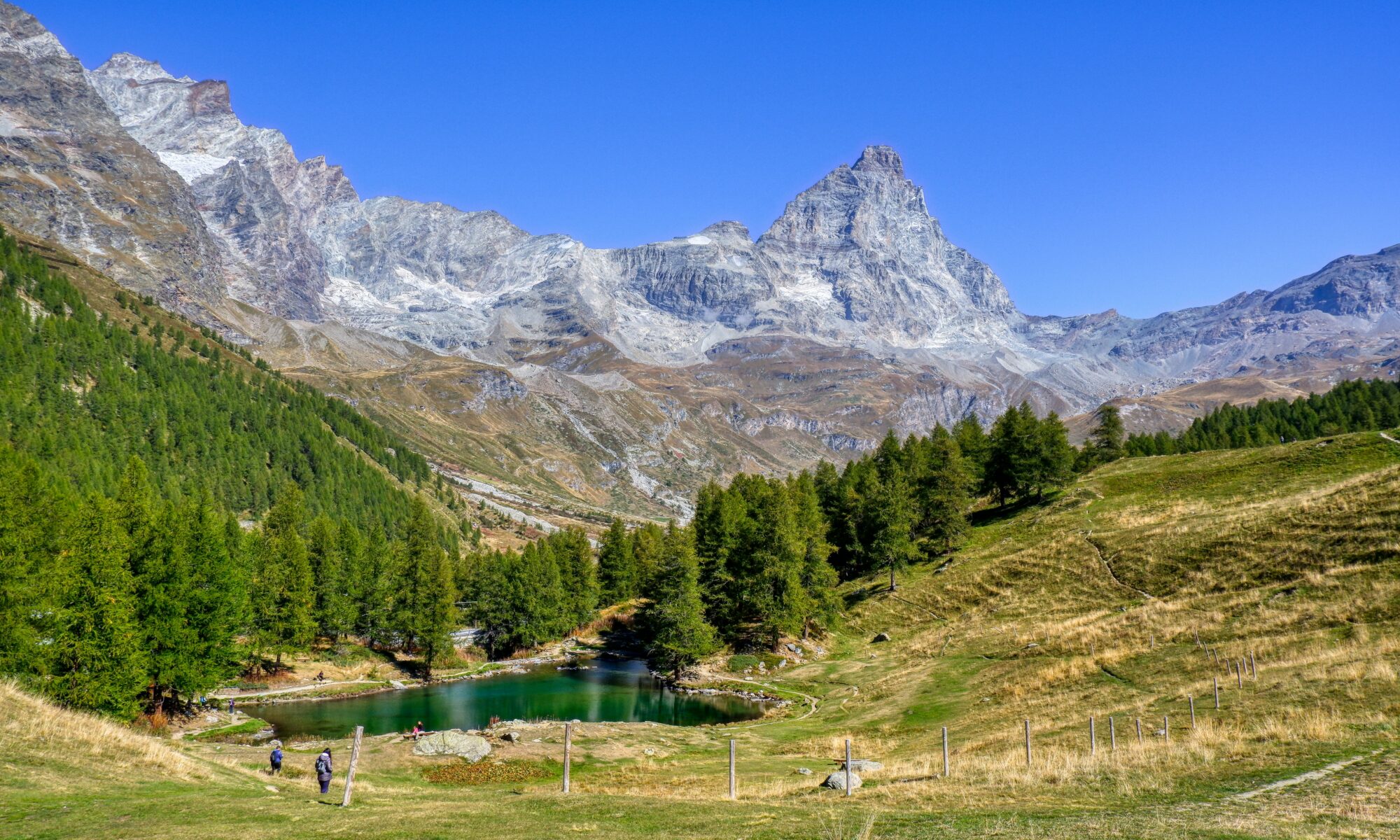
Just one day after a large rockfall on the Matterhorn shocked the Alpine community, authorities and scientists across the Alps are warning that the exceptional heat gripping southern Europe is accelerating glacier melt and increasing instability in high mountain areas.
Italy remains under widespread red heat alerts, with meteorologists expecting the heatwave to continue through at least Ferragosto. While cities are enduring record temperatures, the impact is proving just as dramatic in the mountains, where glaciers are retreating at unprecedented rates and frozen rock is beginning to thaw.
One of the clearest indicators of the current conditions is the zero-degree isotherm. Normally found between 3,500 and 4,000 metres during summer, it remained between 5,500 and 5,800 metres for several days in July—around 1,400 metres higher than normal. This meant that even the highest Alpine peaks were experiencing temperatures above freezing, dramatically accelerating glacier melt while weakening the permafrost that helps hold mountain rock together.
According to Italian scientists, 2026 is already shaping up to be the worst year on record for glaciers in Italy’s Aosta Valley, despite the summer season not yet being over. Researchers say Alpine glaciers are now losing mass at roughly twice their historical rate, with the combination of extreme temperatures, shrinking snow cover and thawing permafrost making high-altitude terrain increasingly unstable.
Glacier Retreat Accelerating Across the Alps
Several glaciers highlighted in recent reports illustrate the scale of the changes.
In South Tyrol, the glacier at Solda retreated around 26 metres in a single year. Italy’s largest glacier, Adamello, continues to shrink rapidly, while the Lys Glacier in the Monte Rosa massif has already lost around one-third of its surface compared with previous decades.
The most dramatic figures come from the Rutor Glacier in Italy’s Aosta Valley. Measurements by ARPA Valle d’Aostashow glacier melt running 148% above the average recorded over the past 20 years.
Between 27 and 31 July, the glacier lost around 7 centimetres of ice thickness every day. Even more remarkably, scientists estimate that between 20 and 31 July alone, the glacier released as much meltwater as it would normally produce during an entire summer season.
Researchers estimate that around 170 square kilometres of glacier surface have disappeared from the Italian Alps over the past 60 years, fundamentally reshaping the mountain landscape.
Matterhorn Rockfall Highlights Growing Instability
The same extreme conditions are also being linked to Wednesday’s major rockfall from the south face of the Matterhorn (Monte Cervino).
Regional geologists are continuing to assess whether additional sections of the mountain have become unstable following the collapse. According to local mountain guides, the danger is not caused solely by unusually high air temperatures, but also by the heat stored deep inside the rock, with internal temperatures now comparable to those recorded during the exceptional summer of 2022.
Experts explain that as permafrost disappears, the frozen “cement” that binds rock together weakens, increasing the likelihood of rockfalls on steep Alpine faces.
Following the collapse, guides have suspended climbing activities on the Italian side of the Matterhorn while safety assessments continue.
Courmayeur Continues Monitoring Planpincieux Glacier
The heatwave is also affecting visitor access in parts of the Aosta Valley.
In Courmayeur’s Val Ferret, local authorities continue to monitor the Planpincieux Glacier, one of the Alps’ best-known glaciers under continuous surveillance because of its natural instability.
Civil Protection measures remain in place, including the closure of the road between Meyen and Planpincieux and restrictions around the Rochefort area. Access to Planpincieux is currently only possible via the alternative Montitta road.
Rather than being permanently closed, the area operates under a dynamic monitoring system. Authorities regularly tighten or relax restrictions according to glacier movement, rainfall and weather forecasts, allowing safety measures to adapt as conditions evolve.
Heat Brings Storms as Well as Melting
The same atmospheric conditions driving the heatwave have also triggered violent thunderstorms across northern Italy and the Alps.
Large hail, intense rainfall and powerful winds have affected several mountain regions in recent days. While these storms provide only temporary relief from the heat, experts say they do little to slow glacier melt and can instead increase the risk of flash floods, debris flows and further rockfalls.
A Summer of Alpine Closures
The latest warnings add to a growing list of climate-related disruptions across the Alps this summer.
Earlier this week, Zermatt-Cervinia announced the early end of summer skiing after exceptional heat severely damaged the glacier. In Chamonix, the famous Aiguille du Midi ice tunnel has also been closed because melting ice has made conditions unsafe.
Together with the Matterhorn rockfall and the unprecedented glacier melt recorded in the Aosta Valley, these events highlight how rapidly mountain conditions are changing across Europe’s highest peaks.
Mountains Under Pressure
For visitors, the message is not that the Alps are becoming inaccessible, but that mountain conditions are evolving more rapidly than ever before.
Resorts, local authorities and mountain guides are increasingly relying on real-time monitoring, temporary closures and dynamic safety measures to protect both residents and visitors as glaciers continue to respond to one of the most intense heatwaves Europe has experienced in recent years.
This summer is becoming another reminder that climate change is no longer a distant concern for the Alps. From accelerated glacier melt and unstable mountain slopes to changing access rules, disrupted summer skiing and increasing safety restrictions, the effects are already reshaping how people experience Europe’s mountains.
Where to Check the Latest Alpine Closures and Safety Updates
Mountain conditions can change rapidly during periods of extreme heat, storms or glacier instability. Before heading into the Alps, visitors should always check official sources for the latest information.
- Matterhorn / Zermatt–Cervinia: Official lift and operations updates from Zermatt Bergbahnen and Cervino Ski Paradise.
- Zermatt Bergbahnen – Live lift & piste status (official)
Matterhorn Paradise – Open Lifts & Pistes - Cervino Ski Paradise – Official website
Cervino Ski Paradise - Courmayeur / Val Ferret: The Municipality of Courmayeur publishes Civil Protection notices, road closures and Planpincieux Glacier updates.
- Courmayeur Mont Blanc website.
- Chamonix: The Chamonix Tourist Office provides road conditions, Mont Blanc Tunnel information and local access updates.
- Chamonix-Mont-Blanc Tourist Office
Chamonix Official Tourist Office - Compagnie du Mont-Blanc (lifts, Aiguille du Midi, Montenvers, closures)
Compagnie du Mont-Blanc – Live Information - Mountain weather: Always consult the local weather forecast and avalanche or mountain safety bulletins before setting out, especially during periods of extreme heat or thunderstorms.
- Meteo Alpes (Italy – Valle d’Aosta)
Meteo Valle d’Aosta - Météo Alpes Montagne (France)
Météo-Alpes
Conditions in the Alps can change from day to day. Visitors planning hikes, glacier activities or high-altitude climbs should always check official local information before travelling, as access restrictions may be introduced or lifted at short notice.
Read More:
- Large Rockfall on the Matterhorn/Cervino Sends Huge Dust Cloud into the Valley
- Zermatt–Cervinia Summer Skiing to Close as Extreme Heat Damages Glacier
- Heat Forces Closure of Aiguille du Midi Ice Tunnel in Chamonix
- Alps Summer Tourism Booms as Heatwave Drives Visitors Despite Climate Challenges
- South America Ski Season 2026: Openings & Snow Conditions
Powerful Andes Storm Cycle Transforms Ski Conditions Across Chile and Argentina
Sources
- La Stampa (6 August 2026) – È il giorno del caldo record: bollino rosso in tutte le città. Allarme ghiacciai in agonia. (Front-page coverage of Italy’s heatwave and glacier crisis.)
- La Stampa (6 August 2026) – La lenta agonia dei ghiacciai: il 2026 è già l’anno peggiore. (ARPA Valle d’Aosta data on the Rutor Glacier, glacier melt, zero-degree isotherm and snow deficit.)
- La Stampa (6 August 2026) – Un boato e una nube di polvere: la Gran Becca è più fragile. (Matterhorn rockfall, geological assessments and comments from the Cervino Mountain Guides.)
- Courmayeur Municipality – Civil Protection Updates (Planpincieux Glacier restrictions and Val Ferret road closures.)
- PlanetSKI – Fourth Summer Heatwave Hits the Alps (Background on the July/August 2026 Alpine heatwave, freezing levels and summer ski closures.)
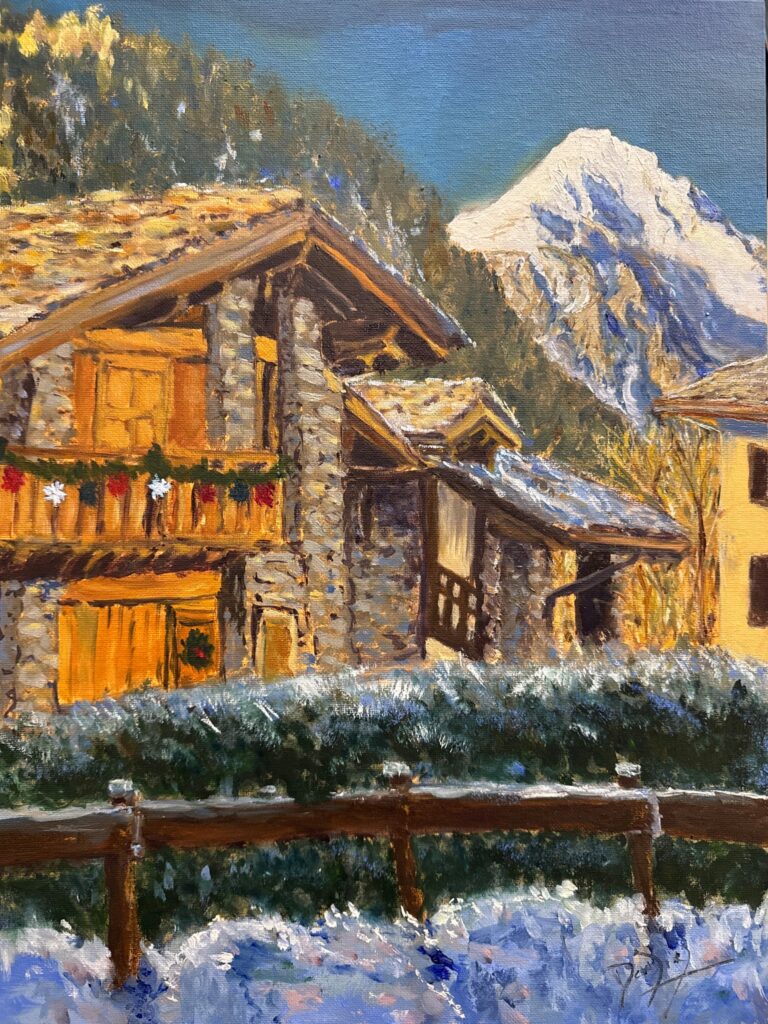
Planning your next trip to the Italian Alps?
If you’re heading to the Aosta Valley, take a look at Il Cuore della Valdigne, our family-owned apartment in Morgex, available for rent when we’re not using it ourselves.
It’s an ideal base to:
- Ski in Courmayeur, La Thuile and Pila
- Enjoy the mountains in summer (hiking, biking, nature)
- Explore the Mont Blanc valley in a quieter, more authentic setting.
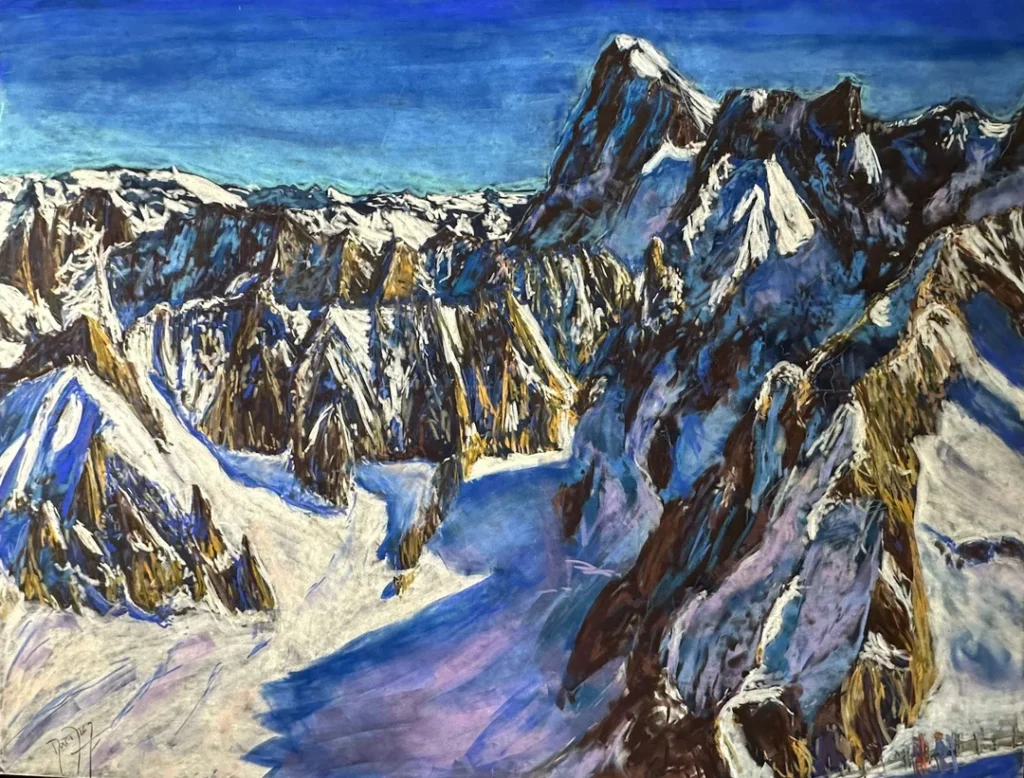
Check my Mountain Art on my Shop
You can go to my shop and see what have been inspiring me lately, lots mountain landscapes in soft pastels, and now in oils too. Go here to check my latest works!
Featured Image: Lago Blu in Cervinia. Photo: Antonio Sessa. Unsplash.


Discover more from The-Ski-Guru
Subscribe to get the latest posts sent to your email.
 Subscribe to The-Ski-Guru here.