

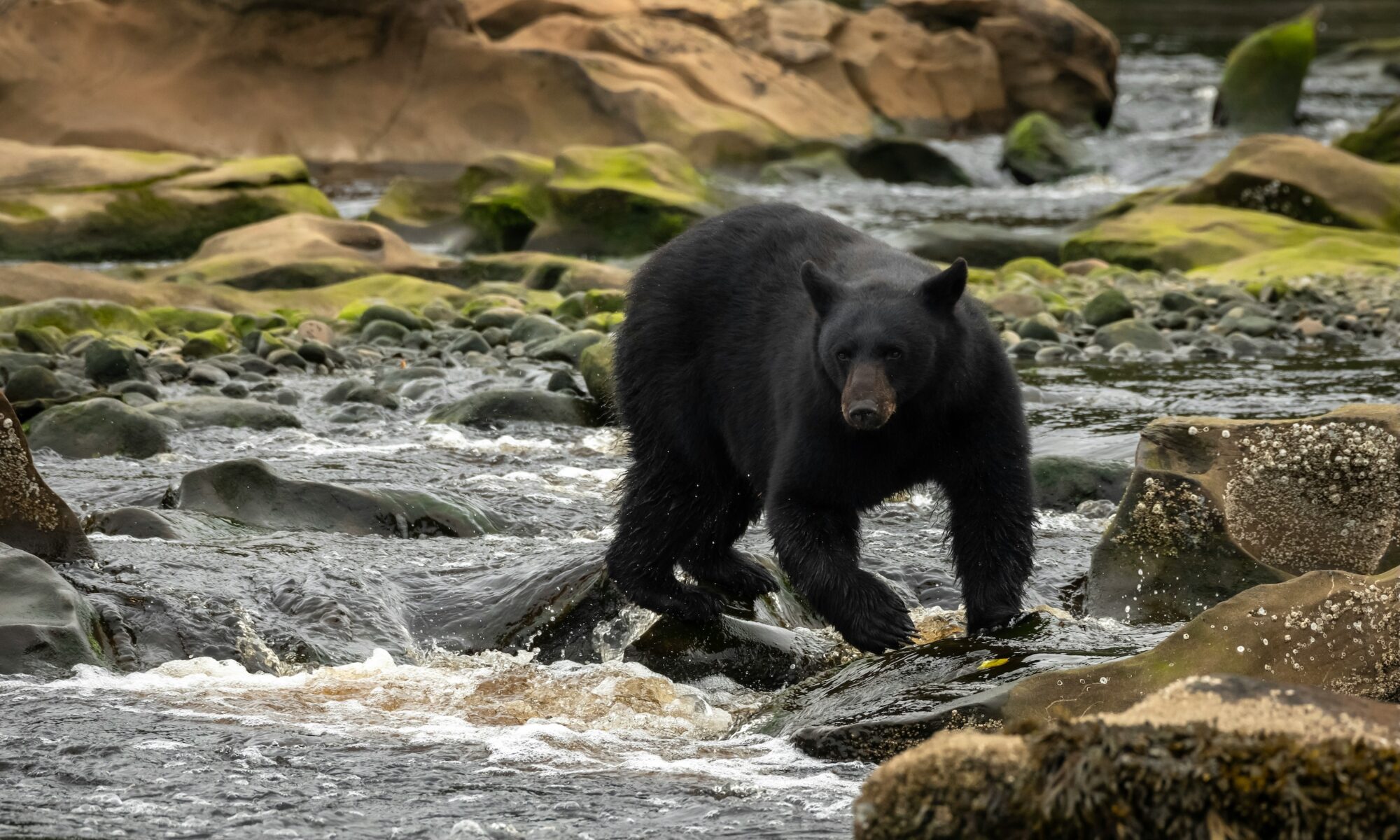
A black bear wandering into a hotel in Breckenridge and apparently helping itself to a bag of M&M’s made headlines this week. Police safely escorted the animal back into the forest, nobody was injured and the story quickly spread around the world.
It was an amusing reminder that mountain towns can produce some unforgettable moments.
But for people who live and work in mountain destinations, there was another reaction.
“That doesn’t happen often… but it isn’t exactly surprising either.”
Whether it’s black bears in Colorado and British Columbia, brown bears in Italy’s Trentino or wolves in the Italian Alps, sharing spectacular mountain landscapes with large carnivores has become part of life.
For visitors, however, these encounters can be unexpected.
Understanding how to behave around wildlife is becoming just as important as checking the weather before heading onto the trails.
Mountain Towns Were Built in Wildlife Habitat
One important point is often forgotten.
The story isn’t really that bears are moving into mountain towns.
In many cases…
Mountain towns were built in bear habitat.
Long before there were ski lifts, hotels, mountain bike parks or hiking trails, bears, wolves and countless other species already called these mountains home.
As tourism expanded, people moved into their habitat.
Today the challenge is not how to remove wildlife from mountain resorts.
It is how people and wildlife can safely coexist.
That conversation has existed in North America for decades and is now becoming increasingly familiar in parts of the Alps.
Living With Bears in Colorado
For anyone who has spent time in Colorado, bears are nothing new.
Around 2000, while living near Aspen Highlands, this writer quickly learned that black bears were simply part of everyday mountain life.
At the time, Aspen Highlands looked very different from today. The village was still relatively undeveloped, with only a handful of buildings, the Aspen Skiing Company offices and a few lodges surrounded by forest. Staying in a small motel across the road from the ski area genuinely felt like sleeping in bear country.
Before hiking, local staff provided bear-awareness training. The advice was simple: the best encounter with a bear is the one that never happens.
Hikers were encouraged to make natural noise while walking through the forest—talking, using walking poles or simply making enough sound that a bear could hear people approaching and move away before being surprised.
The lesson continued the following summer while camping at Twin Lakes.
After cooking a barbecue, campers were advised not only to store food securely, but also to change clothes carrying food smells and seal them inside closed bags. The idea was simple: don’t give a curious bear any reason to investigate your campsite during the night.
Those recommendations remain part of official wildlife advice today.
Whistler: A Resort Built in Bear Country
The same coexistence exists further north.
In Whistler, seeing a black bear grazing beneath a chairlift or crossing a mountain bike trail is almost considered part of summer.
During this year’s Mountain Travel Symposium, one local participant shared a photograph of a mother black bear calmly walking with her cubs while he was out mountain biking.
Nobody was panicking.
It was simply another reminder that Whistler sits in prime black bear habitat.
The Whistler Museum notes that the resort was built where bears have always lived. The challenge isn’t that bears suddenly started visiting Whistler.
The challenge is ensuring bears never learn to associate people with food.
That is why communities such as Whistler, Aspen and Breckenridge invest heavily in bear-resistant rubbish bins, public education and strict rules about storing food.
Once a bear repeatedly obtains food from humans, relocation is often unsuccessful and the animal may ultimately have to be euthanised.
The Breckenridge Bear
That is what makes this week’s story more interesting than a bear stealing chocolate.
Police safely removed the bear from the Grand Timber Lodge without injuries to people or the animal.
The incident also served as another reminder that bears are usually attracted by one thing.
Food.
Garbage, pet food, bird feeders, barbecue grills, scented products and food waste are responsible for many of the encounters that occur around mountain communities.
Colorado Parks and Wildlife has repeatedly stressed that preventing bears from accessing human food is the single most effective way of avoiding conflicts.
The Alps Have Their Own Wildlife Story
Europe faces many of the same questions.
The species, however, are different.
In Trentino, Italy’s brown bear population has become one of the best-known wildlife conservation stories in Europe.
Authorities spent much of this summer reminding hikers how to behave after several encounters between walkers and female bears with cubs.
More recently, officials warned visitors not to rely on online maps showing individual bear sightings. A bear can travel many kilometres in a single day, meaning yesterday’s sighting says very little about where the animal might be today.
In neighbouring Valle d’Aosta, bears are not the main topic of conversation.
Wolves are.
More than one hundred wolves were reported across the region during the last winter season, although authorities believe the true number is likely to be higher. Eleven packs are now recognised across the region and livestock predation remains a major challenge for alpine farmers.
Sightings are also no longer restricted to remote wilderness.
Regional authorities have documented wolves appearing close to villages and have introduced an official reporting app to help monitor sightings.
For many residents, wolves are no longer simply something associated with national parks. They are now part of everyday mountain life.
In nearby Piedmont, the region is drawing up a wolf management plan to address livestock losses and set out when authorities should intervene. Read more about Piedmont’s wolf management plan and what hikers should know about livestock guardian dogs on Alpine trails.
Black Bears Are Not Always Black
One of the biggest misconceptions among visitors is surprisingly simple.
A black bear is not necessarily black.
Black bears can be black, brown, cinnamon or even blond.
Brown bears—or grizzlies in North America—can also vary from almost black to light brown.
Colour is actually one of the least reliable ways to identify a bear.
Instead, experts recommend looking at the animal’s shape.
A black bear has a straighter facial profile, taller pointed ears, shorter claws and no obvious hump over its shoulders.
A brown bear has a large muscular shoulder hump, a more concave face, smaller rounded ears and much longer claws used for digging.
Visitors to Colorado—including Aspen, Breckenridge and most of the state’s mountain resorts—will encounter black bears only. Grizzly bears disappeared from Colorado many decades ago.
In contrast, parts of British Columbia, Alberta, Montana and Wyoming are home to both species, while Trentino’s bears are European brown bears.
Which Bear Is More Dangerous?
Both species deserve enormous respect.
However, brown bears are generally considered more dangerous than black bears.
They are significantly larger, stronger and much more likely to react defensively if surprised, particularly when protecting cubs.
Black bears usually prefer to avoid people.
Most conflicts occur because they have become accustomed to human food.
That difference is important because the correct response to an encounter is not identical for every species.
What Should You Do If You See a Bear?
The good news is that the overwhelming majority of bear encounters end without incident.
If you see a bear:
- Stay calm.
- Never run.
- Keep the bear in sight, but don’t challenge it by staring aggressively.
- Speak in a calm voice so the bear recognises you as a human.
- Slowly back away without turning your back.
- Always leave the bear an escape route.
- Stay together if hiking in a group.
- Keep dogs under control.
- Never approach cubs.
- Never move closer simply to take a photograph.
Many visitors panic when a bear stands on its hind legs.
In reality, this often means the bear is trying to get a better look or smell of its surroundings rather than preparing to attack.
One important distinction concerns attacks.
Wildlife authorities in North America advise fighting back if a black bear attacks, whereas advice for defensive encounters involving brown bears differs. This is another reason why visitors should always follow the guidance issued by local wildlife authorities rather than relying on myths or outdated advice.
What If You See a Wolf?
Wolf encounters remain uncommon because wolves generally avoid people.
If you see one:
- Stay calm.
- Keep your distance.
- Never approach the animal.
- Do not feed it.
- Keep dogs close and under control.
- Slowly back away while keeping the wolf in sight.
- If a wolf approaches unusually closely, make yourself appear larger, wave your arms and shout firmly until it retreats.
Running is never recommended.
In Valle d’Aosta, authorities encourage residents and visitors to report sightings through the region’s official monitoring system, helping wildlife experts understand movements and identify any animals displaying unusual behaviour.
Respect Wildlife—Don’t Fear It
The lesson from Breckenridge isn’t that mountain holidays have suddenly become dangerous.
Nor is it that bears or wolves don’t belong near resorts.
The real lesson is much simpler.
Mountain destinations are not theme parks.
They are living ecosystems.
Whether you’re skiing in Colorado, mountain biking in Whistler, hiking in Trentino or walking through the valleys of the Italian Alps, you’re entering landscapes that remain home to wild animals.
The objective is not to fear them.
It is to understand them.
Making a little noise on the trail, storing food correctly, keeping dogs under control and giving wildlife plenty of space are small actions that help protect both visitors and the animals themselves.
After all, long before there were ski lifts, luxury hotels or mountain villages…
the bears and wolves were already there.
Read More
- Matterhorn Rockfall Sends Huge Dust Cloud into Air
- Alps Glacier Melt Accelerates in Extreme Heat
- Aiguille du Midi Ice Tunnel Closed by Heat
- Cime Bianche Ski Link: Plan to Connect Cervinia and Monterosa
Sources
- Breckenridge Police – Bear enters Grand Timber Lodge; officers safely remove the bear after it steals M&M’s.
https://www.facebook.com/breckpolice/videos/1592049708518417/ - Colorado Parks & Wildlife – Living with Bears – Official guidance on bear behaviour, attractants, food storage and coexistence. Colorado Parks & Wildlife – Living with Bears
- Parks Canada – Bears in the Mountain National Parks – Official information on black bears, grizzlies, identification and safety. Parks Canada – Bears in the Mountain National Parks
- Yellowstone National Park (NPS) – Differences between black bears and grizzly bears. Yellowstone National Park – Bear Ecology
- Provincia Autonoma di Trento / Trentino.com – Official rules of conduct during bear encounters. Rules of Conduct for Bear Encounters in Trentino
- Whistler Museum – Coexisting with Whistler’s Bears (history of bears and the resort). (Use the museum article if you already have it from previous research.)
- Regione Valle d’Aosta – Official information about wolves and reporting sightings.
- ANSA Valle d’Aosta – More than 100 wolves reported during the last winter season; livestock predation data.
Planning your next trip to the Italian Alps?
If you’re heading to the Aosta Valley, take a look at Il Cuore della Valdigne, our family-owned apartment in Morgex, available for rent when we’re not using it ourselves.
It’s an ideal base to:
- Ski in Courmayeur, La Thuile and Pila
- Enjoy the mountains in summer (hiking, biking, nature)
- Explore the Mont Blanc valley in a quieter, more authentic setting.
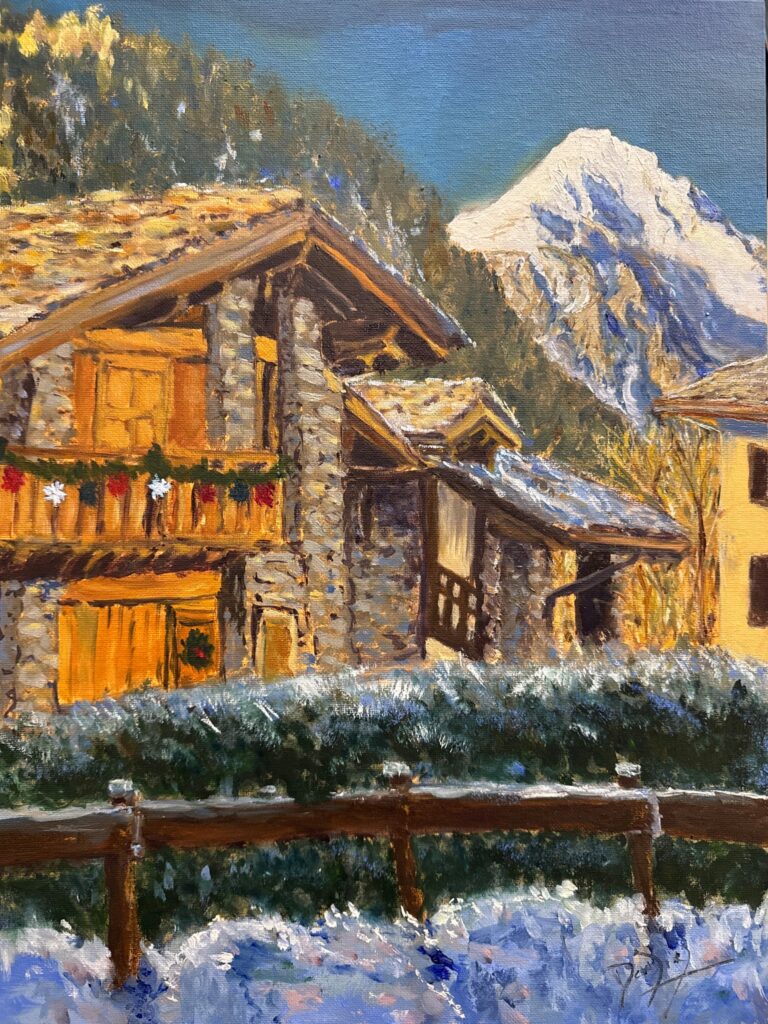
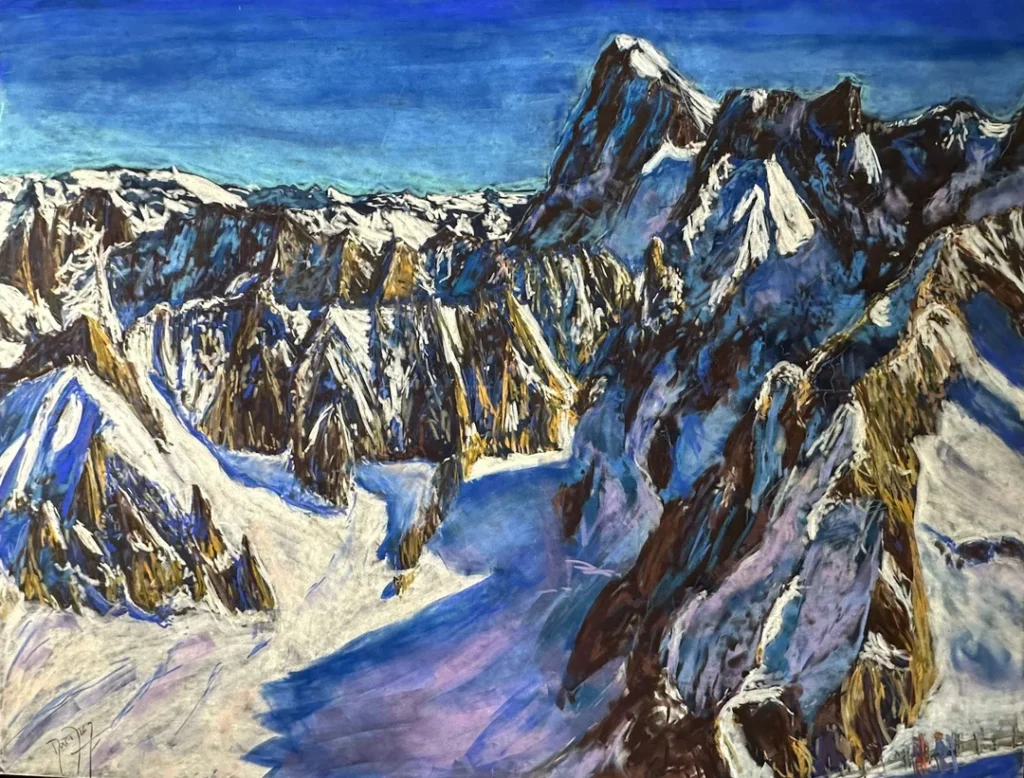
Check my Mountain Art on my Shop
You can go to my shop and see what have been inspiring me lately, lots mountain landscapes in soft pastels, and now in oils too. Go here to check my latest works!
Featured Image: Black bear fishing a salmon. Photo credit: Greg Johnson. Unsplash.


Discover more from The-Ski-Guru
Subscribe to get the latest posts sent to your email.
 Subscribe to The-Ski-Guru here.