Matterhorn Without Snow: Hervé Barmasse Warns of a Changing Mountain

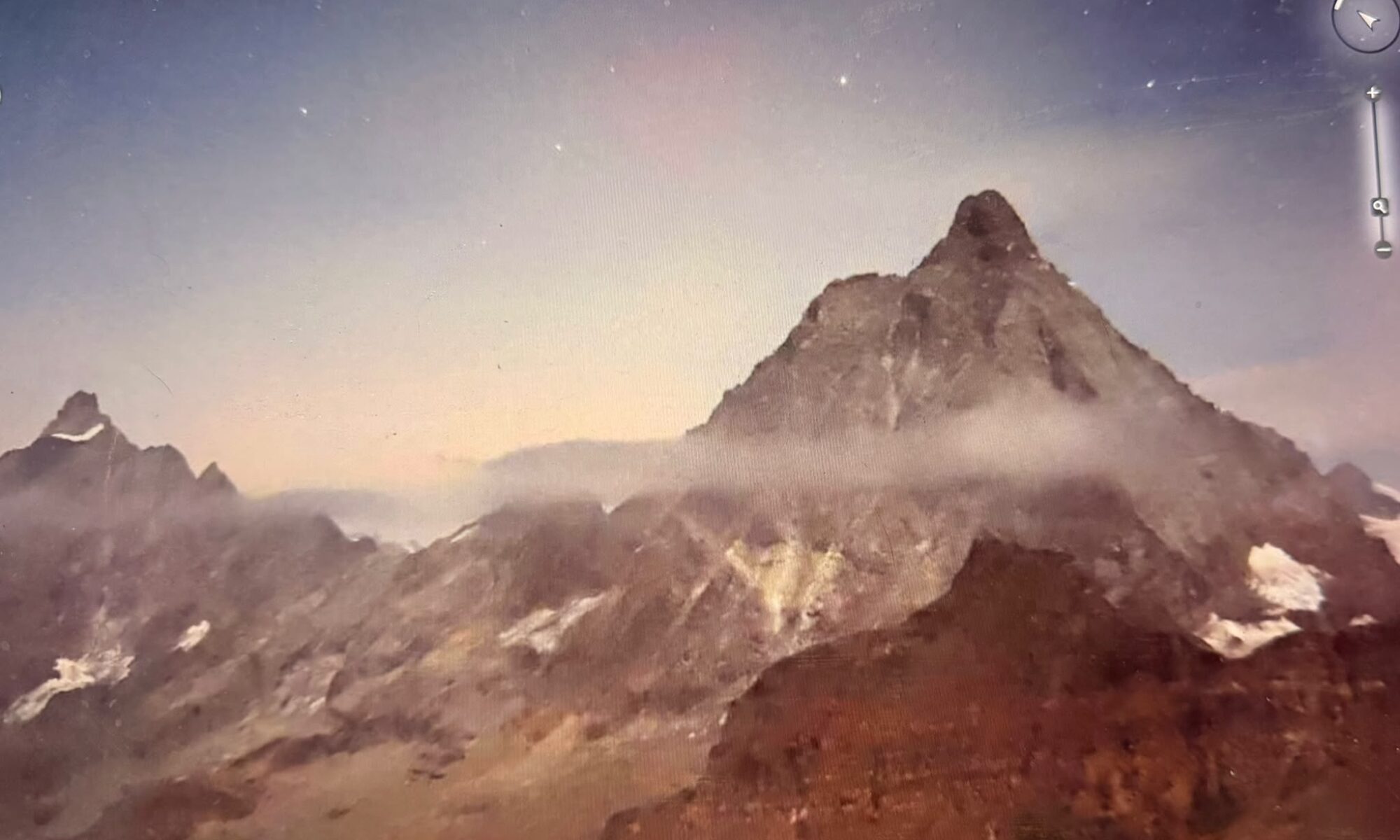
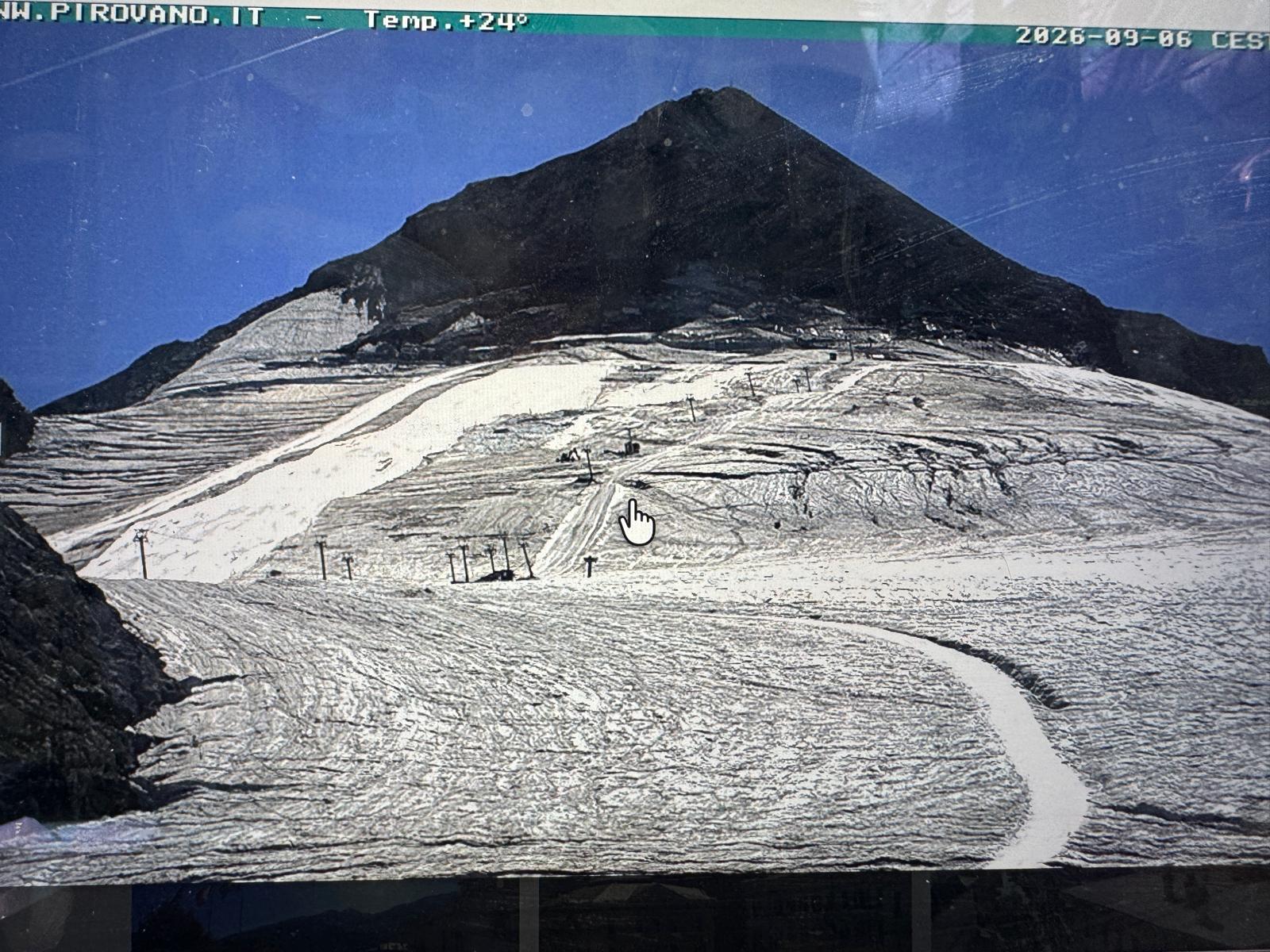
The Cervino, as seen on the early morning of 3rd October 2026. Photo: Webcam Cervino Ski Paradise.

The Matterhorn has appeared almost completely bare at the end of the 2026 summer season. For Italian alpinist and mountain guide Hervé Barmasse, who has spent his life beneath the mountain, the striking images are part of a much bigger change taking place at high altitude.

Only days after a new rockfall prompted the Cervino mountain guides to advise against climbing the Italian normal route, one of the mountain’s best-known alpinists has spoken about another striking feature of the Matterhorn in 2026: the lack of snow.

Hervé Barmasse, a fourth-generation mountain guide from Valtournenche, told Italian mountain publication L’AltraMontagna that he had never seen the Cervino — as the Matterhorn is known in Italy — quite so bare.

His comments are particularly significant because this is not a mountain he encounters occasionally.

Continue reading “Matterhorn Without Snow: Hervé Barmasse Warns of a Changing Mountain”

Pila–Cogne Cable Car: €150–190 Million Link Moves Closer to Political Decision

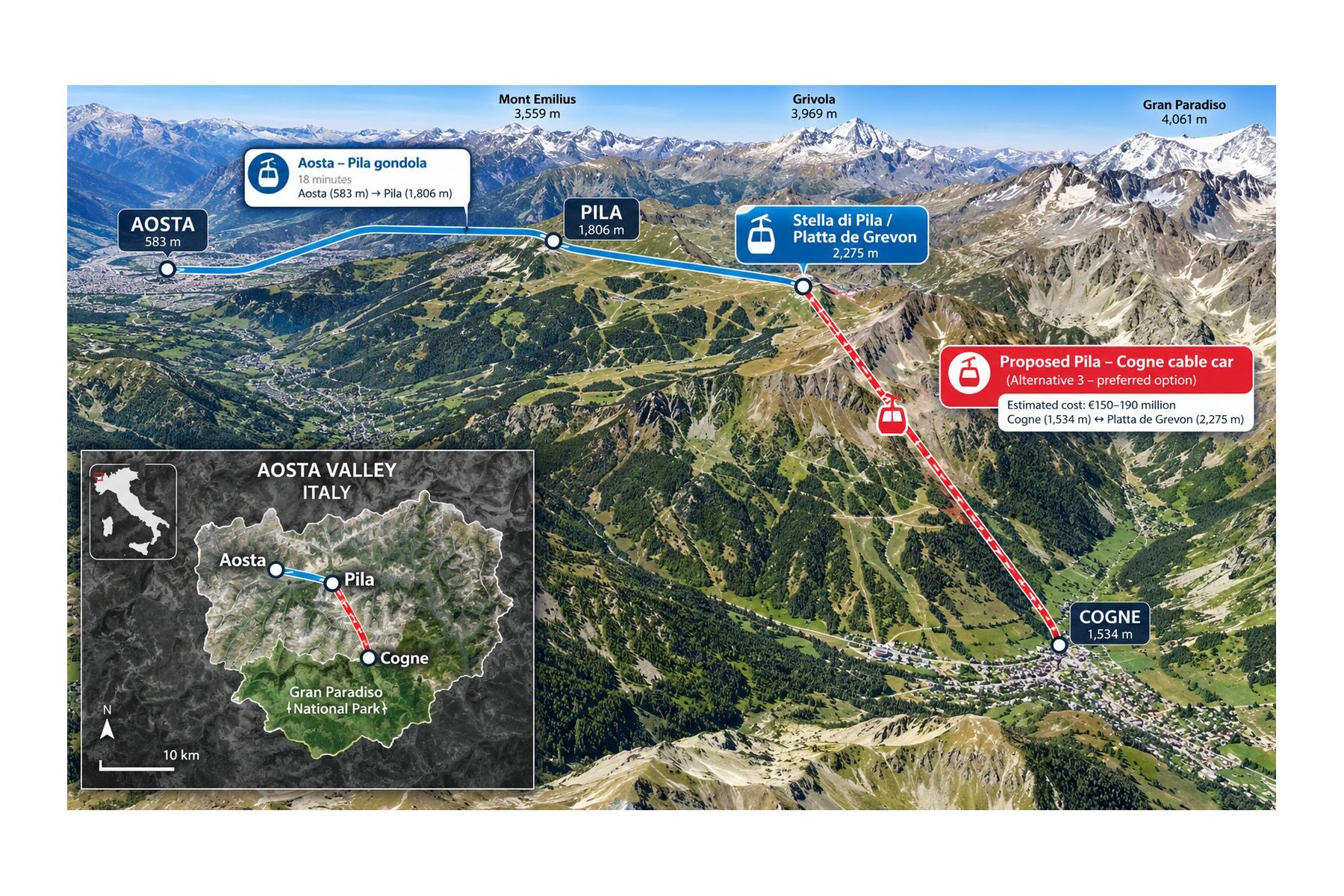
The proposed Pila–Cogne cable car would connect Cogne with Platta de Grevon/Stella di Pila, creating a potential lift-linked route through Pila to Aosta. Illustration: The-Ski-Guru.

A long-discussed cable-car connection between Pila and Cogne in Italy’s Aosta Valley has taken another step forward, with three possible routes now emerging from an initial nine alternatives — and one identified by the technical study as the preferred option.

If eventually built, the project could create something much bigger than a new ski lift. By connecting Cogne with Pila, which is already linked directly by gondola to the city of Aosta, it could effectively create an integrated Aosta–Pila–Cogne mountain destination, combining a regional capital, an alpine ski resort and one of the best-known gateways to the Gran Paradiso National Park.

But this is important: the cable car has not yet been approved for construction.

The latest step concerns the technical feasibility study, while the project is now entering a political and public consultation phase before decisions are made on whether to proceed.

Nine alternatives reduced to three

The project was examined by the Aosta Valley Regional Council’s Economic Development Commission on 1 October 2026.

The technical team initially considered nine different alternatives for connecting Cogne with the Pila ski area.

Three have now been identified as the most practicable solutions, all connecting Cogne with the area of Platta de Grevon, high above Pila.

Continue reading “Pila–Cogne Cable Car: €150–190 Million Link Moves Closer to Political Decision”

Tour du Mont Blanc Moves to Rein In Overtourism as Visitor Numbers Soar

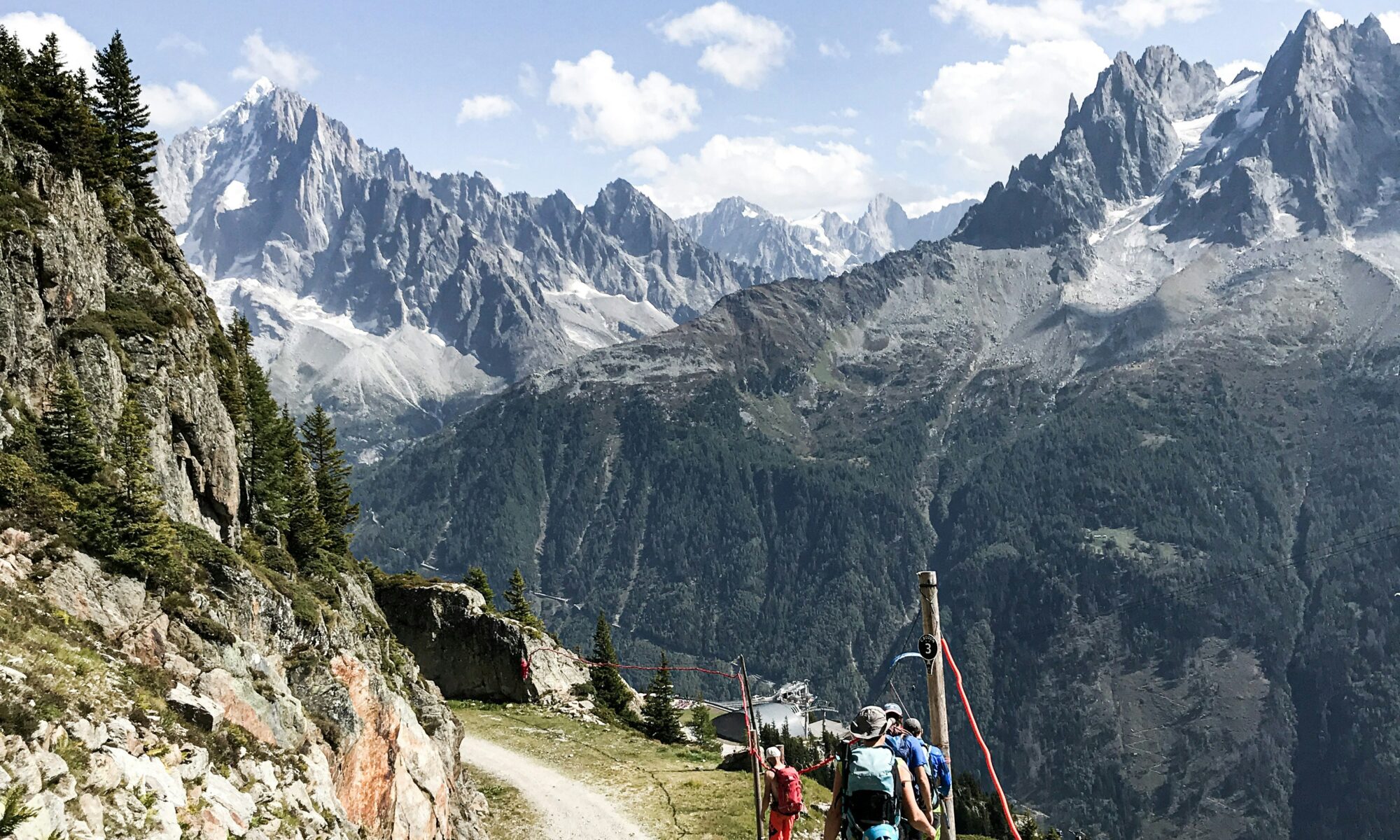
Chamonix Mont Blanc. Photo credit: Antoine de Barquin. Unsplash.

One of the Alps’ most famous long-distance hiking routes could face tighter controls from 2027, as local authorities and mountain professionals seek to curb wild camping, environmental damage and increasingly crowded trails.

The days of treating the Tour du Mont Blanc as an unrestricted hiking route may be coming to an end.

Local authorities and mountain professionals on the French side of the Mont Blanc massif have agreed on the principle of a new charter aimed at better managing one of Europe’s most popular long-distance treks, following another summer of exceptionally heavy use.

The Tour du Mont Blanc — generally known simply as the TMB — covers around 170 kilometres and approximately 10,000 metres of elevation gain as it circles the Mont Blanc massif through France, Italy and Switzerland.

The rapid increase is now raising concerns about erosion, biodiversity, sanitation, safety and the overall experience of walking one of the Alps’ classic routes.

“The open-bar approach is over”

Representatives of the seven French municipalities crossed by the TMB met in September alongside refuge and campsite operators, mountain guides, transport companies, environmental organisations and French state services.

Among the proposals being developed are the systematic reservation of recognised accommodation during the summer season and stronger restrictions on wild camping.

Jean-Marc Peillex, mayor of Saint-Gervais-les-Bains and president of the Communauté de Communes Pays du Mont-Blanc, told AFP that the aim was not to prohibit access to the mountains, but to organise it.

His description of the change was considerably more colourful: the “open-bar” approach, he said, was over.

Other measures being considered include improving authorised bivouac areas with basic facilities, limiting the size and weight of luggage transported between stages, reducing the movement of large suitcases by taxi and potentially establishing a “green brigade” to help enforce local regulations.

Quotas, however, are not currently part of the proposals.

Not all the new rules are decided yet

The direction is clear, but exactly how the system will work is still being negotiated.

The charter is being finalised, and there are differences among local authorities and tourism professionals over how far regulation should go.

One of the most significant ideas is that, from 2027, hikers completing the TMB could be required to have accommodation booked in advance.

But this should not yet be interpreted as a finalised three-country permit system for the entire Tour du Mont Blanc.

The route crosses France, Italy and Switzerland, making coordinated regulation significantly more complicated. Any comprehensive system would ultimately need to account for rules and authorities on all three sides of the massif.

Wild camping is already restricted in several areas

The changes would also build on restrictions that already exist.

Wild camping and bivouacking are not freely permitted everywhere along the Tour du Mont Blanc.

In parts of the French side, including protected areas of the Aiguilles Rouges massif, hikers must already reserve designated bivouac spaces. Vallorcine also prohibits wild camping across its municipal territory outside the specific rules governing nature reserves.

The proposed charter would therefore move towards a more consistent approach rather than introducing regulation from scratch.

A route struggling with its own success

The debate reflects a wider challenge facing the Alps.

Mountain destinations have spent decades encouraging summer tourism as a way of reducing their dependence on skiing and building a stronger year-round economy.

The success of routes such as the Tour du Mont Blanc shows how effective that strategy can be — but also where its limits may lie.

Heavy concentrations of hikers can damage vegetation, accelerate trail erosion and put pressure on water, sanitation and waste infrastructure. Local officials have also complained about inappropriate behaviour, including illegal camping and hikers leaving human waste in the landscape.

At the same time, the TMB has become an important source of summer income for refuges, hotels, restaurants, guides and communities along the route.

That makes the challenge less about keeping visitors away than deciding how many people fragile mountain environments can accommodate — and how those visitors should move through them.

Planning the Tour du Mont Blanc in 2027

For hikers already considering the Tour du Mont Blanc next summer, advance planning will become increasingly important regardless of what final form the new charter takes.

The official Tour du Mont Blanc accommodation platform says reservations for summer 2027 will open on 15 October 2026.

It already strongly recommends booking refuges ahead, warning that the most popular properties can fill several months in advance.

The final rules for 2027 are still taking shape.

But after a summer in which more than 90,000 people reportedly circled the Mont Blanc massif, the message from local authorities is becoming increasingly difficult to miss: one of the Alps’ most famous trails can no longer be managed as though its capacity were unlimited.

Read More

Sources

Where to See the Alps’ Traditional Cow Parades in Autumn 2026

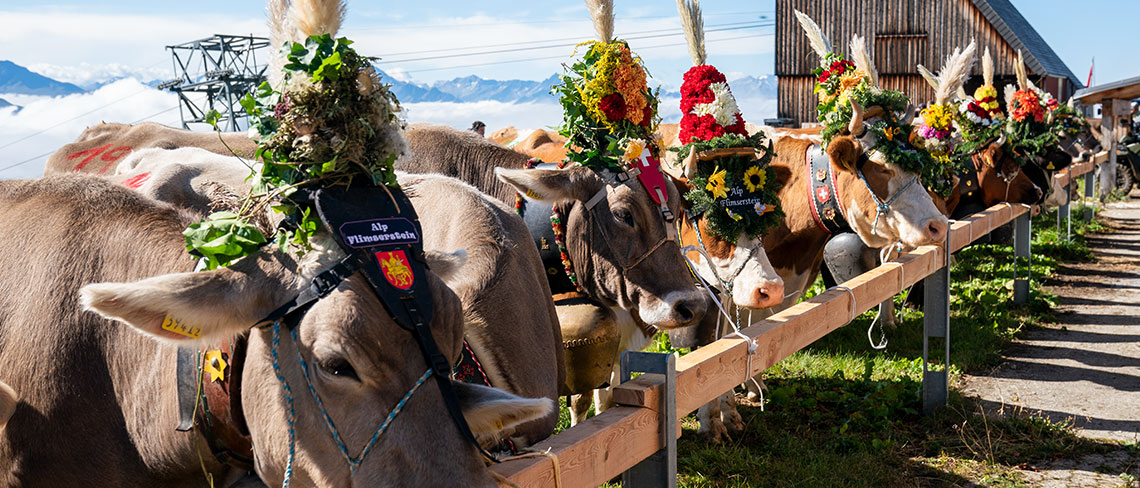
Laax Much Loved Descent of the Cows Festival Returns this September. Photo credit: Laax/Rooster PR

From the Dézarpa in Italy’s Aosta Valley to Switzerland’s Désalpe and Austria’s colourful Almabtrieb, September and October mark one of the Alps’ most atmospheric traditions: the return of cattle from their high summer pastures.

As summer draws to an end in the Alps, another season begins — announced not by ski lifts or the first snowfall, but by the sound of cowbells.

Across Italy, Switzerland, Austria and France, cattle that have spent the warmer months grazing on high-altitude pastures begin their journey back down to farms in the valleys.

The tradition has different names across the Alps. In the Aosta Valley it is known as the Dézarpa, or Devétéya around Cogne. In French-speaking Switzerland it is the Désalpe, while German-speaking regions use Alpabzug or Alpabfahrt. Across Austria and South Tyrol, visitors will hear Almabtrieb. In parts of the French Alps, the return of the herds is known as the descente des alpages or démontagnée.

Whatever the name, the principle is the same.

Continue reading “Where to See the Alps’ Traditional Cow Parades in Autumn 2026”

Stelvio Glacier Reopens After Heat Closure – But Summer Skiing’s August Shutdown Still Matters

Summer skiing on the Stelvio Glacier in Italy

Italy’s Stelvio Glacier has reopened for summer skiing after a three-week heat-related closure. The return of skiing is welcome news, but it follows an extraordinary August in which high temperatures and poor overnight freezing temporarily brought lift-served summer skiing across the Alps to a halt.

Summer skiing returned to Italy’s Stelvio Glacier on Friday, September 4, after cooler conditions allowed operators to reopen lifts and pistes following a shutdown that began on August 15.

The official Bormio lift-status service confirmed the reopening, with all six Stelvio lift installations operating: the Cristallo, Pajer, Geister 1 and Geister 2 ski lifts, together with the Passo Stelvio–Trincerone and Trincerone–Livrio cable cars.

Not everything has returned to normal, however. Several pistes remain closed, and the Pajer and Cristallo ski lifts are operating only from 6:30 am until midday. The two cable cars operate until 4 pm.

The Stelvio summer season is officially scheduled to run from May 30 until November 1, 2026.

Why Stelvio closed

The August closure was significant because Stelvio had remained open after other Alpine summer ski areas suspended skiing during the summer heat.

SIFAS, the company operating the Stelvio facilities, announced the suspension of skiing from August 15, citing three factors: persistent heat waves reaching high altitude, the absence of sufficient overnight cooling and refreezing of the snowpack, and frequent thunderstorms that had further affected glacier conditions.

Continue reading “Stelvio Glacier Reopens After Heat Closure – But Summer Skiing’s August Shutdown Still Matters”

Alpine Glacier Retreat Raises Questions Over the Future of the Ski Economy

Photo credit: Skyway Monte Bianco.

After a summer marked by glacier retreat, rockfalls, unstable permafrost and repeated disruption across the Alps, an increasingly difficult question is emerging: how should mountain tourism adapt to a rapidly changing environment?

The debate has been brought into sharper focus by Legambiente, one of Italy’s largest environmental organisations, which argues that Alpine communities can no longer plan their future on the assumption that glaciers, water resources and snow conditions will remain as they have been in the past.

Speaking to Corriere della Sera during the 2026 Carovana dei Ghiacciai, Vanda Bonardo, the campaign’s coordinator and national head of Legambiente’s Alps division, said mountain regions need to move from planning based on stability towards managing continuous change.

Her comments come during an extraordinary summer across the Alps, with developments around Mont Blanc providing some of the clearest examples.

Continue reading “Alpine Glacier Retreat Raises Questions Over the Future of the Ski Economy”

Planpincieux Glacier: Seven Years After the Alarm, the Mont Blanc Glacier Is Retreating Fast

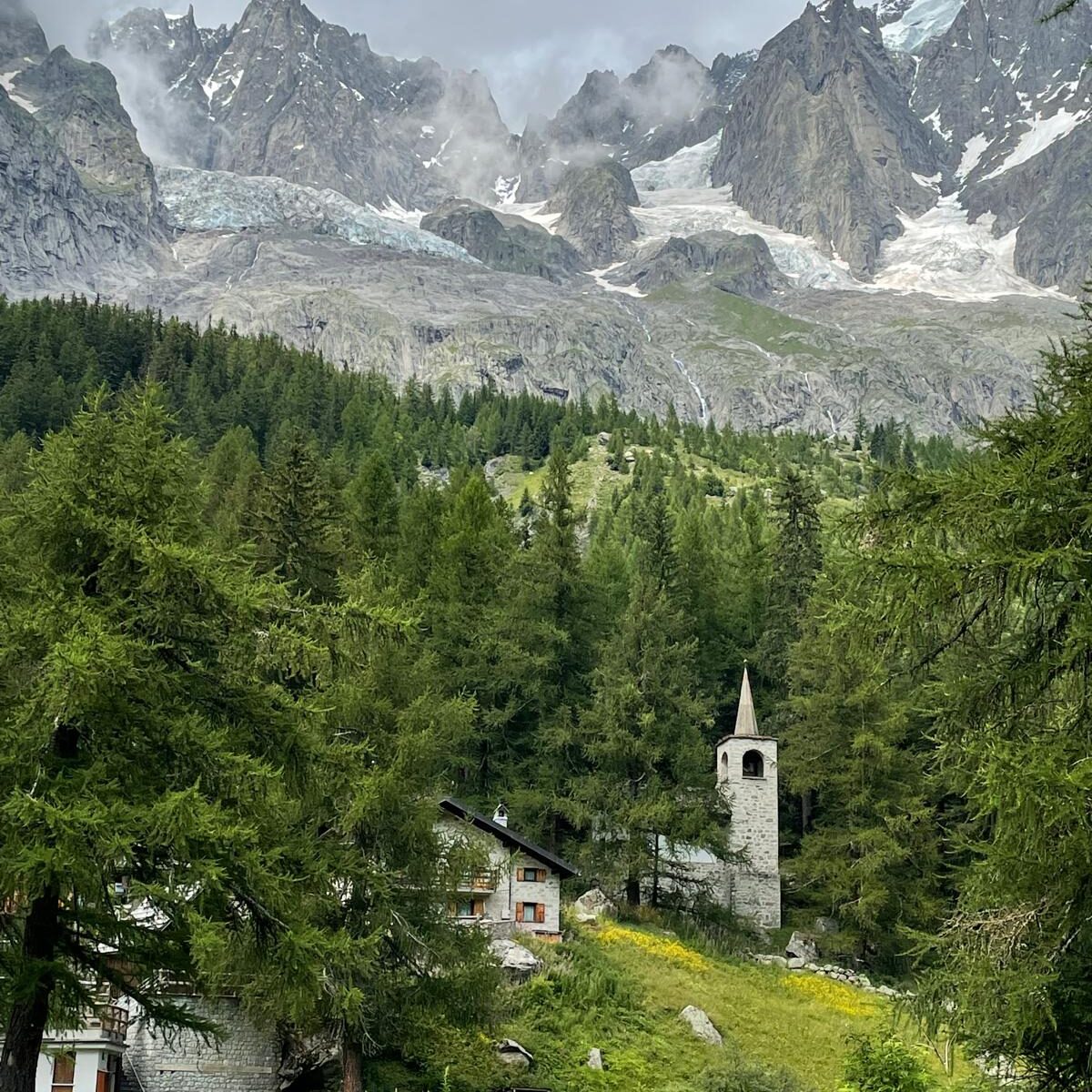
Planpincieux glacier and the church in the bottom. Photo: The-Ski-Guru.

The Planpincieux Glacier retreat is accelerating on the Italian side of Mont Blanc, seven years after the hanging glacier above Courmayeur first made international headlines over fears of a major collapse.

The hanging glacier, located above Val Ferret on the Italian side of the Mont Blanc massif, accelerated again during July 2026, reaching movement of around 80 centimetres per day. The figure was confirmed by the Valle d’Aosta regional authorities, which placed the glacier under continuous monitoring during the period of heightened activity.

The situation has since improved. Jean-Pierre Fosson of Fondazione Montagna Sicura said during the Valle d’Aosta stage of Legambiente’s Carovana dei Ghiacciai that Planpincieux has now fallen below the critical thresholds and that current conditions are considered favourable.

But the longer-term picture is far less reassuring.

Planpincieux Glacier retreat reaches 50 metres in three years

According to a report from Corriere della Sera, the front of Planpincieux has retreated by around 50 metres in just three years.

The glacier hangs at around 2,600 metres beneath the Grandes Jorasses, high above Val Ferret. Ice and debris continue periodically to break away from its front and descend towards the valley.

The glacier is particularly closely monitored because of its position above an inhabited and heavily visited valley.

During July’s acceleration, Courmayeur introduced Civil Protection restrictions in the areas potentially exposed to a collapse. Access restrictions were subsequently eased as conditions stabilised.


Read more: Nepal Glacier Disaster: Could It Happen in the Alps? — Following the catastrophic glacier-related disaster in Nepal, we look at whether similar high-mountain hazards could occur in the Alps, and how monitoring at Planpincieux, Blatten and elsewhere can provide crucial warning time.


Continue reading “Planpincieux Glacier: Seven Years After the Alarm, the Mont Blanc Glacier Is Retreating Fast”

Mer de Glace Ice Cave Turns 80 — But May Have Only a Few Years Left

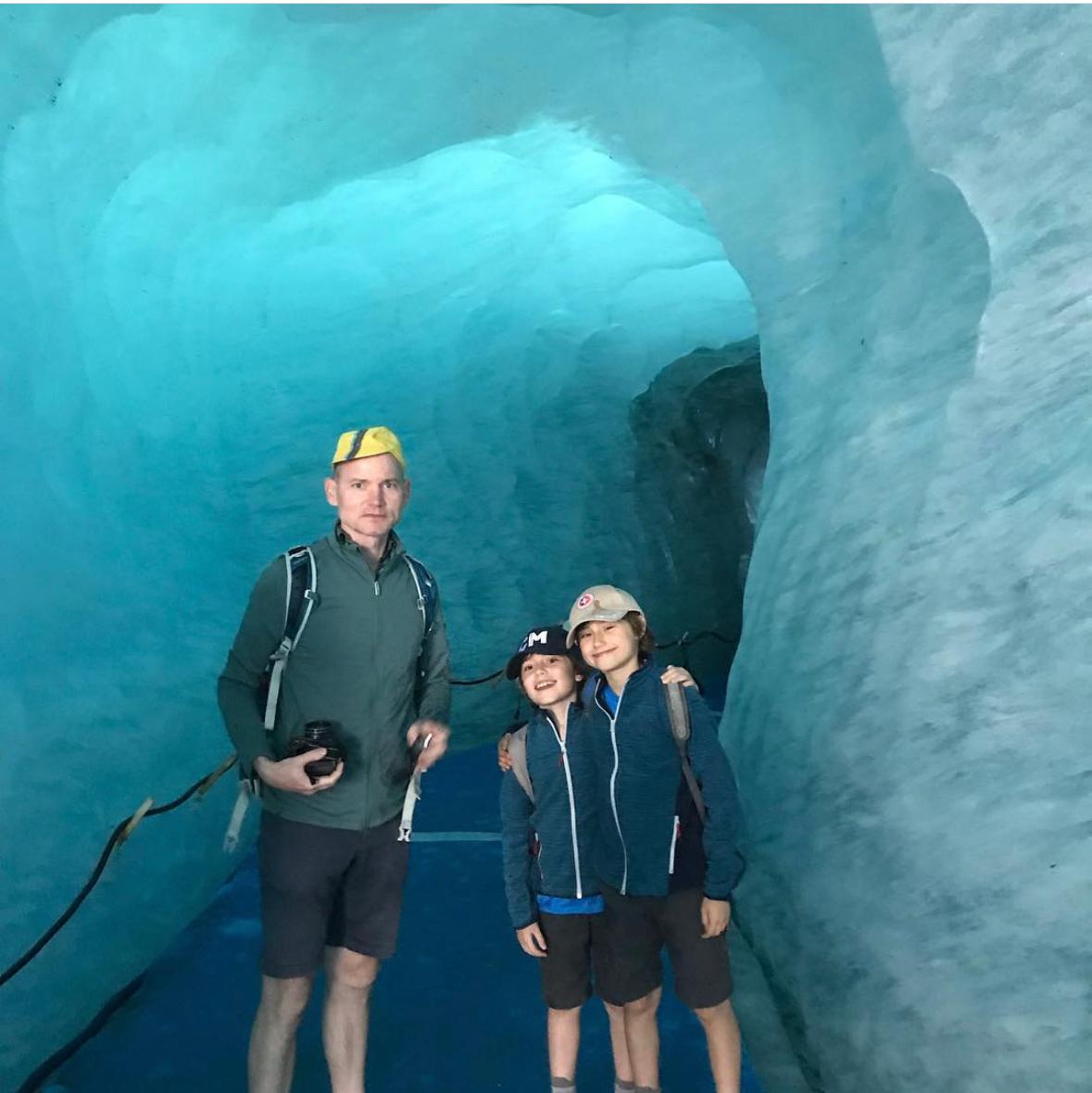
My husband and sons inside the Montenvers cave in 2018. Photo: The-Ski-Guru

The famous ice cave carved into the Mer de Glace above Chamonix is celebrating its 80th anniversary in 2026. But as the glacier continues to shrink, the family that has been carving it since 1946 knows the attraction may not survive to celebrate its centenary.

For eight decades, workers have returned to the Mer de Glace above Chamonix to carve a new passage into the moving glacier.

The famous Grotte de Glace, or Ice Cave, was first created in 1946 by Georges Claret. Three generations later, his grandson Benjamin Claret continues a family tradition that has become one of Chamonix’s best-known tourist attractions.

But its 80th anniversary comes with an increasingly uncertain future.

Continue reading “Mer de Glace Ice Cave Turns 80 — But May Have Only a Few Years Left”

Mont Blanc Faces Record Rockfall Year After Extreme Alpine Summer

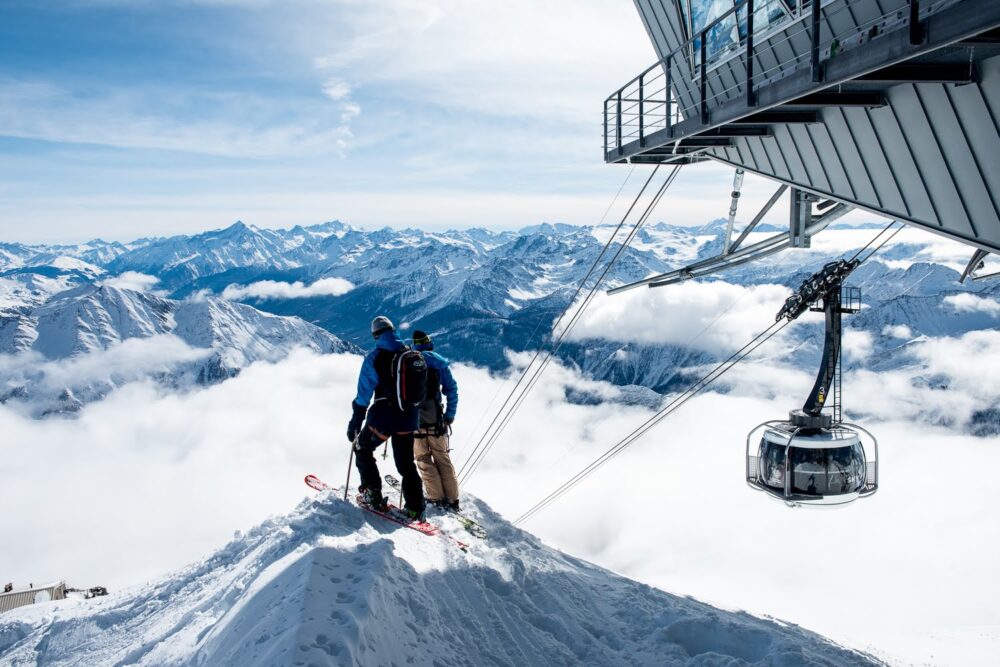
The view from the top of the Skyway Monte Bianco - Punta Hellbronner- Amazing rotating gondola that takes you up to the highest point in Italy to see the Mont Blanc and all the surrounding mountains. Photo: The-Ski-Guru.

The Mont Blanc massif is facing a record rockfall year after an exceptionally hot Alpine summer destabilised high-altitude terrain — and scientists warn that some of the largest collapses may still be to come.

Around 450 significant rockfalls could be recorded in the Mont Blanc massif during 2026, according to geomorphologist Ludovic Ravanel, research director at France’s National Centre for Scientific Research (CNRS).

The figure would comfortably surpass the previous record of around 300 events in 2022, another year marked by intense heatwaves.

Just 10 or 20 years ago, only a few dozen such events would typically have been recorded.

Continue reading “Mont Blanc Faces Record Rockfall Year After Extreme Alpine Summer”

Lightning Danger in the Alps: Hiker Dies as Storms Follow Extreme Heat

A storm in the Alpe Torinesi, photo credit: Joshua Kettle. Unsplash.

A hiker has died after being struck by lightning in the Italian Alps, while two Polish climbers were injured by another lightning strike above Cortina d’Ampezzo, as violent thunderstorms followed a prolonged period of extreme summer heat.

The incidents highlight one of the most rapidly developing hazards in the mountains: thunderstorms that can turn apparently manageable hiking and climbing conditions into a dangerous situation within minutes.

Atmospheric scientists say the Alps themselves can act as a hotspot for lightning, with mountain topography helping to trigger and intensify summer thunderstorms.

Hiker Dies on Piz Starlex

Gustav Wiesler, 42, from Tubre in South Tyrol, died while descending from Piz Starlex, a 3,075-metre mountain above Val Monastero close to the Swiss border.

Wiesler had last made contact at around 13:00 from the summit, when a thunderstorm was approaching.

Continue reading “Lightning Danger in the Alps: Hiker Dies as Storms Follow Extreme Heat”