

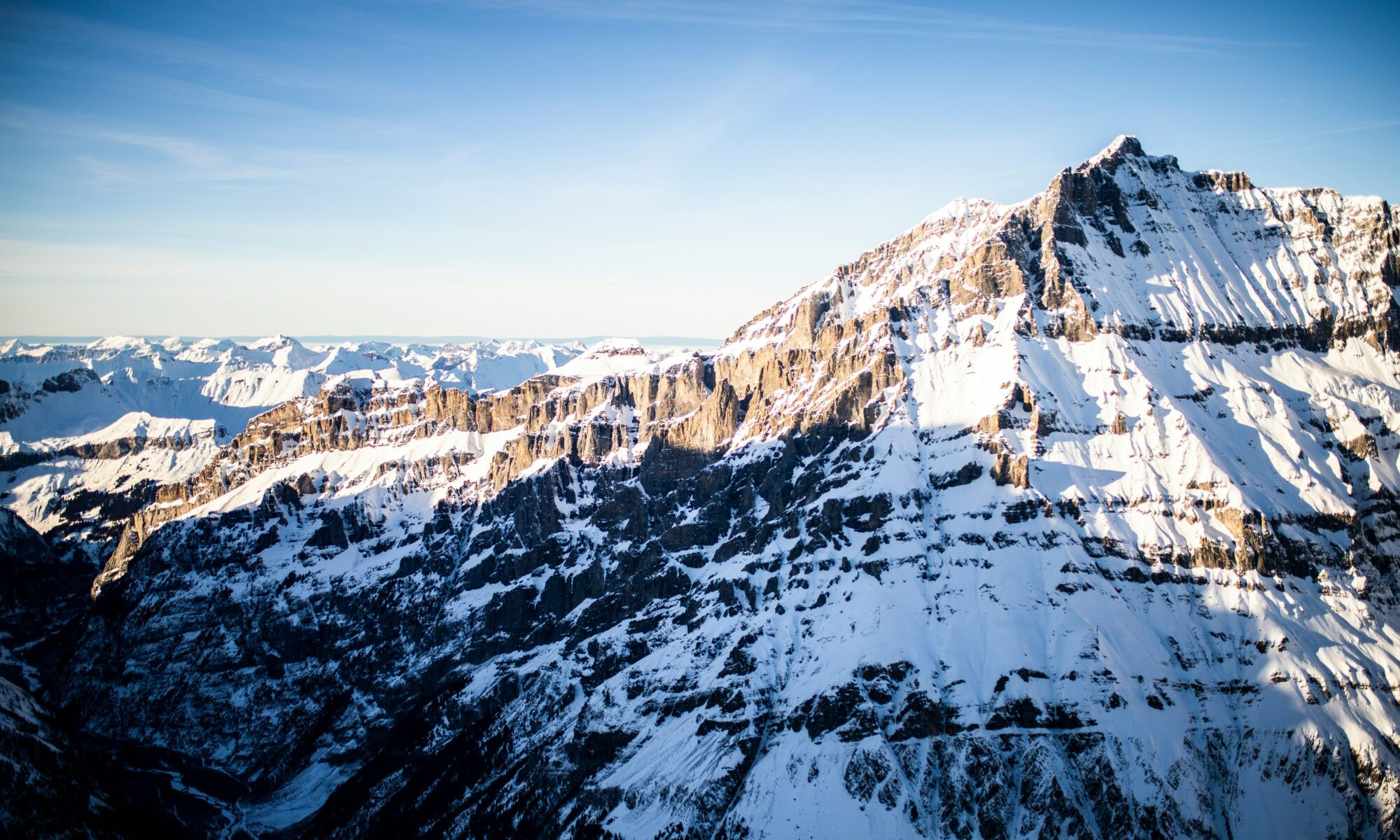
Nearly a year after the catastrophic collapse that destroyed much of the Swiss village of Blatten, authorities are again monitoring instability in the same high-mountain area above the Lötschental valley. The renewed concerns are a reminder that the risks linked to glacier retreat, thawing permafrost, and unstable rock faces in the Alps are not disappearing after a single event — and may instead become a longer-term operational challenge for mountain communities, infrastructure, transport routes, and tourism regions.
Swiss authorities confirmed this week that parts of the glacier and surrounding mountain terrain near Blatten continue to show signs of instability, while access to the disaster zone remains dangerous because of ongoing rockfall and debris movement. The original collapse on 28 May 2025 saw millions of cubic metres of rock, ice, and mud surge down the mountain in less than a minute, destroying most of the village after a successful evacuation of around 300 residents. One person died in the disaster.
The event rapidly became one of the most significant Alpine mountain disasters in modern Swiss history. Scientists and mountain authorities are still studying exactly what triggered the collapse of the Birch Glacier beneath the Kleines Nesthorn, but many researchers believe thawing permafrost likely played an important role in destabilising the surrounding rock faces.
Permafrost acts as a kind of frozen “glue” holding high-altitude rock together. As temperatures rise and the ground thaws more deeply during warmer summers, water penetrates fractures in the mountain, weakening the structure of steep slopes. Experts say this does not mean every collapse can be directly blamed on climate change, but warming conditions appear to be accelerating natural instability processes in the Alps.
The Blatten disaster also highlighted how much Alpine hazard management has evolved. The village had been evacuated days before the collapse after geologists detected accelerating movement in the mountain above the glacier. Seismic monitoring, drone observations, satellite imagery, and continuous surveillance helped authorities recognise that the risk of a major collapse was increasing.
That growing dependence on real-time monitoring is becoming increasingly important across the Alps. Switzerland’s permafrost monitoring systems already track long-term mountain instability trends, while similar glacier surveillance systems have been used in places such as Planpincieux Glacier Monitoring in Italy, where repeated evacuations have taken place in recent years due to fears of ice collapse.
The implications go well beyond isolated villages. Thawing permafrost and glacier retreat increasingly affect mountain roads, hiking routes, lift infrastructure, mountain huts, reservoirs, and rail systems. In some parts of the Alps, entire slopes previously considered stable are now being reassessed. This is becoming an operational issue as much as an environmental one, especially in regions heavily dependent on tourism and mountain transport connections.
The challenges linked to mountain instability are not limited to glaciers and high rock faces. Avalanche activity also continues to affect Alpine transport corridors well into late spring. In France, the reopening of the Petit St Bernard Pass between the Tarentaise Valley and Italy was temporarily postponed after a spontaneous wet-snow glide avalanche occurred above the access road during the night of 23 May 2026. According to French avalanche monitoring platform Data Avalanche, the slide released in two phases, reducing the size of the debris reaching the road. Authorities ultimately decided conditions were stable enough to reopen the pass on Sunday morning, restoring access between France and Italy. The event nevertheless highlighted how spring thaw cycles, unstable snowpacks, and warming mountain conditions continue to complicate operations on high Alpine routes even outside the core winter season.
You can see a similar pattern in recent discussions around Mountain Infrastructure Risk in the Alps, where roads, tunnels, mountain railways, and access routes are increasingly exposed to climate-related hazards ranging from avalanches and rockfall to flooding and slope instability.
Scientists also warn that the effects are highly localised and difficult to predict. Large collapses remain relatively rare, but experts say they may become more frequent as mountain landscapes continue adjusting to warmer conditions and changing glacier geometry.
For Alpine tourism destinations, the challenge is becoming one of adaptation rather than short-term reaction. Resorts and mountain communities are increasingly investing in hazard mapping, monitoring systems, evacuation planning, and infrastructure reinforcement to manage a more unstable high-mountain environment.
The renewed instability above Blatten is therefore not simply a continuation of a single disaster story. It is part of a broader transformation taking place across the Alps, where glaciers, rock faces, snowpacks, and permafrost are changing faster than many mountain regions were historically prepared for.
Within this wider context, the Alps are increasingly facing interconnected risks linked to warming winters, earlier spring thaw cycles, glacier retreat, and changing snow conditions. These themes also connect closely with recent discussions on Snow Conditions in a Warming Alpine Climate, Why the Alps Did Not Have a Snow-Rich Winter, and European Avalanche Danger Scale Explained.
 Planning your next trip to the Italian Alps?
Featured Image: Lauchernalp. Lötschental, Valais, Switzerland. Photo: Caspar Camille Rubin. Unsplash.


Discover more from The-Ski-Guru
Subscribe to get the latest posts sent to your email.
 Subscribe to The-Ski-Guru here.