The Alps in a Wilder Weather Era: Climate Extremes, Pollution and Adaptation
Introduction
Weather patterns are becoming more volatile worldwide, with scientists increasingly pointing to sharper swings, clustered extremes, and less predictable seasons as a key signal of climate change.
In the Alps, however, these changes are not just visible — they are amplified by geography, altitude, and human infrastructure.
From pollution trapped in valleys like Chamonix to increasing avalanche cycles and rockfall risks, the region offers a clear picture of how global climate signals translate into real-world mountain impacts — and how Alpine regions are beginning to adapt.
A Global Signal — With Alpine Consequences
Recent climate analysis points to a shift away from stable seasonal patterns toward more erratic and extreme weather behaviour.
In the Alps, this is already evident:
Heavy snowfall events followed by rapid warming
Rain-on-snow episodes increasing avalanche risk
Sudden freeze–thaw cycles destabilising rock faces
This layered risk environment is one of the defining features of climate change in mountain regions.
How the Alps Are Adapting
Faced with increasing instability, Alpine regions are investing in adaptation strategies — both in infrastructure and in how people move through mountain environments.
Climate-Resilient Infrastructure
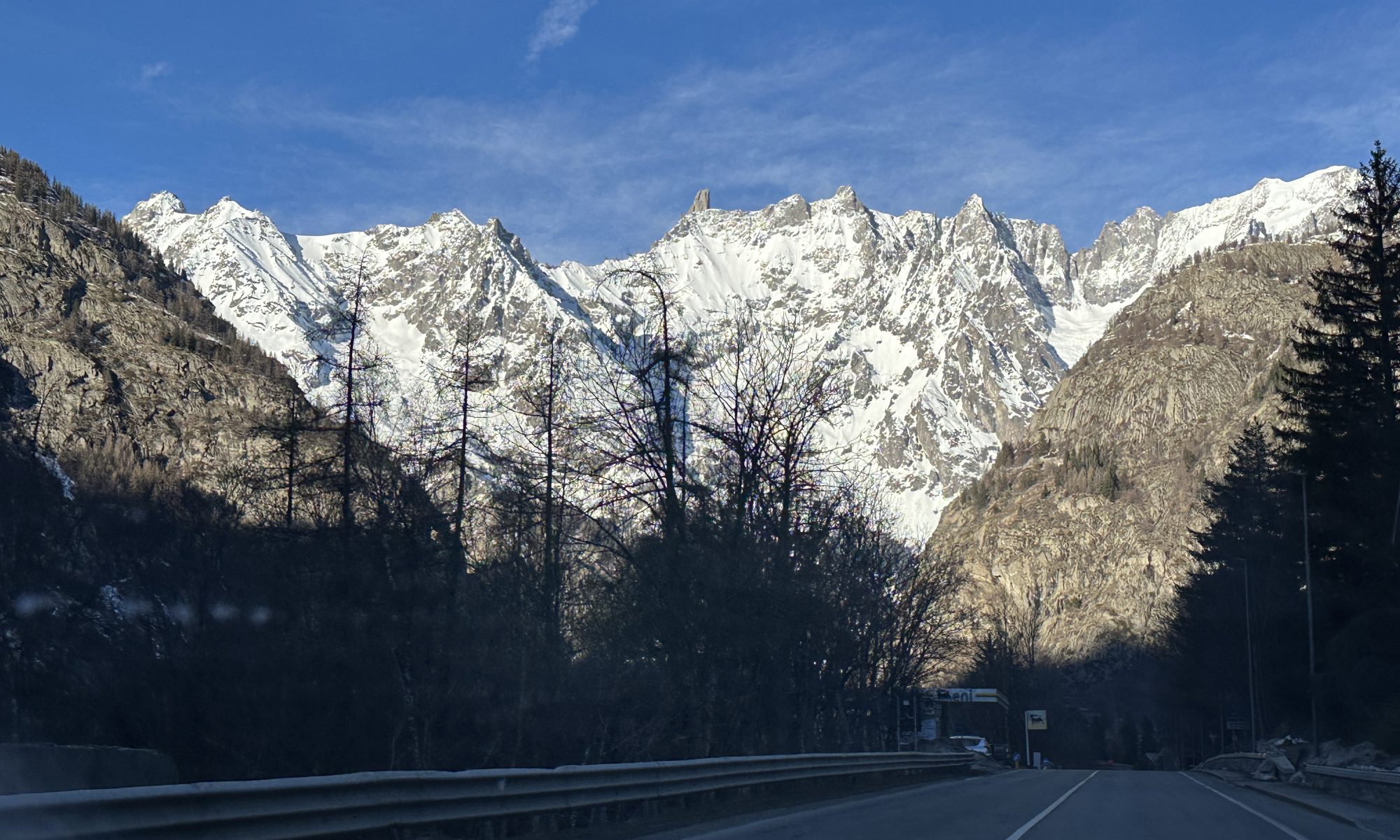
One of the clearest examples can be seen in transport corridors such as the Autostrada A5, where long tunnel sections and protective galleries help reduce exposure to:
Avalanches
Rockfall
Extreme weather disruptions
In parts of the upper valley, the motorway is routed extensively through tunnels or protected sections, illustrating how Alpine infrastructure is increasingly designed to operate under more unstable mountain conditions.
Across the Alps, similar measures include:
Avalanche galleries and snow sheds
Reinforced road and rail corridors
Monitoring systems for unstable slopes and glaciers
Mobility Is One of the Easiest Adaptation Levers for Resorts
For mountain resorts, climate adaptation is not only about engineering — it is also about how people get there.
In Alpine valleys already under pressure from congestion, poor air circulation and peak-day traffic, transport remains one of the most practical areas where resorts and event organisers can act quickly.
Measures do not always require major infrastructure. In many cases, they begin with:
Better public transport coordination
Park-and-ride systems
Shuttle improvements
Clearer “getting here” guidance
And stronger encouragement of carpooling and shared travel
These approaches matter because they address two problems at once:
Lower per-person emissions
Fewer vehicles on already constrained mountain roads
Some destinations and events are already encouraging this shift, integrating shared mobility into access strategies and sustainability plans.
Emerging third-party tools are also part of the picture. For example, Mountain Rideshare is one platform focused on shared journeys for mountain travel. ➡️ https://www.mountainrideshare.com
While not a complete solution, these measures represent one of the most realistic short-term actions available to resorts facing increasing environmental pressure.
Improved Risk Awareness
Alongside infrastructure and mobility, awareness remains essential.
Understanding risk is increasingly important as conditions become less predictable:
Always check official forecasts
Understand how hazard levels are defined
Recognise that many accidents occur during moderate-to-high danger levels
While infrastructure and forecasting continue to improve, they cannot fully eliminate risk.
The core challenge remains:
Increasing variability makes prediction harder
Protective infrastructure is costly and location-specific
Some hazards — such as large-scale rock instability — are evolving rapidly
In this sense, the Alps are becoming both:
A testing ground for climate adaptation
And a warning signal of its limits
Conclusion
The Alps offer a clear, real-time example of what a “wilder weather” future looks like.
Not simply warmer — but more complex, less predictable, and more interconnected.
From pollution episodes in Chamonix to climate-adapted infrastructure in the Aosta Valley, the region highlights how global climate trends are already reshaping mountain environments.
For travellers, operators, and policymakers alike, the message is clear:
Understanding the Alps today means understanding not just the weather — but how it is changing.
If you’re heading to the Aosta Valley, take a look at Il Cuore della Valdigne, our family-owned apartment in Morgex, available for rent when we’re not using it ourselves.
You can go to my shop and see what have been inspiring me lately, lots mountain landscapes in soft pastels, and now in oils too. Go here to check my latest works!
Subscribe to get the latest posts sent to your email.
Enjoyed this post? Get my latest ski guides, weather insights, resort updates and travel tips directly in your inbox. Subscribe to The-Ski-Guru here.
Manage Cookie Consent
To provide the best experiences, we use technologies like cookies to store and/or access device information. Consenting to these technologies will allow us to process data such as browsing behavior or unique IDs on this site. Not consenting or withdrawing consent, may adversely affect certain features and functions.
Functional
Always active
The technical storage or access is strictly necessary for the legitimate purpose of enabling the use of a specific service explicitly requested by the subscriber or user, or for the sole purpose of carrying out the transmission of a communication over an electronic communications network.
Preferences
The technical storage or access is necessary for the legitimate purpose of storing preferences that are not requested by the subscriber or user.
Statistics
The technical storage or access that is used exclusively for statistical purposes.The technical storage or access that is used exclusively for anonymous statistical purposes. Without a subpoena, voluntary compliance on the part of your Internet Service Provider, or additional records from a third party, information stored or retrieved for this purpose alone cannot usually be used to identify you.
Marketing
The technical storage or access is required to create user profiles to send advertising, or to track the user on a website or across several websites for similar marketing purposes.


 Planning your next trip to the Italian Alps?
 Planning your next trip to the Italian Alps?
 Ski in Courmayeur,
 Enjoy the mountains in summer (hiking, biking, nature)


 Subscribe to The-Ski-Guru here.