The Mega-Pass Wars Enter a New Phase: Ikon Expands, Epic Consolidates and Indy Goes Global

Ikon Pass sales platform. Credit: Alterramtnco.com

Ikon is pushing deeper into Asia, Indy Pass has grown beyond 300 resorts and a new Snow Pass has entered the market. Meanwhile, Epic is shifting its focus from expansion to guest experience. But across the Atlantic, Europe’s own multi-resort passes show that there is more than one way to build a ski empire.


The ski pass wars are no longer simply a battle between Epic and Ikon.

Ikon Pass has expanded its Asian footprint again for winter 2026/27, adding Madarao Mountain Resort in Japan and Beidahu and Lake Songhua in China.

On its own, that might look like another incremental expansion of an already enormous ski pass.

Look at what is happening across the wider market, however, and something more significant is emerging.

Ikon continues to build a worldwide collection of destination resorts. Epic, after years of acquisitions and international partnerships, is openly talking about improving what it already has. Indy Pass has assembled more than 300 mostly independent ski areas. Snow Pass has arrived as another lower-cost alternative.

And in Europe, regional passes such as Magic Pass, Ski amadé, Dolomiti Superski, the Valle d’Aosta regional pass and Mont Blanc Unlimited demonstrate yet another model: destinations cooperating across resorts, regions and even national borders without necessarily being owned by the same company.

The mega-pass may have won.

The next battle is over what kind of mega-pass skiers actually want.
Continue reading “The Mega-Pass Wars Enter a New Phase: Ikon Expands, Epic Consolidates and Indy Goes Global”

Action Outdoors Launches No-Frills Hakuba Ski Trip as Japan Targets a Broader UK Market

Hakuba Valley in Japan’s Northern Alps, where Action Outdoors will launch its first Japan ski programme in January 2027. Photo: Action Outdoors. Photographer: Matt Hall.

A new Hakuba package from £1,214 brings Action Outdoors’ shared-room, no-frills model to Japan—but international flights are not included.

Japan may rank high on British skiers’ bucket lists, but the destination is still commonly associated with expensive, long-haul ski holidays aimed at the luxury market. Action Outdoors is now testing whether a simpler, more social model can make skiing in Japan accessible to a broader group of travellers.

The UK operator is launching its first Japan programme for winter 2026/27, with two departures to Hakuba Valley in January and February 2027.

Prices start from £1,214 per person, based on four people sharing a room. The package includes one night in Tokyo, return Shinkansen train travel between Tokyo and Nagano, bus transfers to Hakuba, seven nights’ half-board accommodation, a six-day lift pass and six days of either instructed piste skiing or off-piste guiding.

International flights to Japan, lunches and transfers between Tokyo’s airports and the city are not included.

Continue reading “Action Outdoors Launches No-Frills Hakuba Ski Trip as Japan Targets a Broader UK Market”

Stelvio Glacier Reopens After Heat Closure – But Summer Skiing’s August Shutdown Still Matters

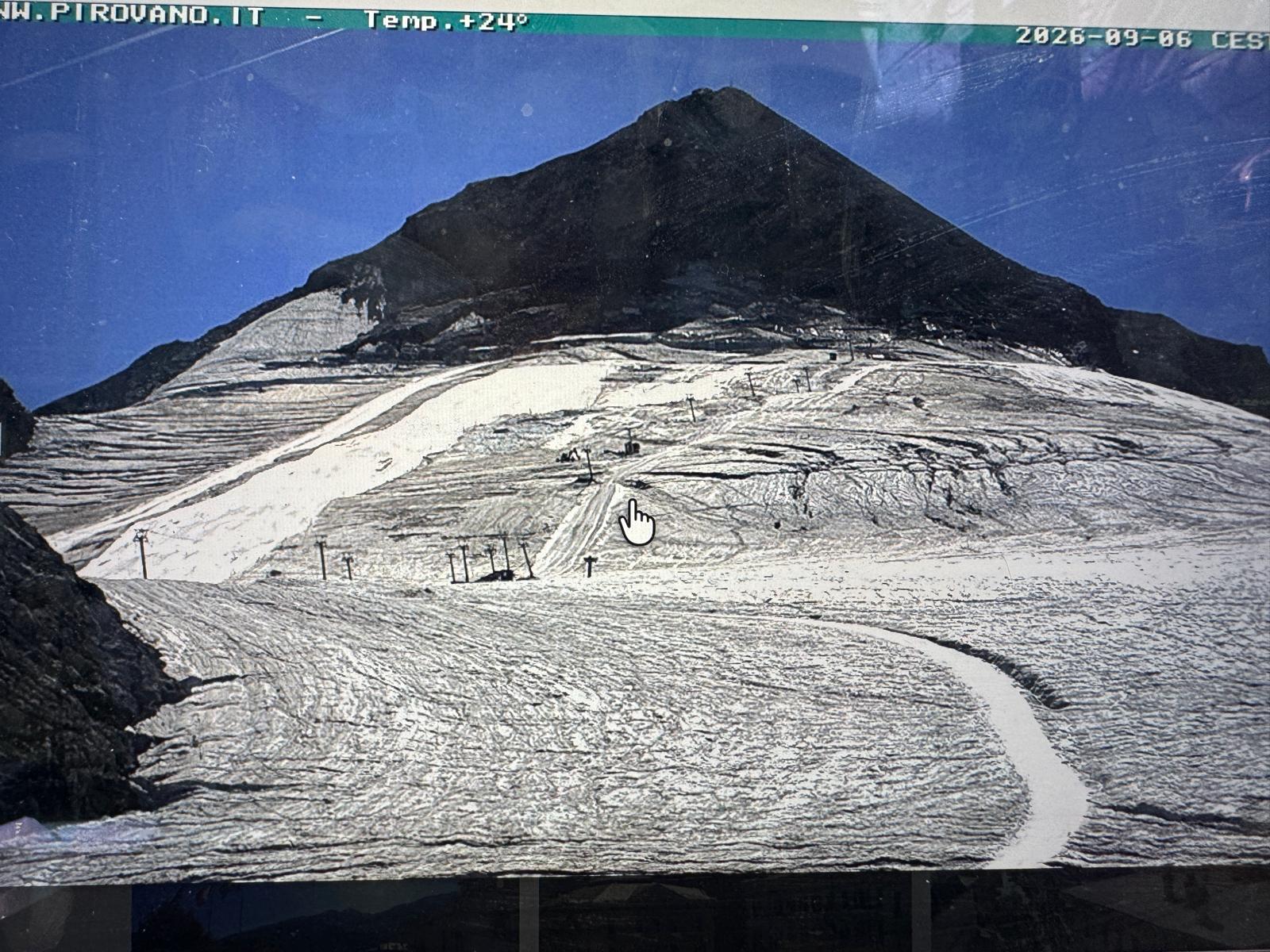
Summer skiing on the Stelvio Glacier in Italy

Italy’s Stelvio Glacier has reopened for summer skiing after a three-week heat-related closure. The return of skiing is welcome news, but it follows an extraordinary August in which high temperatures and poor overnight freezing temporarily brought lift-served summer skiing across the Alps to a halt.

Summer skiing returned to Italy’s Stelvio Glacier on Friday, September 4, after cooler conditions allowed operators to reopen lifts and pistes following a shutdown that began on August 15.

The official Bormio lift-status service confirmed the reopening, with all six Stelvio lift installations operating: the Cristallo, Pajer, Geister 1 and Geister 2 ski lifts, together with the Passo Stelvio–Trincerone and Trincerone–Livrio cable cars.

Not everything has returned to normal, however. Several pistes remain closed, and the Pajer and Cristallo ski lifts are operating only from 6:30 am until midday. The two cable cars operate until 4 pm.

The Stelvio summer season is officially scheduled to run from May 30 until November 1, 2026.

Why Stelvio closed

The August closure was significant because Stelvio had remained open after other Alpine summer ski areas suspended skiing during the summer heat.

SIFAS, the company operating the Stelvio facilities, announced the suspension of skiing from August 15, citing three factors: persistent heat waves reaching high altitude, the absence of sufficient overnight cooling and refreezing of the snowpack, and frequent thunderstorms that had further affected glacier conditions.

Continue reading “Stelvio Glacier Reopens After Heat Closure – But Summer Skiing’s August Shutdown Still Matters”

Muslim Ski Club Shows How Ski Tourism Can Reach a Market It Has Long Overlooked

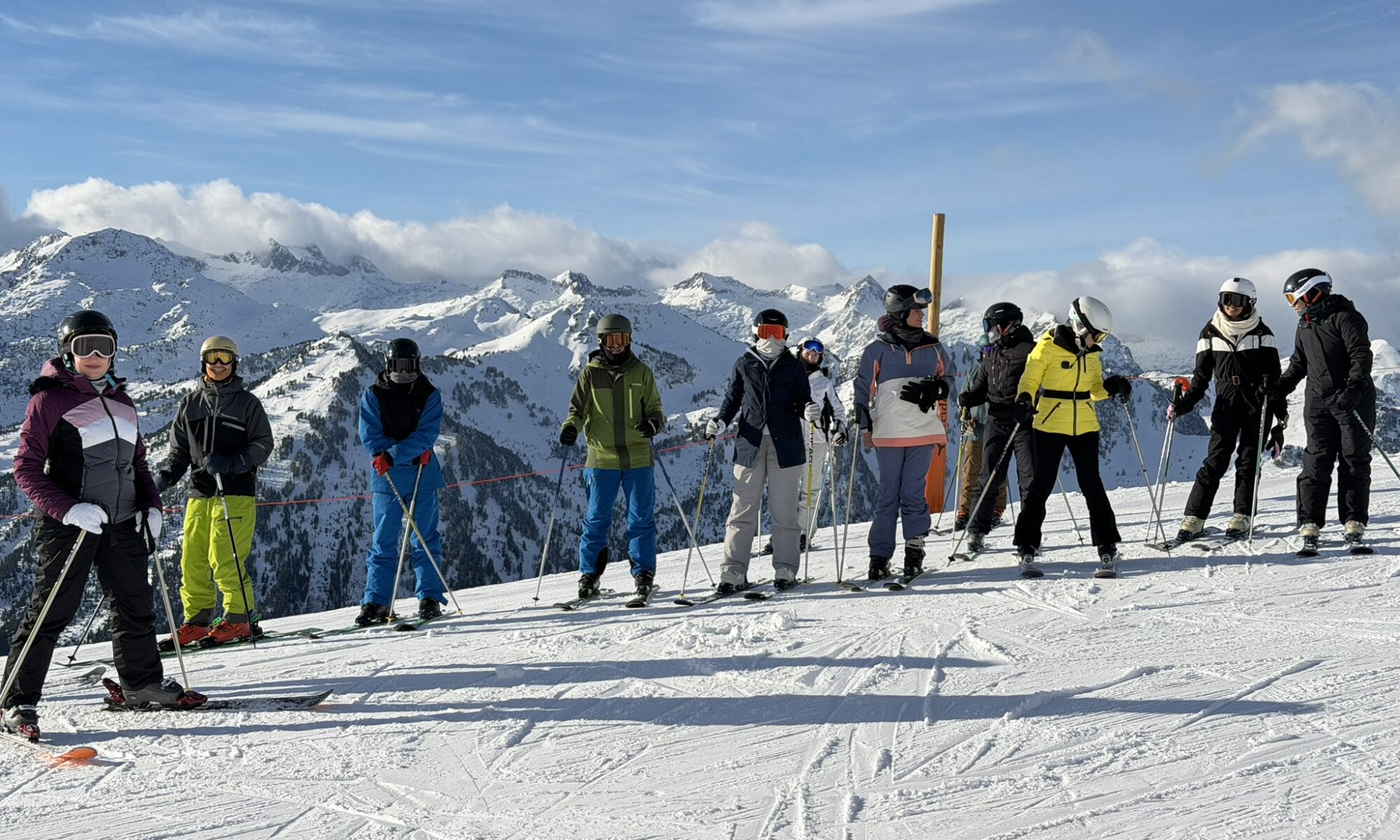
Members of the Muslim Ski Club on the slopes, helping create a more accessible and welcoming pathway into skiing for Muslim travellers. Photo: Muslim Ski Club

Ski tourism has spent decades looking for new source markets, younger skiers and ways to broaden participation. But sometimes growth may be less about discovering another destination or building another lift, and more about asking a simpler question: who was the traditional ski holiday designed for?

The UK-based Muslim Ski Club is beginning to provide one answer.

Founded by Burhan Ali in 2024, the organization was created to make skiing more accessible and relevant to Muslim travelers — from complete beginners who have never considered a ski vacation to experienced skiers looking for a community with which to travel.

The concept has now gained recognition beyond snowsports. The Muslim Ski Club recently won Gold in the Hospitality, Leisure and Tourism Business of the Year category at the 2026 Bedfordshire Chamber of Commerce SME Business Awards.

It is an interesting achievement for a relatively young organization — but perhaps even more interesting for the wider ski industry.

Learning the mountain together: Muslim Ski Club members navigate the slopes as part of the community-led ski experience. Photo: Muslim Ski Club

Continue reading “Muslim Ski Club Shows How Ski Tourism Can Reach a Market It Has Long Overlooked”

Nepal’s Glacier Disaster Is a Warning for Mountain Regions Everywhere — Including the Alps

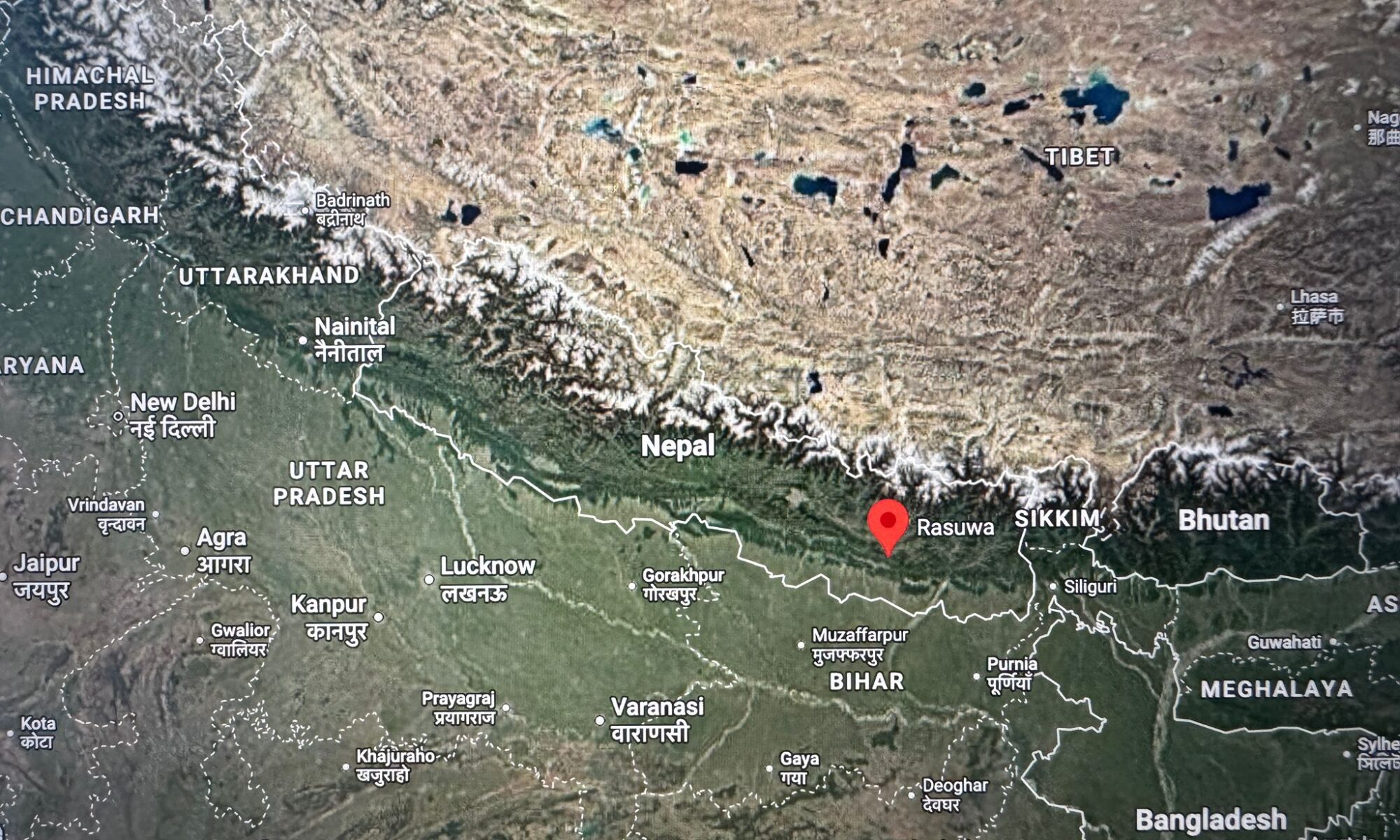
Map of Rasuwa in Nepal, where the floodings occurred. Photo: Google Maps.

A catastrophic glacier-related collapse in the Himalayas has killed hundreds of people across Nepal and Tibet and left many more missing.

But beyond the shocking images and the rapidly evolving casualty figures lies a much bigger question for mountain regions around the world:

Could something similar happen in the Alps?

The answer is uncomfortable.

The precise sequence that produced the Nepal disaster is still being investigated. But glacier collapses, rock avalanches, sudden releases of glacial water, debris flows and naturally dammed lakes are not unique to the Himalayas. They are hazards that also exist in the Alps — and Alpine history provides some dramatic examples.

What can be very different is the ability to identify certain dangers in advance, monitor them and evacuate people before the mountain moves.

And even in the best-monitored Alpine countries, that warning cannot always be guaranteed.

Continue reading “Nepal’s Glacier Disaster Is a Warning for Mountain Regions Everywhere — Including the Alps”

Randa Raises Alert Level as Weisshorn Hanging Glacier Accelerates Above Zermatt Valley

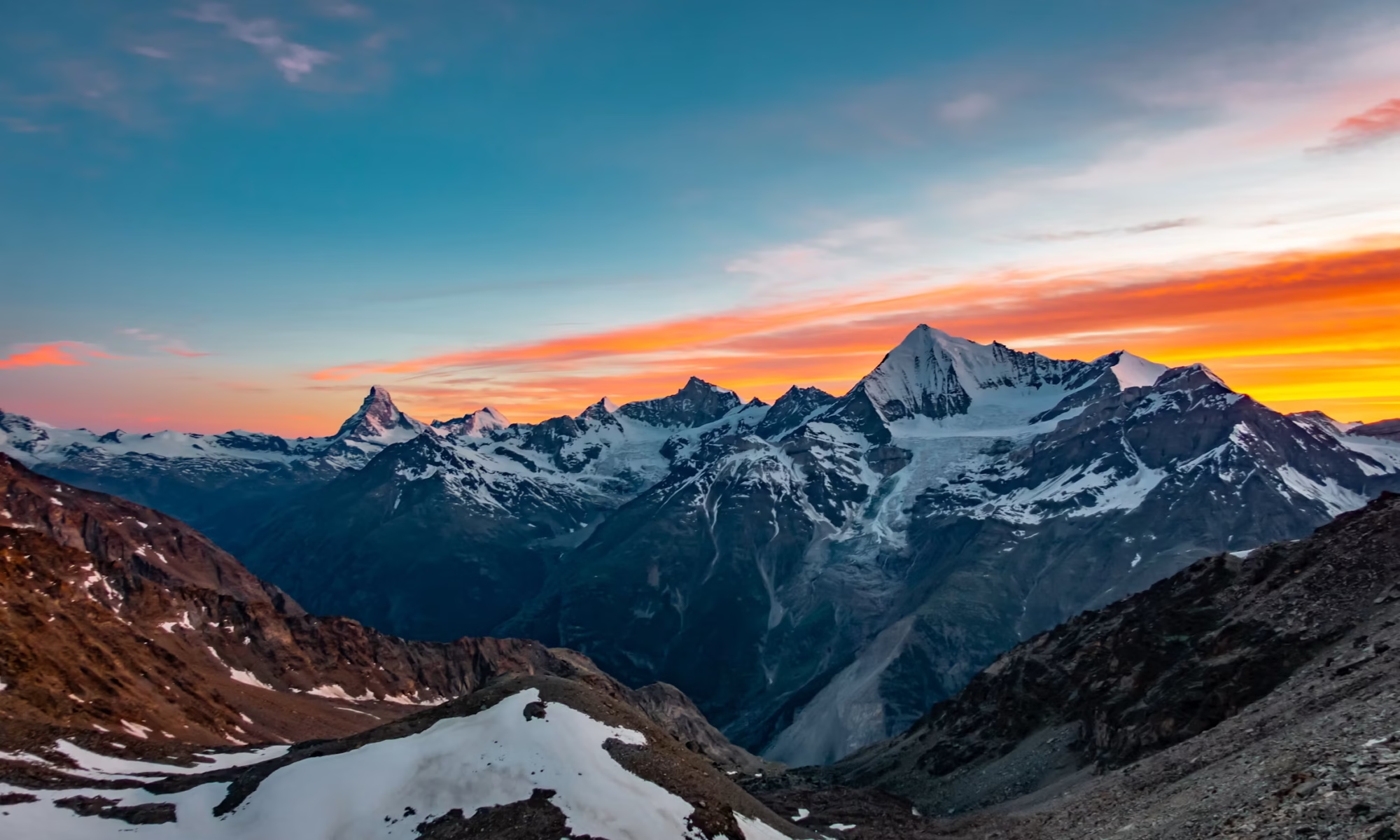
Sunset over the Matterhorn and Weisshorn, from Nadelgrat, Randa. Photo by: Sylvain Maroux. Unsplash.

Authorities in the Swiss canton of Valais have increased monitoring of the Weisshorn East hanging glacier above Randa to Level 3, following a marked acceleration in its movement and several ice break-offs.

Randa lies in the Mattertal, on the main valley approach towards Täsch and Zermatt, making the situation particularly relevant for visitors travelling through the region.

The municipality said movements of the hanging glacier have been monitored more closely since the end of June 2026. Following a significant increase in movement and acceleration, monitoring was raised to Level 3 on 24 August.

At least three break-offs occurred during the afternoon of 24 August, with the largest taking place between 17:00 and 18:00. The resulting ice deposits remained on the glacier plateau below.

Poor weather initially prevented experts from reliably estimating the volume involved.

Continue reading “Randa Raises Alert Level as Weisshorn Hanging Glacier Accelerates Above Zermatt Valley”

Alpine Glacier Retreat Raises Questions Over the Future of the Ski Economy

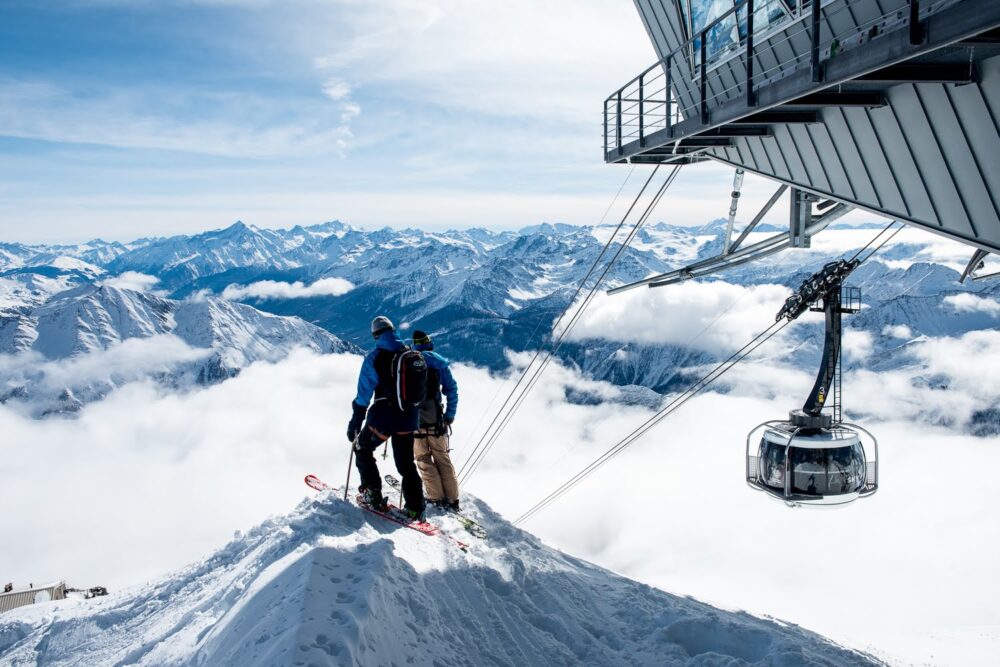
Photo credit: Skyway Monte Bianco.

After a summer marked by glacier retreat, rockfalls, unstable permafrost and repeated disruption across the Alps, an increasingly difficult question is emerging: how should mountain tourism adapt to a rapidly changing environment?

The debate has been brought into sharper focus by Legambiente, one of Italy’s largest environmental organisations, which argues that Alpine communities can no longer plan their future on the assumption that glaciers, water resources and snow conditions will remain as they have been in the past.

Speaking to Corriere della Sera during the 2026 Carovana dei Ghiacciai, Vanda Bonardo, the campaign’s coordinator and national head of Legambiente’s Alps division, said mountain regions need to move from planning based on stability towards managing continuous change.

Her comments come during an extraordinary summer across the Alps, with developments around Mont Blanc providing some of the clearest examples.

Continue reading “Alpine Glacier Retreat Raises Questions Over the Future of the Ski Economy”

From Delayed Opening to October Skiing: Portillo Extends an Extraordinary 2026 Season

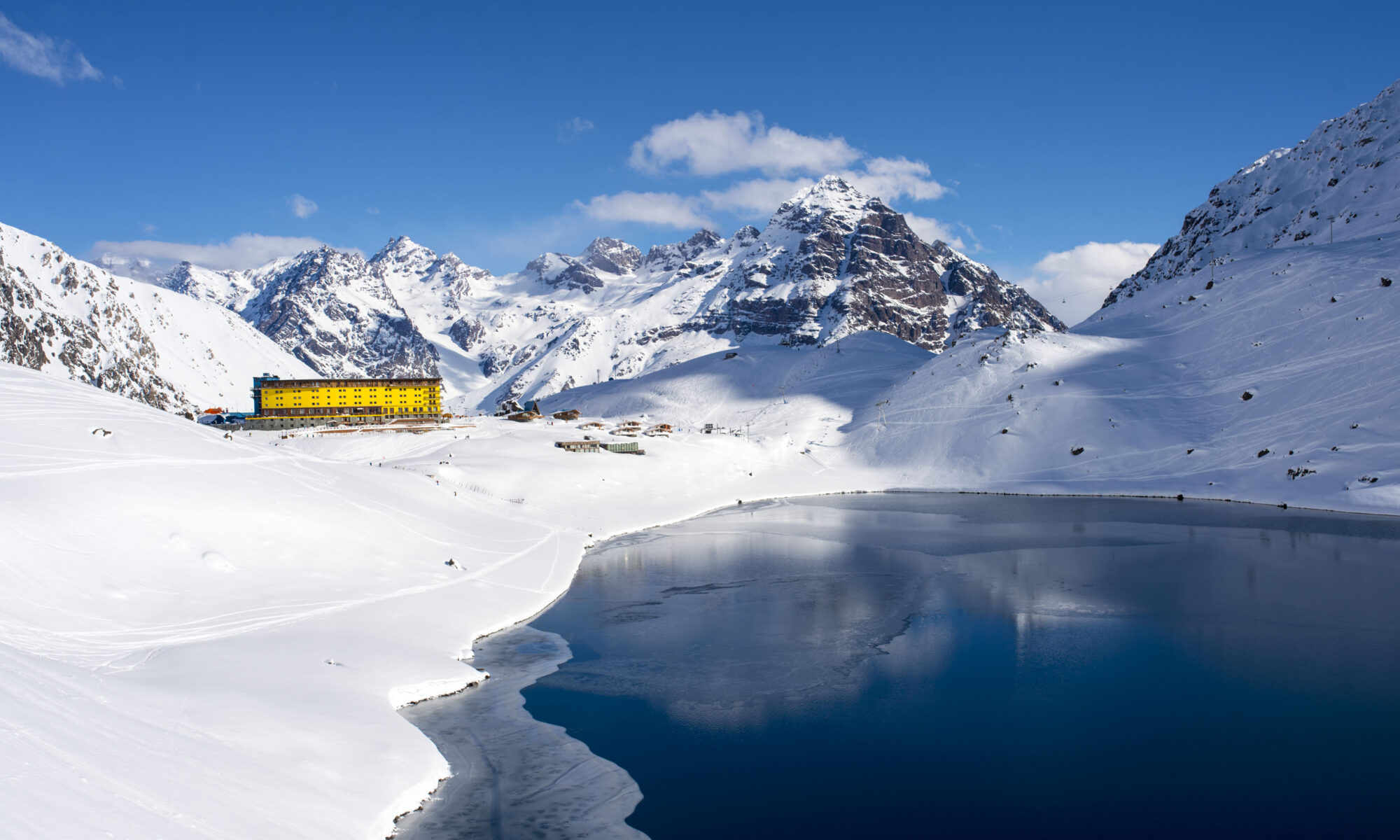
Aereal View of Portillo. Photo by Pia Vergara. Courtesy Ski Portillo.

After opening late because of insufficient snow and then losing almost one-third of its season to a prolonged road closure, Ski Portillo has accumulated more than seven metres and will now continue operating until 11 October.

Ski Portillo has extended its 2026 season by more than two weeks, completing an extraordinary turnaround in a winter that began with too little snow, delivered one of the largest storm cycles in recent years and then left the Chilean resort largely isolated during a crucial part of its short operating season.

The resort had originally planned to close on 26 September. It will now continue operating until Sunday 11th October, with a 20% discount available for stays between 30 September and the new closing date.

Portillo attributed the extension to the exceptional amount of snow received this winter. The resort announced more than seven metres of accumulated snowfall, while its official snow report was showing a seasonal total of 8.19 metres by 21 August.

However, the abundance of snow tells only part of the story.

A Season That Began With Too Little Snow

Portillo had initially planned to open on 20 June, in time for the beginning of the main South American winter holiday period.

Historically, the resort aims to open around the end of June. As with every ski area relying heavily on natural snowfall, this is always subject to conditions, but being operational by early July is particularly important. Families from Chile, Argentina, Brazil and other South American markets traditionally travel during their winter school holidays.

In 2026, the expected snowfall did not arrive in time. Although an early storm produced approximately 40 centimetres and the resort supplemented it with snowmaking, Portillo said it did not yet have the base required to open safely and provide an adequate skiing experience.

The planned 20 June opening was therefore postponed.

Portillo eventually began limited operations on 4 July, exclusively for hotel guests. Only three runs — Plateau, Las Lomas and Corralito — were initially available, and the resort was not yet accepting day skiers.

Then, just ten days after the delayed opening, the situation changed completely.

Continue reading “From Delayed Opening to October Skiing: Portillo Extends an Extraordinary 2026 Season”

Historic El Niño Could Shape the 2026/27 Ski Season Worldwide

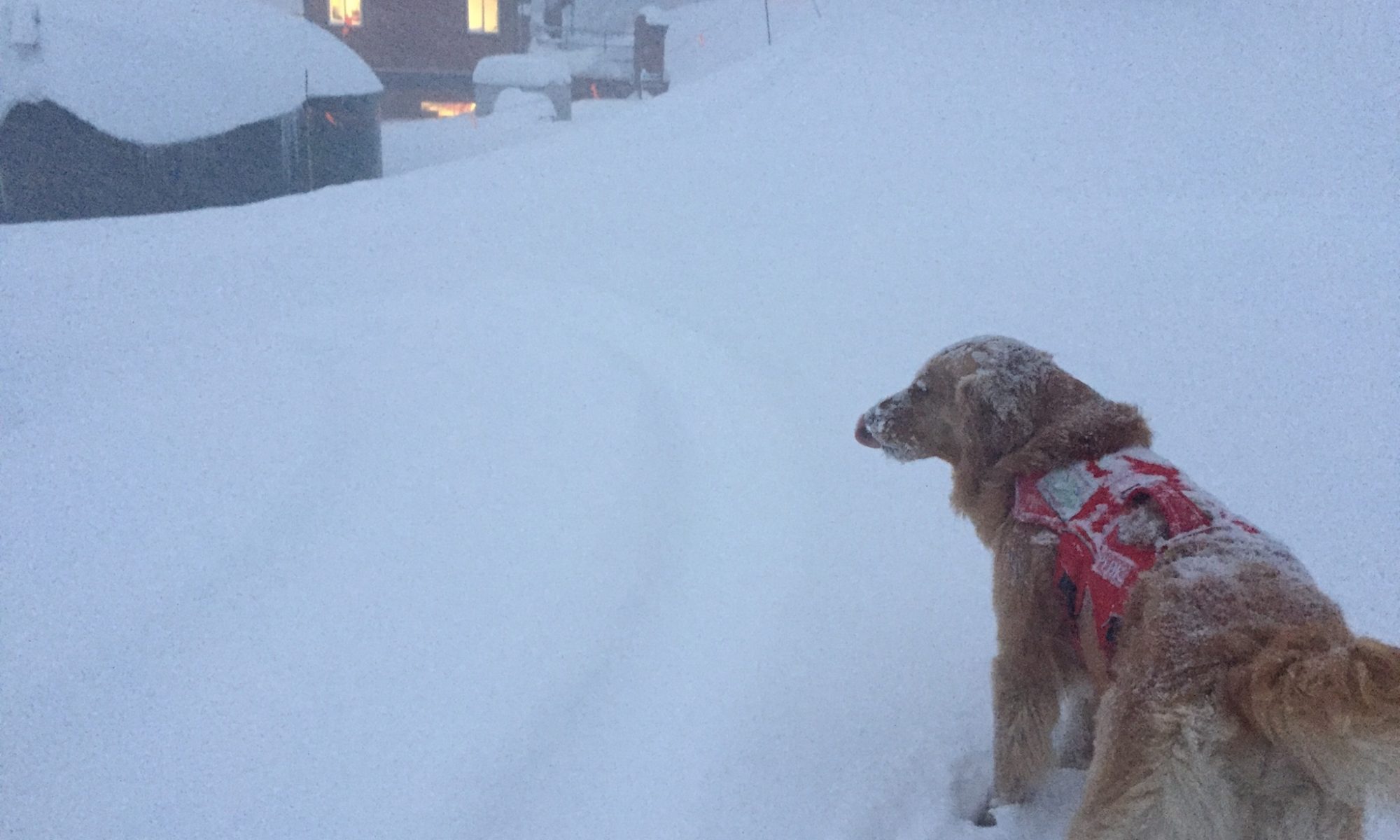
A patrol dog is waiting to go to work in Heavenly. Photo: Elisabeth Biebl. Heavenly Mountain Resort

A strengthening El Niño in the Pacific could become one of the most powerful on record, potentially influencing weather patterns across some of the world’s major ski regions during the 2026/27 Northern Hemisphere winter.

The latest outlook from the US National Oceanic and Atmospheric Administration (NOAA), released on 13 August, says El Niño is strengthening and now has a greater than 90% chance of becoming a very strong event during the Northern Hemisphere autumn and winter of 2026/27.

Even more strikingly, NOAA estimates a 69% chance that El Niño could reach historic strength during October-December 2026, based on the Relative Oceanic Niño Index (RONI).

For skiers, however, there is an important caveat: a historic El Niño does not automatically mean a historic snow season.

Its influence varies considerably between North America, Europe, Japan and the Southern Hemisphere, while individual storms, temperatures and regional atmospheric patterns will ultimately determine how much snow actually falls.

Continue reading “Historic El Niño Could Shape the 2026/27 Ski Season Worldwide”

Are Ski Resorts Becoming Too Concentrated? Antitrust Scrutiny Reaches the Ski Industry

Dolomiti Superski- 3 Zinnen Dolomiten- New Chairlift Mittelstation-Helm. Photo credit: Dolomiti Superski. Dolomiti Superski ski lifts as ski resort antitrust debate grows worldwide.

For decades, the ski industry has moved steadily towards larger resort groups, multi-resort passes and integrated mountain networks. Now, regulators on three continents are beginning to ask whether that growing concentration is reducing competition.

On 7 August, Italy’s competition authority closed its investigation into Dolomiti Superski after accepting commitments that include €30 million in compensation for skiers and, perhaps more significantly for the industry, changes to the way individual ski areas within the network coordinate prices and distribution.

The Italian decision comes just weeks after a proposed acquisition involving some of Chile’s largest ski resorts was abandoned following competition concerns, and only a day after another antitrust lawsuit was filed against several of the biggest ski operators in the United States.

Taken individually, the cases are very different. Together, however, they raise a broader question for the ski industry: as resorts increasingly consolidate into larger networks and multi-resort passes become the norm, how much competition remains between individual ski areas?

For skiers, the issue is simple: as lift ticket prices continue to climb, regulators want to know whether rising costs are being driven solely by inflation and investment—or whether reduced competition is also playing a role.

Continue reading “Are Ski Resorts Becoming Too Concentrated? Antitrust Scrutiny Reaches the Ski Industry”