

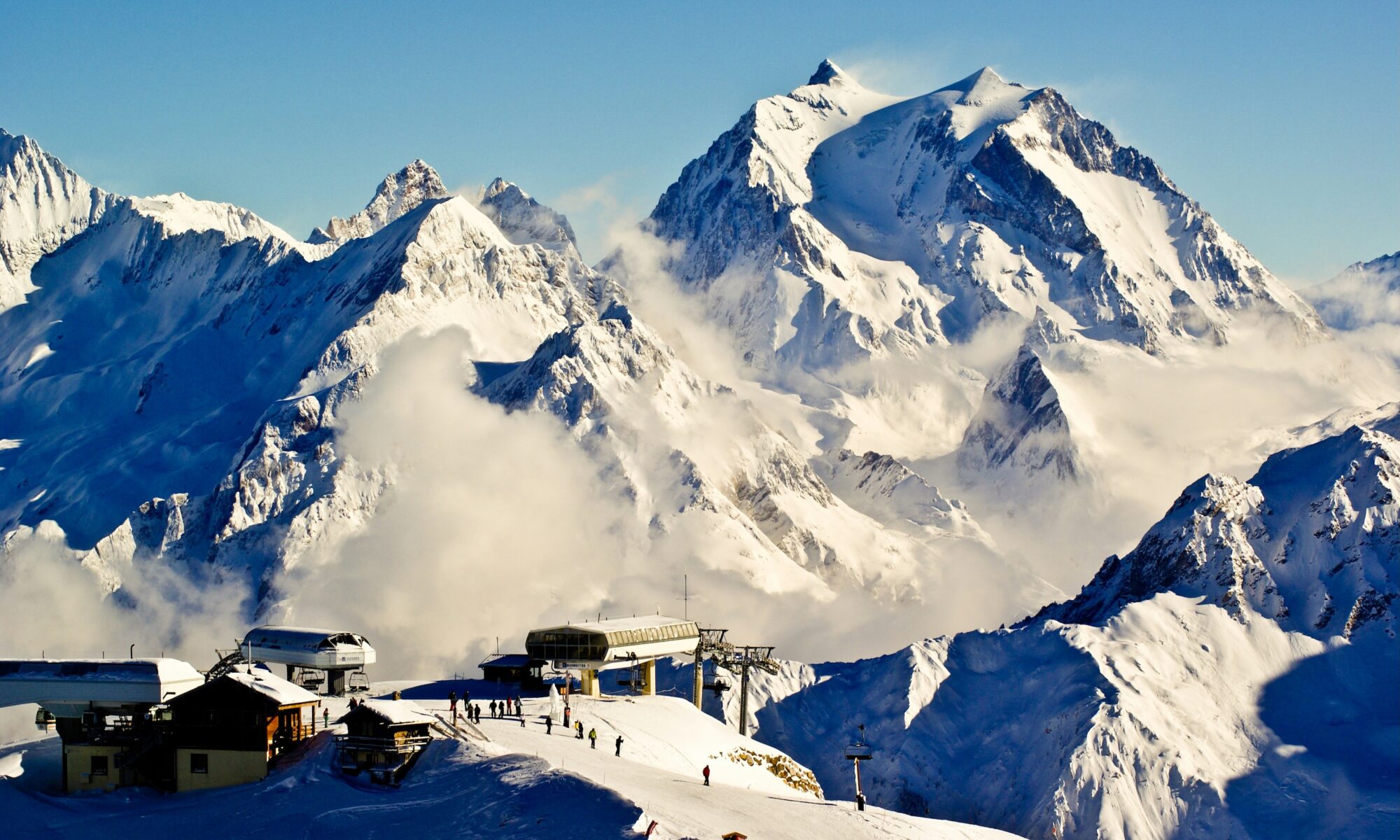
High above the famous French ski resort of Courchevel, a giant artificial water reservoir built to support snowmaking operations is now raising serious concerns about Alpine infrastructure stability in a warming climate.
The reservoir, located above the village of La Tania at around 2,270 metres altitude, was constructed to supply artificial snow for the new Éclipse piste, developed for the 2023 Alpine World Ski Championships and linked to preparations for future international winter sports events. But according to recent investigations by Le Monde, the structure is now subsiding at an alarming rate.
The reservoir reportedly holds around 170,000 cubic metres of water and cost approximately €5.7 million to build. Engineering reports cited by French media suggest the retaining structure has sunk nearly 90 centimetres in just four years. Authorities have already ordered the gradual draining of the reservoir to reduce pressure on the unstable terrain below.
What makes the story particularly significant is the suspected cause: thawing Alpine permafrost.
According to experts quoted by TF1 Info, the reservoir sits above a rock glacier and permafrost zone that may have become destabilised after construction. One engineer reportedly described the structure as behaving “like a giant radiator,” accelerating the thawing process beneath it.
This is not simply a local engineering issue. It reflects a broader challenge increasingly facing Alpine ski resorts: how to adapt mountain infrastructure to climate change while the mountains themselves are becoming less stable.
Across the Alps, warming temperatures are affecting glaciers, permafrost, rock faces and high-altitude terrain. The consequences are already visible through increased rockfalls, unstable slopes, road collapses, glacier monitoring systems and more frequent infrastructure disruptions, themes increasingly explored in Mountain Infrastructure Risk in the Alps.
For ski resorts, the timing is especially delicate. Many destinations are investing heavily in snowmaking systems, reservoirs, lift upgrades and high-altitude terrain expansion in order to maintain reliable winter operations. Yet climate warming is simultaneously making high-mountain construction more technically complex and potentially riskier. This comes as resorts across Europe face increasingly difficult questions about Snow Conditions in a Warming Alpine Climate and the long-term viability of winter tourism infrastructure.
The Courchevel reservoir is particularly symbolic because it was built as part of the high-profile Éclipse piste project, one of the centrepieces of the 2023 World Championships and a key element in the region’s Olympic ambitions. Instead of showcasing the future of Alpine skiing infrastructure, the site is now becoming a case study in the hidden geotechnical risks linked to warming mountain environments.
The story also raises difficult long-term questions for resorts across Europe. Snowmaking reservoirs have become increasingly common in many Alpine regions as resorts attempt to guarantee skiable terrain during warmer and less predictable winters. But engineers may now need to reassess how these structures interact with thawing permafrost, unstable rock glaciers and shifting underground water systems, particularly after another winter discussed in Why the Alps Did Not Have a Snow-Rich Winter.
This situation in Courchevel is unlikely to remain an isolated case.
Similar concerns are already emerging elsewhere in the Alps, where thawing permafrost has affected lift pylons, mountain huts, roads and high-altitude construction projects. Italy’s monitoring systems around Planpincieux Glacier Monitoring in Italy, repeated rockfall events in the Mont Blanc massif and infrastructure instability in several Alpine valleys all point to the same underlying trend: the mountains themselves are changing.
Rather than representing a simple debate about snowmaking, the Courchevel reservoir crisis highlights the increasingly complex reality facing ski resorts in a warming climate. Adaptation infrastructure may itself become vulnerable to the environmental changes it is designed to address.
For Alpine destinations planning major long-term infrastructure investments linked to future international ski events, the issue is likely to become even more important in the years ahead.
Sources
Le Monde – Investigation into the reservoir subsidence and permafrost concerns.
TF1 Info – Video report and expert commentary on the instability risks.
Actu Lyon / Actu.fr – Regional reporting on emergency measures and local concerns.
 Planning your next trip to the Italian Alps?
 Planning your next trip to the Italian Alps?
If you’re heading to the Aosta Valley, take a look at Il Cuore della Valdigne, our family-owned apartment in Morgex, available for rent when we’re not using it ourselves.
It’s an ideal base to:
- Ski in Courmayeur, La Thuile and Pila
- Enjoy the mountains in summer (hiking, biking, nature)
- Explore the Mont Blanc valley in a quieter, more authentic setting.
 Ski in Courmayeur,
 Enjoy the mountains in summer (hiking, biking, nature)
Check my Mountain Art on my Shop
You can go to my shop and see what have been inspiring me lately, lots mountain landscapes in soft pastels, and now in oils too. Go here to check my latest works!
Featured Image: Courchevel. Photo: Piotr Figlarz. Unsplash.


Discover more from The-Ski-Guru
Subscribe to get the latest posts sent to your email.
 Subscribe to The-Ski-Guru here.