

Across the Alps, a growing number of ski destinations are facing the same difficult question: can smaller mountain municipalities still afford to develop and modernise ski infrastructure on their own?
Two recent stories from northern Italy suggest the Alpine ski industry may be entering a new phase — one defined less by endless expansion and more by consolidation, selective investment and regional cooperation.
In Lombardy, the municipality of Valfurva recently abandoned plans for a new lift connection linking the valley more directly to Bormio’s ski area. The proposed project, intended to connect the S. Antonio/S. Nicolò area with the Bormio slopes, had already secured part of its public funding but ultimately failed to move forward because the remaining financing and permitting timelines proved too difficult to complete. Local officials described the decision as “painful, but inevitable.”
The cancellation was particularly striking because it comes just months before the Milan-Cortina 2026 Winter Olympics, with Bormio itself hosting Olympic alpine skiing events. (neveitalia.it)
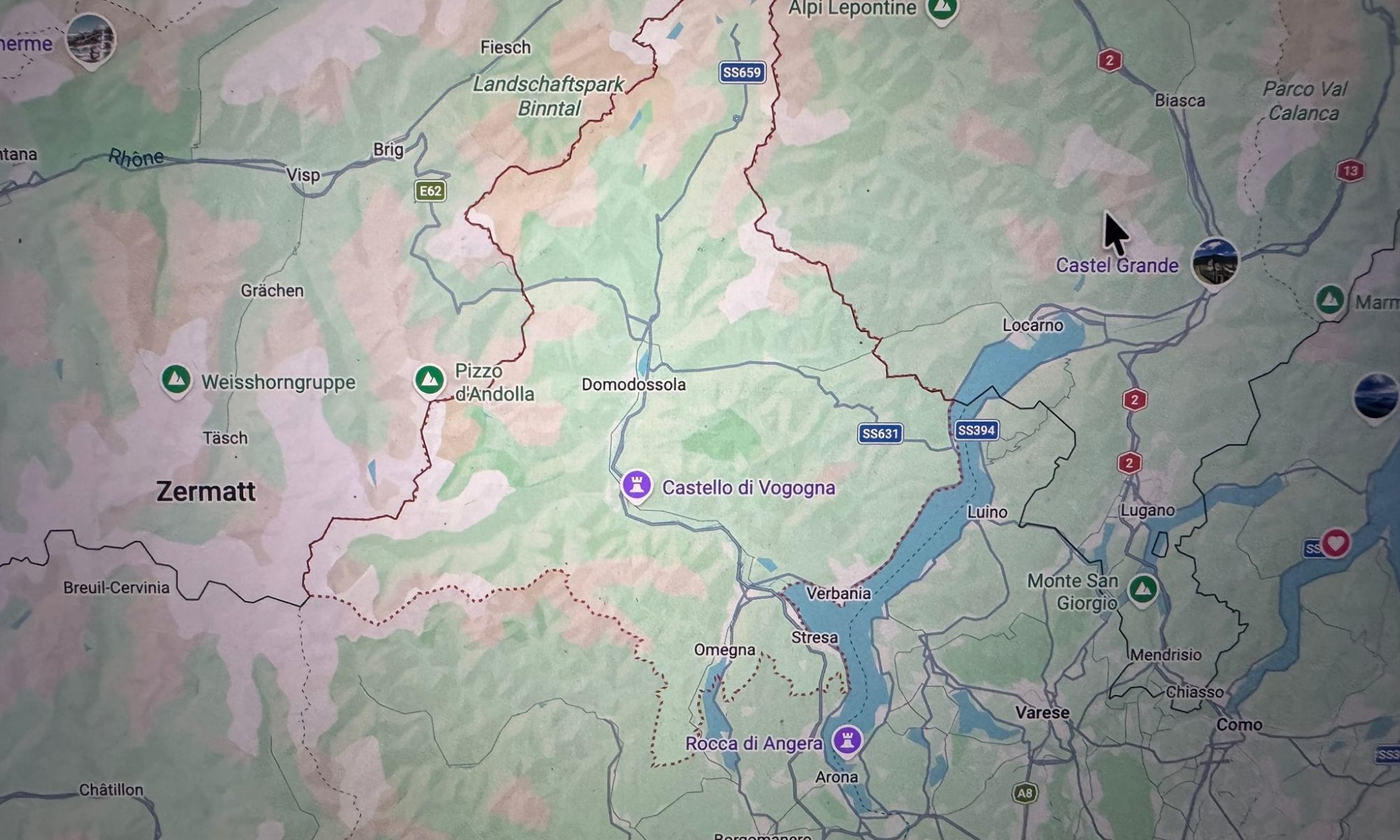
At the same time, further west in Piemonte, regional authorities and ski operators have begun discussing a very different approach: the possibility of creating a broader public-private holding structure capable of coordinating or supporting multiple ski areas across the Verbano-Cusio-Ossola province, with potential links extending toward the Valsesia and Monterosa regions.
The proposal remains exploratory, but the direction is significant. Instead of each resort or municipality attempting to survive independently, the idea under discussion would involve greater regional coordination between public institutions, private investors and ski lift operators.
Together, the two stories point toward a broader reality increasingly visible across the Alps: ski infrastructure is becoming dramatically more expensive to build, maintain and operate.
Modern gondolas and detachable chairlifts now regularly cost tens of millions of euros. Snowmaking systems require huge energy and water investments. Labour shortages continue to affect mountain operations. Climate variability is increasing pressure on lower-elevation resorts. And many small municipalities simply no longer have the financial capacity to pursue large standalone projects.
In response, Alpine regions are beginning to explore new models.
France has long relied on large integrated operators such as Compagnie des Alpes, which manages multiple major resorts under a centralised structure. South Tyrol has increasingly developed interconnected ski domains capable of sharing infrastructure, marketing and operational costs. In Switzerland and Austria, several smaller resorts have already faced mergers, closures or increasing dependence on cantonal and regional support.
Northern Italy may now be moving in a similar direction.
The discussion in Piemonte is not simply about rescuing struggling ski hills. It may reflect a larger effort to rethink how mountain tourism is financed and managed in an era where infrastructure costs continue to rise while winters become less predictable.
At the same time, the Valfurva decision shows that even projects connected to globally visible events such as Milan-Cortina 2026 are no longer guaranteed to proceed if the financial and political conditions are not fully aligned.
This does not mean investment in Alpine skiing is stopping. Quite the opposite. Across the Alps, resorts are still spending heavily on lift replacements, snowmaking upgrades, transport systems and four-season tourism infrastructure. But there are growing signs that investment is becoming more selective.
Rather than endless expansion, many destinations now appear to be prioritising:
modernisation over extension,
reliability over scale,
and regional cooperation over fragmented local projects.
That shift may ultimately reshape the future structure of Alpine skiing itself.
For decades, many mountain communities could justify building new lifts as a symbol of growth and competitiveness. Increasingly, however, the challenge is no longer simply building infrastructure — but sustaining it economically over the long term.
And that may become one of the defining questions for the next generation of Alpine tourism.
Read More:
Courmayeur’s New Gondolas Signal a Deeper Shift in Alpine Ski Infrastructure
Snow Conditions in a Warming Alpine Climate
Mountain Infrastructure Risk in the Alps & Pyrenees
Grandvalira’s Future Transport Projects
Milan-Cortina 2026
Why Some Towns Are Buying Their Ski Resorts Back
Sources:
NeveItalia – Valfurva/Bormio project cancellation:
https://www.neveitalia.it/ski/santacaterinavalfurva/news/impianto-valfurva-bormio-il-sindaco-di-valfurva-stralcio-del-progetto-doloroso-ma-inevitabile-per-non-perdere-i-contributi
NeveItalia – Piemonte ski holding discussions:
https://www.neveitalia.it/piemonte/news/societa-impianti-unica-per-lo-sci-nel-vco-prosegue-il-dialogo-con-regione-piemonte-possibile-un-coinvolgimento-della-valsesia
 Planning your next trip to the Italian Alps?
 Planning your next trip to the Italian Alps?
If you’re heading to the Aosta Valley, take a look at Il Cuore della Valdigne, our family-owned apartment in Morgex, available for rent when we’re not using it ourselves.
It’s an ideal base to:
- Ski in Courmayeur, La Thuile and Pila
- Enjoy the mountains in summer (hiking, biking, nature)
- Explore the Mont Blanc valley in a quieter, more authentic setting.
 Ski in Courmayeur,
 Enjoy the mountains in summer (hiking, biking, nature)
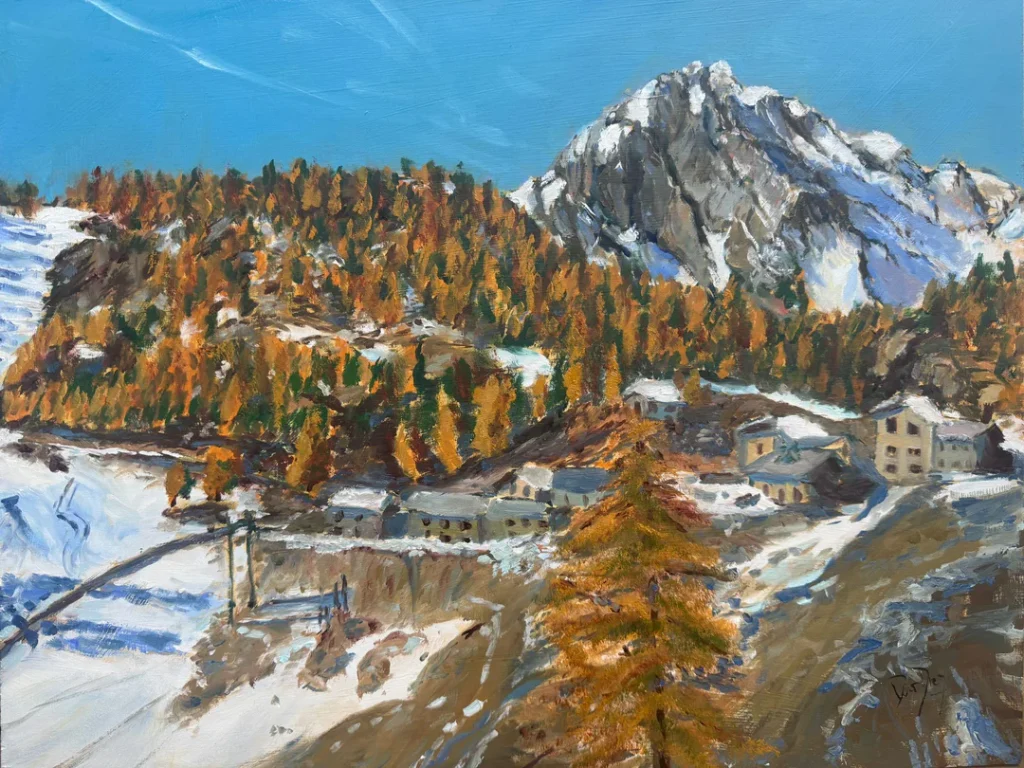
Check my Mountain Art on my Shop
You can go to my shop and see what have been inspiring me lately, lots mountain landscapes in soft pastels, and now in oils too. Go here to check my latest works!

Featured Image: Verbano-Cusio-Ossola. Google Maps.


Discover more from The-Ski-Guru
Subscribe to get the latest posts sent to your email.
 Subscribe to The-Ski-Guru here.